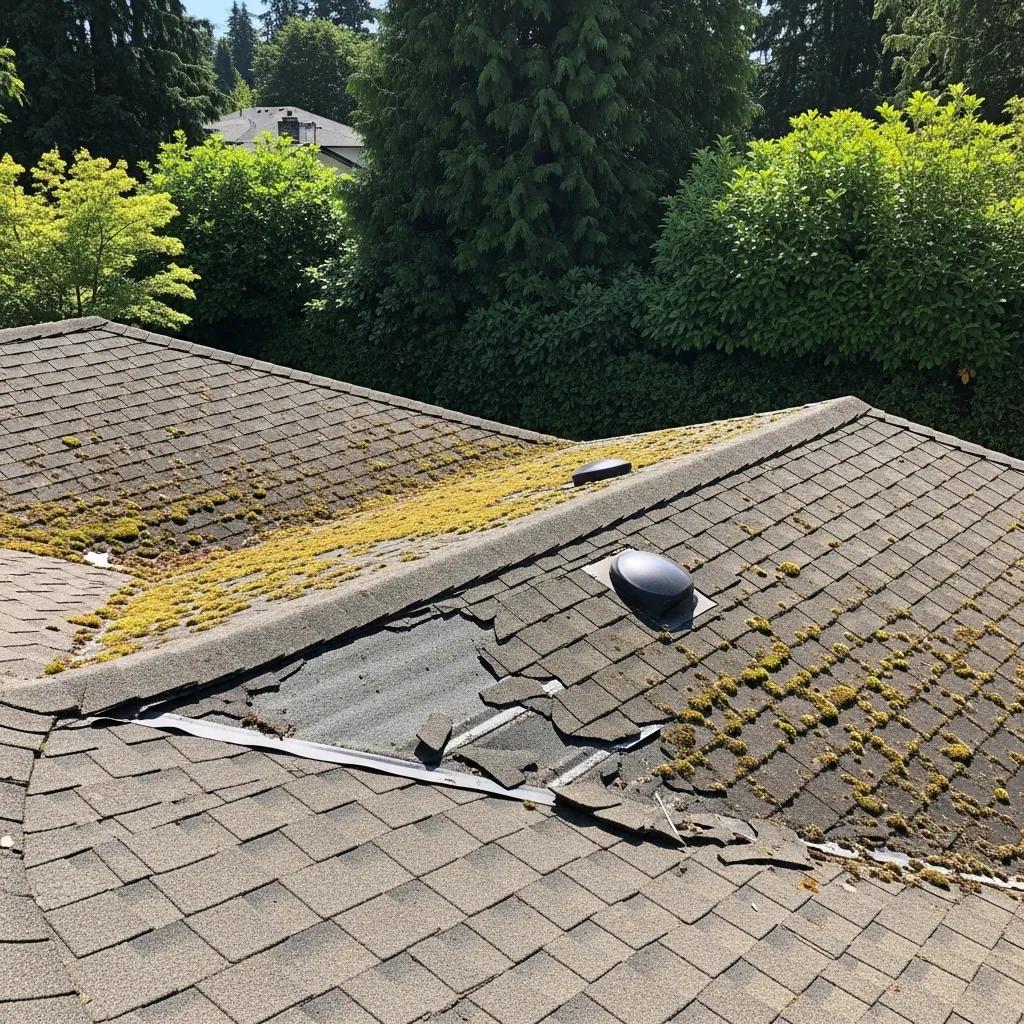
Top 5 Roof Issues in Bellevue Homeowners Should Watch for and Repair Promptly
Roof problems in Bellevue often stem from a mix of heavy seasonal rain, tree cover, and occasional wind-driven events that accelerate wear on common roof components; recognizing the most frequent issues early saves homeowners from costly secondary damage like ceiling collapse, mold, and framing rot. This guide explains the five roof problems Bellevue homeowners should watch for—roof leaks, shingle damage, moss growth, storm damage, and related maintenance gaps—and gives clear detection tips, immediate actions, and realistic next steps for repair or protection. You will learn how to spot interior and exterior leak signs, differentiate shingle wear that needs a patch versus full replacement, remove and prevent moss safely, and follow an emergency workflow after storms that preserves insurance options. Each section includes short checklists, comparison tables that map cause → sign → urgency, and practical photo ideas for documentation so you can confidently assess whether to diy a temporary fix or call a pro. Read on for targeted, Bellevue-specific guidance that links local climate drivers to practical homeowner steps and shows when a free inspection or an insurance-claims-ready estimate is the right next move.
What Are the Most Common Roof Leaks in Bellevue and How Can You Spot Them?
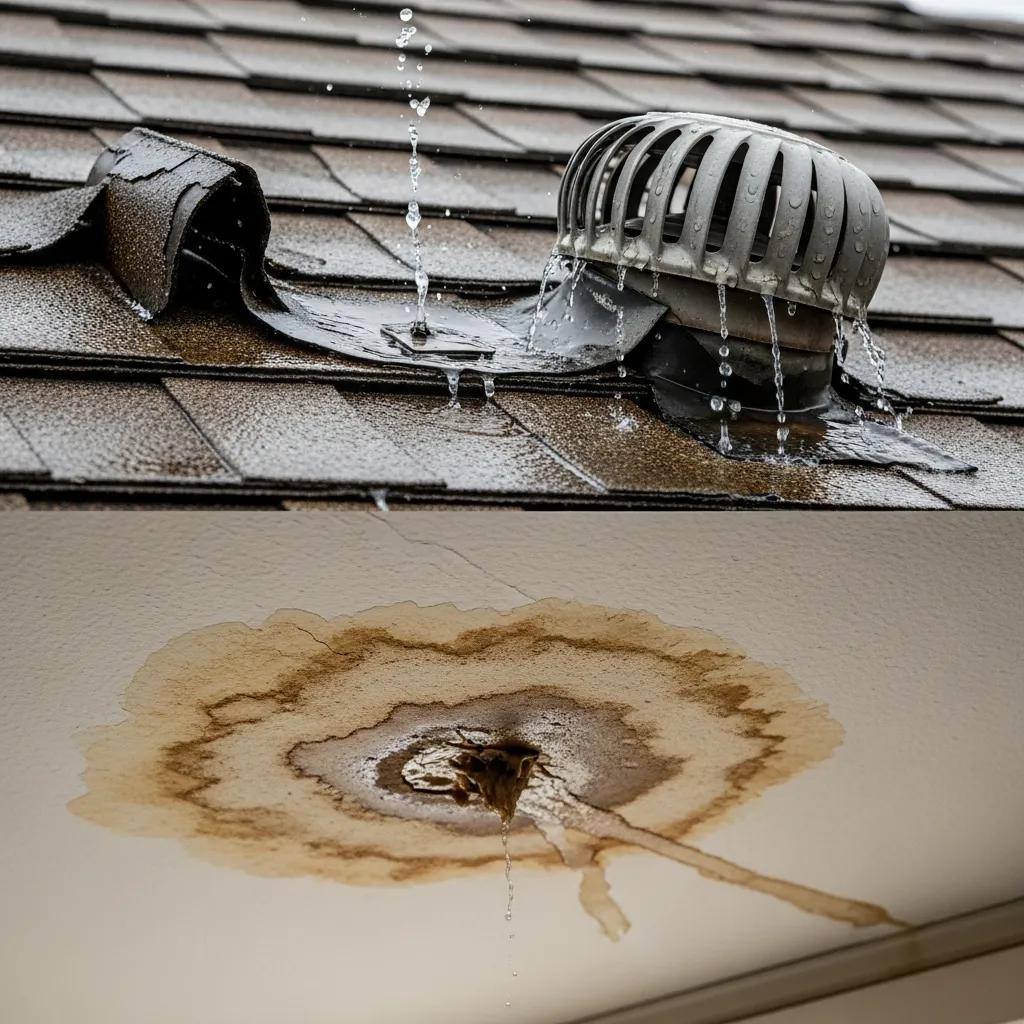
A roof leak starts when water breaches the weatherproofing layers—often at penetrations or aging flashings—and allows moisture into the attic or living space, leading to stains, mold, and structural compromise if unaddressed. In Bellevue’s wet climate, common leak sources include failing flashing around chimneys and skylights, deteriorated vent and pipe boots, valleys where runoff concentrates, and areas with missing or damaged shingles. Below is a quick comparison of typical leak sources, their most common signs, and the urgency level to help prioritize inspections and temporary protections.
Flashing (chimney/skylight)
Rust, cracked sealant, interior ceiling stains near roof penetration
High
Pipe/vent boots
Torn rubber collars, attic moisture around vents
Medium-High
Roof valleys
Pooled water, split shingles in valley, interior drip after rain
High
Shingle failures
Granules in gutters, lifted tabs, localized leaks
Medium
This shows where to focus visual checks on wet days and after storms; if you find rusted or cracked flashings, acting quickly reduces interior damage and limits insurance exposure. The next paragraphs list clear interior and exterior signs homeowners can spot without climbing onto a steep roof.
What Causes Roof Leaks in Bellevue Homes?
Roof leaks in Bellevue most often arise from a combination of material aging, installation weaknesses, and environmental stressors that exploit small failures over time. Repeated, heavy rain soaks underlayment edges and encourages moss and algae that pry up shingles; wind events can lift tabs and expose nail holes; and poor or shifted flashing around chimneys, skylights, and vents creates direct channels for water. In practice, a common scenario is a decades-old chimney flashing whose sealant failed after many wet winters, allowing water to track into attic insulation and show as ceiling stains; preventive flashing inspection and targeted repairs stop this progression. Understanding these causes helps homeowners prioritize inspections before small leaks become costly repairs.
What Are the Signs of a Roof Leak Inside and Outside Your Home?
Interior and exterior indicators of leaks provide both early warning and evidence for claims if you document them promptly and consistently. Inside, look for yellow or brown ceiling stains, peeling paint, sagging drywall, musty odors in the attic, and visible daylight or water trails through the roof sheathing. Outside, inspect gutters for excessive shingle granules, check for lifted, cracked, or missing shingles, look for rust or gaps around flashings, and note moss or debris collecting near penetrations that can trap moisture. Photograph each sign with a date and short caption—these images are essential for accurate repair estimates and insurance documentation, and they form the foundation for the immediate next step: temporary protection or a professional inspection.
For homeowners who detect any of the interior or exterior signs above and want to avoid further damage, it's appropriate to call a local roofing professional for a no-cost inspection and estimate. Roof Pros NW offers free inspections and consultations throughout the Central Puget Sound area and provides insurance-claims guidance and financing options, including deferred payment plans, to help prioritize repairs and limit out-of-pocket surprises. Scheduling a timely inspection preserves evidence for claims and helps determine whether a temporary tarp, targeted repair, or larger intervention is needed.
How Does Shingle Damage Affect Bellevue Roofs and When Should You Repair or Replace?
Shingle damage reduces a roof’s ability to shed water and resist wind uplift, and that loss of performance accelerates leaks and underlayment decay if left unrepaired; the result is decreased service life and higher replacement risk. In Bellevue, shingle failures commonly appear as missing or blown-off shingles, curling and edge lift from moisture cycles, and granule loss that exposes the mat beneath UV and abrasion. The brief table below maps common damage types to causes and practical short-term fixes or replacement triggers so homeowners can judge repair urgency and budget implications.
Missing shingles
Wind uplift, poor adhesion
Replace shingle(s); replace roof if >25% loss
Curling / edge lift
Age, moisture cycles
Reseal or replace affected area; consider deck inspection
Granule loss
UV wear, hail, aging
Patch small areas; replace when large exposed sections present
This comparison clarifies when patching extends life and when systemic wear justifies a full replacement; the next section explains specific local weather impacts that drive those thresholds.
What Types of Shingle Damage Are Common in Bellevue?
Locally, Bellevue roofs frequently suffer edge lift and granule shedding because persistent rain encourages moss and organic buildup at shingle edges, while occasional wind events dislodge weakened tabs. Missing or split shingles often appear along roof ridges and windward slopes after seasonal storms, and repeated wet-dry cycles cause asphalt shingles to lose adhesion and curl at the edges. For small, localized damage—single or a few shingles—repairing the affected shingles and ensuring proper sealing around flashings typically restores water resistance and delays replacement; however, broad granule loss across multiple slopes signals the end of useful life and should prompt budgeting for a full replacement.
How Does Bellevue Weather Impact Shingle Durability?
Bellevue’s maritime climate accelerates certain shingle degradation pathways: consistent moisture fosters moss and algae that lift shingles, wind events cause repeated uplift stress on nail bonds, and occasional hail or debris impacts create surface pitting or granule loss. Seasonal inspection timing matters: check after heavy autumn leaf fall and again after late-winter storms to catch early damage and clean gutters to prevent back-up. Proactive maintenance—trimming overhanging branches, clearing gutters, and replacing isolated damaged shingles—extends shingle life and reduces the likelihood of needing a full replacement.
When homeowners weigh repair versus replacement, consider three practical criteria: the area of active damage, the roof’s remaining expected life, and insurance coverage or financing options. Roof Pros NW can perform a free inspection to estimaterepair cost, discuss full-replacement planning, and explain available financing and insurance-claims assistance to help homeowners choose the most cost-effective path forward. A focused repair is usually best for isolated damage, while pervasive granule loss or widespread curling typically triggers replacement planning.
Why Is Moss Growth a Serious Problem for Bellevue Roofs and How Can You Remove It Safely?
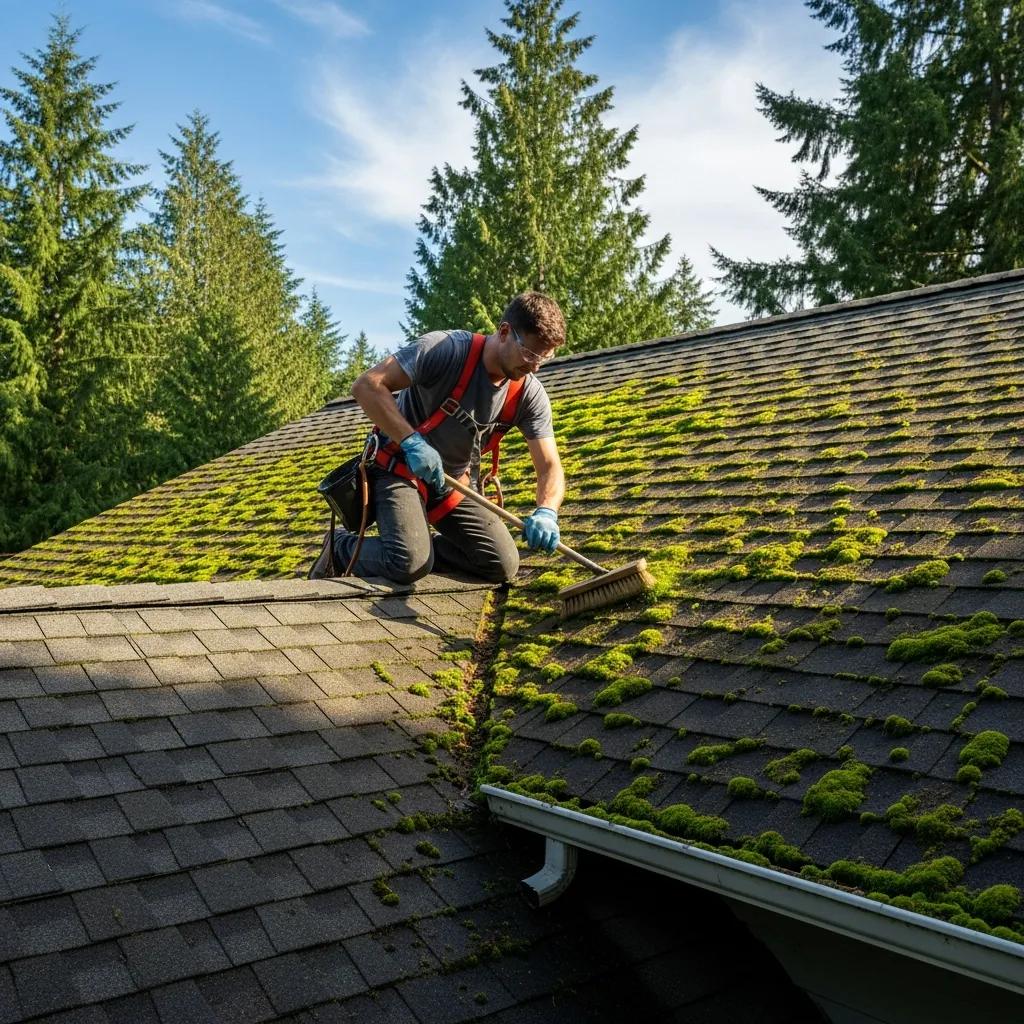
Moss thrives in Bellevue where shade and persistent moisture create a favorable environment, and when established it lifts shingles, traps water at the roof surface, and accelerates underlayment and decking rot—reducing the roof’s service life and increasing leak risk. Removing moss safely involves techniques that dislodge growth without stripping protective granules or damaging roof materials, and preventing reestablishment requires addressing shade, debris, and moisture-holding features. The following numbered steps summarize safe removal and prevention tactics suitable for do-it-yourself limits and when to seek professional help.
Gently remove loose moss with a soft brush from lower to upper slope to avoid lifting shingles.
Treat remaining growth with an approved, eco-friendlier moss-killing solution applied per product directions.
Improve drainage and sunlight by trimming overhanging branches and clearing gutters to reduce re-growth.
Avoid pressure washing on fragile shingles; hire professionals for steep or aged roofs to prevent damage.
Why Does Moss Thrive on Roofs in Bellevue’s Climate?
Bellevue’s wet, cool winters and abundant tree cover create long periods of roof surface moisture and shaded microclimates ideal for moss colonization. Organic debris—needles, leaves, and seed material—accumulates in valleys and gutters, providing a substrate that retains moisture against shingles and underlayment. Over time, moss roots and rhizoids pry at shingle edges and hold water through dry spells, sustaining a cycle of decay that shortens shingle life and increases leak risk. Addressing the ecological drivers—sunlight, debris, and moisture—reduces the local conditions that favor moss establishment.
What Are Safe and Effective Moss Removal and Prevention Methods?
Safe moss removal balances effectiveness with preservation of shingle integrity: use low-pressure brushing and targeted chemical treatments formulated for roofs, and avoid high-pressure washing that strips granules and damages the felt. For steep slopes, older roofs, or heavy infestations, hire a professional service that uses low-impact methods and follows safety protocols; professionals also document the condition for insurance purposes if water damage is discovered. Preventive measures—regular gutter cleaning, trimming trees for better sunlight, and installing zinc or copper strips at ridgelines where appropriate—help keep moss from returning and protect roof investment over time.
If moss removal or prevention exceeds safe DIY limits, consider professional moss removal and long-term prevention services from a local provider. Roof Pros NW provides safe removal options, preventive maintenance plans, insurance-claims guidance when moss-related leaks cause interior damage, and financing choices to spread cost—helping homeowners address both immediate risks and long-term protection while maintaining safety and insurance documentation.
How Can Storm Damage Affect Your Bellevue Roof and What Steps Should You Take After a Storm?
Storms can cause a range of roof damage—from discrete missing shingles and dented metal to compromised flashings and punctured skylights—and prompt action after a storm preserves evidence for insurance claims and prevents progressive water damage. Immediate homeowner steps are inspect, document, provisionally protect, and contact professionals; the following emergency table maps typical storm damage signs to recommended immediate homeowner actions and typical professional next steps so you can prioritize responses that minimize interior harm.
Missing or torn shingles
Photograph, clear safe debris, cover interior if leaking
Detailed inspection, targeted shingle replacement or temp tarping
Damaged flashing or vents
Document, place buckets under drips, avoid attic disturbance
Replace flashing, secure penetrations, check underlayment
Punctures or sagging decking
Evacuate area if large leak, document fully
Emergency tarping, structural assessment, moisture mitigation
This emergency framework clarifies what to do in the first 48 hours after a storm; quick documentation and temporary protection retain claim integrity and reduce secondary damage. The next section lists practical signs to look for and how to document them effectively.
What Are the Common Signs of Storm Damage on Bellevue Roofs?
After strong winds or hail, inspect for missing or split shingles, dented metal flashing, cracked vents, displaced gutters, and accumulated debris that can puncture the roof membrane; inside, watch for sudden ceiling stains or new attic moisture. Photograph damage from ground level where safe and take close-ups of exposed nail heads, split tabs, and any interior water staining with a ruler or object for scale. Accurate timestamps and short captions like “ridge north slope, 12/05/2024” help insurers and contractors evaluate severity and sequence of events. Documenting both macro and micro signs ensures any temporary repairs or full replacements are backed by clear evidence.
How Do You Get Emergency RoofRepair and Insurance Help in Bellevue?
Start by documenting all visible damage with dated photos and short video walkthroughs, then take temporary measures such as placing buckets under active drips and covering exposed interior areas; avoid improvised fixes that might void insurance coverage. Contact your insurer to report the loss and ask about preferred documentation; meanwhile, seek a professional emergency inspection to evaluate tarping needs and to produce an estimate that aligns with claim requirements. Local specialists can provide emergency tarping, rapid mitigation, and insurance-claims guidance—Roof Pros NW offers emergency repair services, claims assistance, free inspections, and financing options to bridge the gap between immediate protection and permanent repair or replacement, helping homeowners recover with less stress and clearer next steps.
Document damage with photos and video from multiple angles.
Protect the interior with temporary covers and dehumidification if needed.
Contact insurer to report and confirm documentation needs.
Request a professional inspection and a claims-ready estimate.
These numbered steps form a concise checklist to preserve safety, evidence, and coverage while professionals arrange temporary and permanent repairs.
Frequently Asked Questions
What should I do if I notice a roof leak in my Bellevue home?
If you detect a roof leak, it's crucial to act quickly to minimize damage. Start by documenting the leak with photos and noting the location and any visible signs, such as stains or moisture. If safe, place buckets to catch dripping water and protect your interior. Contact a local roofing professional for a thorough inspection and repairestimate. Roof Pros NW offers free inspections and can guide you through the repair process, ensuring you maintain your insurance coverage.
How often should I inspect my roof for damage?
In Bellevue, it's advisable to inspect your roof at least twice a year, ideally in the spring and fall. Additionally, conduct inspections after severe weather events, such as heavy rain or storms. Look for signs of wear, such as missing shingles, moss growth, or damaged flashing. Regular inspections help catch issues early, allowing for timely repairs that can extend the life of your roof and prevent costly damage down the line.
Can I remove moss from my roof myself?
Yes, you can remove moss from your roof yourself, but it requires caution to avoid damaging shingles. Use a soft brush to gently dislodge loose moss, working from the lower slope upwards. Avoid pressure washing, as it can strip protective granules. If the infestation is severe or your roof is steep, consider hiring a professional service that specializes in safe moss removal and can also provide preventive maintenance to keep moss from returning.
What are the risks of ignoring roof damage?
Ignoring roof damage can lead to severe consequences, including leaks, mold growth, and structural damage. Water intrusion can compromise insulation and framing, leading to costly repairs. Additionally, prolonged exposure to moisture can create health hazards due to mold. Ignoring minor issues can escalate into major problems, resulting in a need for a full roof replacement. Regular maintenance and prompt repairs are essential to protect your home and investment.
How can I prepare my roof for winter weather in Bellevue?
To prepare your roof for winter weather, start by clearing gutters of debris to ensure proper drainage. Inspect for loose or damaged shingles and replace them as needed. Trim overhanging branches to prevent them from falling on your roof during storms. Consider applying a moss prevention treatment if you have a history of moss growth. Finally, schedule a professional inspection to identify any potential issues that could worsen during winter conditions.
What should I include in my roof maintenance plan?
A comprehensive roof maintenance plan should include regular inspections, cleaning gutters, removing debris, and checking for signs of damage such as missing shingles or moss growth. Schedule professional inspections at least twice a year and after severe weather. Document all maintenance activities and repairs, as this information can be valuable for insurance claims. Additionally, consider preventive treatments for moss and algae to extend the life of your roof.
How do I choose a reliable roofing contractor in Bellevue?
Choosing a reliable roofing contractor involves several steps. Start by researching local companies and reading reviews from previous customers. Verify their licensing and insurance to ensure they are qualified to perform the work. Ask for references and check their portfolio of completed projects. Obtain multiple estimates to compare pricing and services. Finally, choose a contractor who communicates clearly and provides a detailed written contract outlining the scope of work and warranty information.


