Concrete Flat Roof Pros and Cons: A Comparison With Built-Up Roofing
When it comes to flat roofs, two options often stand out: concrete flat roofs and built-up roofing systems. Both are designed to provide reliable protection, but their unique characteristics make them suited for different needs. If you’re managing a commercial property, upgrading your home’s flat roof, or simply exploring roofing options, understanding the pros and cons of these systems is crucial for making a decision that fits your goals and budget.
Concrete flat roofs are renowned for their durability, often lasting over 50 years when properly installed and maintained. Their solid structure can handle heavy loads and provides excellent thermal mass, which can help with insulation. However, their weight requires robust structural support, and hidden maintenance cycles, like replacing underlayment membranes every 15–20 years, can add unexpected long-term costs.
On the other hand, built-up roofing systems offer a lightweight, water-resistant alternative. Composed of multiple waterproof layers, these systems are typically more affordable upfront and can be a great choice for buildings where weight is a concern. But while they excel in water resistance and lower initial costs, they may require more frequent repairs over time, potentially impacting durability and overall value.
For property owners and managers in the Pacific Northwest, where heavy rain, moisture, and moss growth are constant challenges, choosing the right flat roofing system can protect against costly water damage and extend the life of your roof. Whether it’s a concrete flat roof with its unmatched longevity or a built-up roof with its proven water resistance, recognizing the strengths and limits of each system ensures you make a smarter decision.
In this article, we’ll dive deeper into the technical details of concrete flat roof pros and cons compared to built-up roofing systems. You’ll learn about installation complexities, structural requirements, durability, energy efficiency, and cost factors to help you choose a roofing solution tailored to your property’s unique needs.
Concrete flat roofs and built-up roofing systems are two popular options for flat roof structures, each offering unique advantages and challenges. Understanding their differences in durability, cost, maintenance, and installation needs can help property owners choose the best roofing solution for their specific requirements. These key takeaways highlight the most essential points to consider before deciding between these two flat roof types.
- Concrete flat roofs offer unmatched structural durability: They can last 50+ years, making them a long-term investment, but their weight requires proper structural support during installation.
- Built-up roofing systems provide proven water resistance: These roofs feature multiple waterproof layers and are often more affordable upfront compared to concrete flat roofs.
- Hidden maintenance cycles can affect concrete flat roofs: The underlying water-resistant membrane typically requires replacement every 15-20 years, which adds periodic maintenance costs.
- Weight considerations matter for both systems: Concrete flat roofs are significantly heavier and may need reinforcements; built-up roofs are lighter but might not withstand heavy loads as well.
- Cost comparisons depend on multiple factors: Concrete flat roofing has higher installation costs, while built-up roofing offers a balance of affordability and durability, but may require more frequent repairs over time.
- Professional inspections are essential for both options: Regular roof inspections can detect issues like membrane deterioration, leaks, or structural concerns early to avoid expensive repairs.
- Energy efficiency differs based on materials used: Concrete flat roofs provide natural thermal mass for insulation, while built-up roofs may rely on additional layers or coatings to improve energy performance.
By understanding the strengths and challenges of concrete and built-up flat roofs, property owners can make informed choices that meet their building needs and long-term goals. Dive into the main article for a detailed comparison and expert insights from Roof Pros NW.
Concrete Flat Roofs: Benefits and Challenges
Concrete flat roofs are known for their strength and durability. These roofs are common on commercial buildings but are also an option for residential properties. Understanding their unique advantages and challenges is essential for property owners evaluating this roofing system.
Benefits of Concrete Flat Roofs
- Exceptional Durability: Concrete flat roofs are highly resistant to fire, pests, and severe weather conditions. Their lifespan can exceed 50 years with proper maintenance, making them a long-term investment.
- Thermal Mass and Energy Efficiency: Concrete has excellent thermal mass, meaning it can help stabilize indoor temperatures by absorbing heat during the day and releasing it at night. This can lead to lower heating and cooling costs over time.
- Structural Strength: These roofs can support heavy loads, including HVAC units, solar panels, and green roofing systems, which can be appealing for energy-conscious or eco-friendly property owners.
- Customizable Options: Concrete roof tiles can be combined with waterproof coatings or insulation layers to improve energy efficiency and water resistance.
Challenges of Concrete Flat Roofs
- Significant Weight: One of the biggest challenges of concrete flat roofing is its weight. This roofing system requires substantial structural reinforcement to handle the heavy load, especially in older buildings. Property owners must account for the added cost of engineering and installation.
- Waterproofing Maintenance: Although concrete is water-resistant, it is not entirely immune to water damage. Over time, cracks can develop, allowing water to seep through. A water-resistant underlayment membrane is necessary to prevent leaks, but this layer requires regular inspections and eventual replacement.
- Higher Upfront Costs: Concrete flat roofs are more expensive to install compared to other flat roof systems due to the labor-intensive process and material costs. However, their durability and low maintenance needs may offset this expense over time.
- Slower Installation Process: Concrete flat roof installation can take longer than other systems because of the need for structural preparation, curing time, and waterproof coating applications.
Regional Considerations
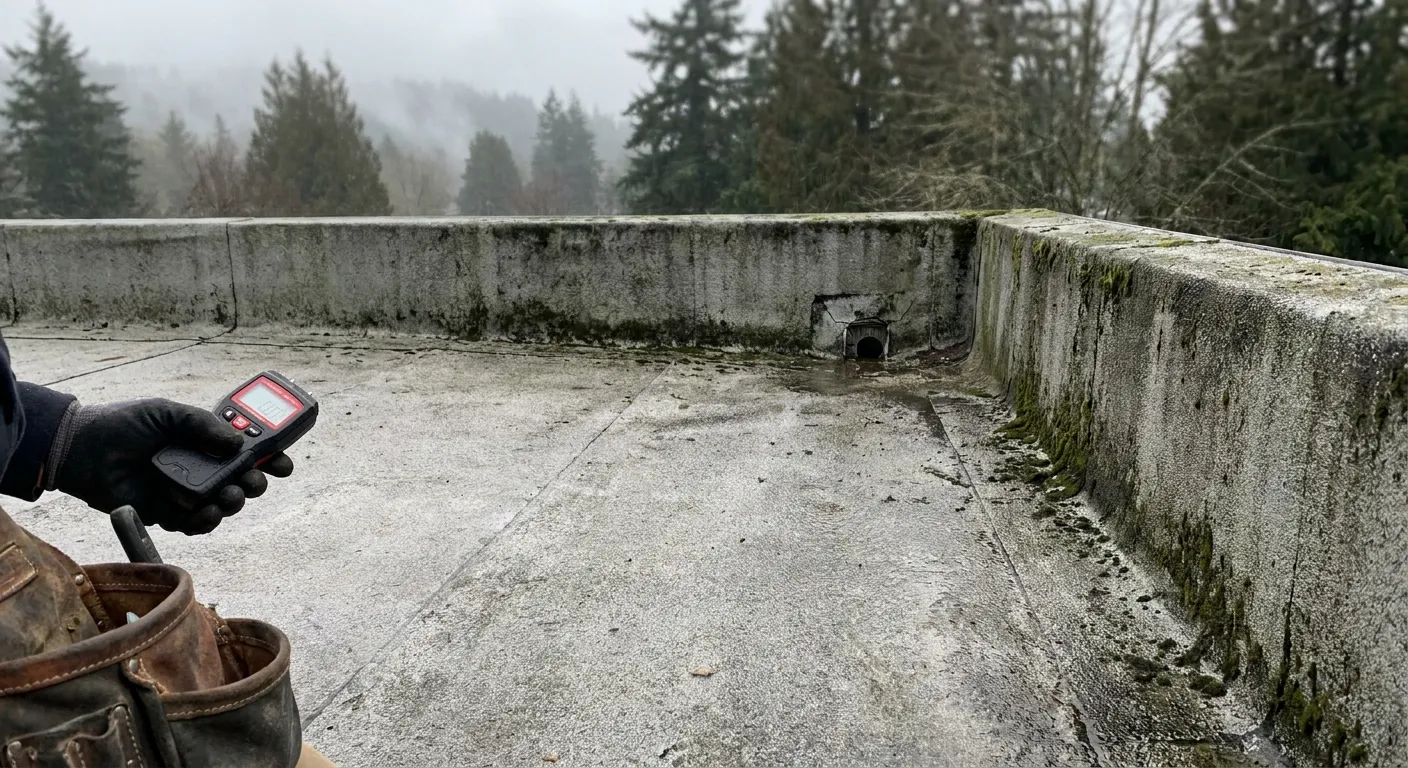
For property owners in the Pacific Northwest, rain and moisture are critical challenges. Concrete flat roofs must be expertly sealed to withstand heavy rainfall and prevent moss growth. Periodic cleaning and reapplying sealant can keep the roof in top shape throughout the wet season.
Built-Up Roofing Systems: Benefits and Challenges
Built-up roofing (BUR), often referred to as “tar and gravel” roofs, has been a popular flat roofing option for over a century. This system uses multiple layers of bitumen, roofing felt, and gravel for durability and waterproofing.
Benefits of Built-Up Roofing Systems
- Proven Water Resistance: The layered design creates an effective barrier against water infiltration, making it ideal for regions with heavy rainfall like the Pacific Northwest. The top gravel or reflective coating also protects against UV rays.
- Cost-Effective Installation: Built-up roofing systems are generally less expensive to install than concrete flat roofs. Their materials are widely available, which helps keep costs reasonable.
- Ease of Repairs: Repairing BUR systems is straightforward, as small cracks or leaks can be patched without replacing entire sections. This makes maintenance less expensive over the life of the roof.
- Versatility in Applications: BUR systems can accommodate minor structural movement, making them suitable for various building types.
Challenges of Built-Up Roofing Systems
- Shorter Lifespan: While durable, built-up roofing systems typically last between 15 to 30 years, depending on maintenance and environmental conditions. This lifespan falls short of the durability offered by concrete flat roofs.
- Heavier Build Than Other Membranes: Though lighter than concrete, built-up roofing systems still require buildings to handle additional weight from the multiple layers of bitumen and gravel. Some structural reinforcement may be necessary.
- Maintenance for Gravel Layer: The gravel topcoat used to protect against UV and weather damage can degrade or shift over time, requiring homeowners to redistribute or replace the top layer periodically.
- Vulnerability to Moss Growth: In the Pacific Northwest’s damp climate, the gravel surface can collect moisture, which encourages moss growth. Annual roof moss removal is critical to prevent long-term damage.
Cost Comparison: Concrete Flat Roof vs. Built-Up Roofing
Understanding cost differences is key to choosing between a concrete flat roof and a built-up roofing system.
Upfront Costs
- Concrete Flat Roofs: The initial cost of a concrete flat roof is significantly higher due to the need for structural reinforcement, specialized labor, and materials like concrete roof tiles or waterproof coatings.
- Built-Up Roofing Systems: BUR systems are more affordable upfront, with costs influenced primarily by the thickness of the bitumen layers and gravel or reflective coating options.
Long-Term Costs
- Concrete Flat Roofs: Although the initial investment is high, concrete flat roofing tends to require less frequent repairs. However, replacement or repair of the underlayment membrane can significantly impact long-term budgets.
- Built-Up Roofing Systems: Maintenance, such as redistributing gravel and patching small leaks, should be anticipated every few years. Over time, these smaller costs can add up, particularly in wet climates.
For property owners with strict budget constraints, built-up roofing systems may be more appealing due to lower upfront costs. However, choosing a concrete flat roof could result in fewer long-term expenses.
Maintenance Considerations
Both concrete flat roofs and built-up roofing systems require regular maintenance, especially in the Pacific Northwest’s wet and moss-prone climate. However, their maintenance needs differ significantly.
Maintaining a Concrete Flat Roof
- Sealant Checks and Repairs: Property owners should inspect the waterproof coatings and underlayment membrane annually. Cracks in the concrete must be sealed promptly to prevent leaks.
- Moss Prevention: Due to moisture retention in the region, applying moss inhibitors and routine cleaning is essential to prevent moss buildup, which can compromise waterproofing.
- Professional Inspections: Hiring a professional for regular inspections of structural integrity and waterproofing helps prolong the roof’s lifespan. Explore Roofing Services with Roof Pros NW to schedule an inspection.
Maintaining a Built-Up Roof
- Gravel Redistribution: Over time, gravel layers can shift due to wind, rain, and foot traffic. Redistributing gravel periodically helps protect the roofing membrane from UV and weather damage.
- Patch Repairs: Addressing small cracks or holes promptly ensures the layered system stays watertight.
- Moss Removal: Like concrete roofs, moss grows easily on built-up surfaces. Annual roof moss removal helps reduce the risk of leaks caused by trapped moisture.
Both systems benefit from proactive maintenance and routine inspections. Roof Pros NW offers expert flat roof maintenance for Pacific Northwest property owners.
How to Choose the Right Flat Roof for Your Property
When deciding between a concrete flat roof and a built-up roofing system, consider the following factors:
- Budget: For lower upfront costs, built-up roofing is a more accessible choice. Property owners with higher budgets and a focus on long-term savings may prefer concrete.
- Climate: In the Pacific Northwest, both systems are suitable if maintained properly. However, BUR systems require moss control more frequently due to their gravel topcoat.
- Load Capacity: Concrete flat roofs are better suited for buildings that need to support heavy equipment, green roofs, or solar panels.
- Longevity: Concrete flat roofing offers a lifespan of up to 50 years, while built-up systems typically last 15 to 30 years.
To ensure durability and proper installation, work with a professional roofer. Roof Pros NW is experienced in flat roof installation and repair, providing expert guidance tailored to Pacific Northwest properties.
Both concrete and built-up flat roofs have their strengths and challenges. Evaluating your building’s needs and consulting with roofing professionals will help you make the right decision for your property.
Get a Free Roof Leak Inspection Today
If you’re dealing with a leaking roof, acting quickly is essential to prevent further damage. Roof Pros NW is here to help with our professional roof leak inspection and repair services. Don’t let a small leak turn into a big problem—schedule your inspection today and let our experts handle the rest.
Here’s why our roof leak inspection service is the right choice for your home:
- Thorough inspections to identify even the smallest leaks that can cause major damage.
- Expert guidance on repair options to fit your budget and needs.
- Fast response times so you can address leaks before they worsen.
- Protect your home from water damage, mold, and structural issues.
- Enjoy peace of mind knowing your roof is in trusted hands.
Don’t wait to address that leak—our schedule fills up quickly! Let Roof Pros NW help safeguard your home today.
Schedule your roof leak inspection now.
Conclusion
Choosing the right flat roof system involves understanding the unique benefits and challenges of each option. Concrete flat roofs are highly durable, provide excellent structural strength, and offer long-term energy efficiency. However, they come with higher upfront costs, significant weight, and a need for careful waterproofing maintenance. On the other hand, built-up roofing systems provide reliable water resistance, cost-effective installation, and ease of repairs, but they have a shorter lifespan and require regular attention to gravel and moss control.
For properties in the Pacific Northwest, considering the region’s wet climate is essential. Both roofing systems perform well with proper care, but frequent inspections and maintenance steps like moss removal, gravel redistribution, and sealant checks are critical to ensuring their longevity. With careful planning, either option can protect your property against rain, moisture, and environmental wear.
To make an informed choice, evaluate factors such as your budget, project timeline, long-term plans, and the roof’s load requirements. While built-up systems are a suitable choice for those looking to minimize upfront costs, concrete flat roofs may be best for those prioritizing strength and longevity.
Taking the next step is simple. Scheduling a professional roof inspection ensures your building’s structure and roofing needs are understood before making a decision. At Roof Pros NW, we offer expert guidance and installation services tailored to the demands of the Pacific Northwest climate. Whether you need help with flat roof maintenance or are ready to explore flat roof installation, our team is here to assist.
Protect your property with a roofing solution built to last. Contact Roof Pros NW today to take the next step toward a durable and well-maintained flat roof.
FAQs
How much does a professional roof inspection cost in 2026 for a flat or commercial roof?
The cost of a professional roof inspection in 2026 for a flat or commercial roof varies depending on factors like roof size, complexity, and location. A thorough inspection can identify potential issues early, saving money in the long run. Contact Roof Pros NW for an estimate tailored to your specific needs.
Is it worth paying for a certified paid inspection instead of accepting a free inspection from a contractor?
A certified paid inspection often provides a more detailed analysis from an unbiased professional. This can uncover hidden issues that may be overlooked in a free inspection, which might be more sales-focused. Consider the value of detailed insights when deciding, and contact Roof Pros NW for quality inspections.
What should I ask before hiring a roofing contractor to ensure they’re trustworthy and fairly priced?
Before hiring a roofing contractor, ask about their licensing, insurance, years of experience, and references. Request a detailed written estimate and inquire about warranties on materials and labor. Check online reviews and ensure they have good communication. Contact Roof Pros NW for transparent and reliable service.
How do roofing contractors determine pricing for roof replacement versus repair?
Roofing contractors determine pricing based on factors like roof size, material type, extent of damage, and labor required. Replacement often involves more materials and labor than repairs. Contact Roof Pros NW for a detailed assessment and personalized quote.
Is roof moss removal worth the cost for properties in the Pacific Northwest with flat roofing systems?
Roof moss removal is vital in the Pacific Northwest due to the wet climate, which encourages moss growth that can damage roofing materials. Regular removal prevents leaks and extends roof life. Contact Roof Pros NW for professional moss removal services.
