Pros and Cons of Flat Roof Homes: What Homeowners Should Know
Flat roof homes stand out with their sleek, modern designs and versatile spaces, offering a unique blend of architectural style and practicality. From creating rooftop gardens to finding extra room for HVAC systems, flat roofs can transform how you use and enjoy your home. But for homeowners, especially in the Pacific Northwest, flat roofs come with specific challenges that can’t be overlooked. The area’s heavy rainfall and long wet seasons can put this type of roofing to the test, making proper maintenance and material choices essential to protecting your investment.
Why does this matter? A roof’s main job is to shield your home from the elements, and flat roofs require careful planning to handle everything from water pooling to moss growth. Neglecting drainage systems or skipping routine inspections can reduce their lifespan and lead to costly repairs. On the flip side, with the right materials and proactive care, flat roofs can be energy efficient, visually stunning, and functional in ways that pitched roofs often can’t match.
If you’re considering a flat roof for your home, this guide will walk you through the pros and cons of flat roof homes. You’ll learn about their advantages, like maximizing usable space and boosting curb appeal, as well as their disadvantages, such as drainage concerns and maintenance demands in a wet climate. Whether you’re drawn to their modern aesthetic or evaluating their practicality, understanding these factors will help you decide if a flat roofing system is the right fit for your home in the Pacific Northwest.
Flat roofs provide a modern and functional design, but they come with unique challenges that homeowners should consider, especially in the Pacific Northwest. These key takeaways explore the architectural benefits, practical downsides, and maintenance necessities for flat roof homes, with a special focus on their performance in wet and rainy climates.
- Flat roofs offer modern aesthetics and usable space: They create a sleek architectural design and can provide extra space for rooftop patios, gardens, or HVAC systems.
- Drainage challenges require proactive planning: Flat roofs are prone to water pooling and rely on specialized drainage systems, which must be regularly inspected and cleaned, especially in the rainy Pacific Northwest.
- Heavy rainfall can accelerate wear and tear: The PNW’s wet climate can shorten a flat roof’s lifespan if routine maintenance, including moss removal, isn’t prioritized.
- Maintenance intervals may differ from general advice: Standard recommendations for flat roofs may not address the higher maintenance frequency required to prevent moisture problems in the PNW.
- Roofing materials matter for durability: Membrane options like TPO or EPDM are popular for flat roofs, but homeowners should choose materials designed to handle high moisture and resist moss growth.
- Flat roofs can be energy efficient when designed properly: High-quality insulation and reflective coatings can help reduce energy costs, making them a sustainable option for some homeowners.
- Cost considerations aren’t just about installation: While flat roofs may be cheaper to install, long-term maintenance and potential repairs can offset initial savings.
- Inspections are critical for catching hidden problems: Scheduling regular professional inspections can help identify drainage issues, leaks, or material degradation before they lead to major damage.
With these key points in mind, the rest of the article will dive deeper into the pros and cons of flat roof homes, explain how they perform in the Pacific Northwest, and guide homeowners in deciding if this unique roofing style is the right choice for their property.
The Aesthetic and Architectural Benefits of Flat Roof Homes
Flat roof homes bring a unique aesthetic appeal that continues to grow in popularity. Their sleek, modern look pairs perfectly with minimalist and contemporary architectural styles. Beyond their aesthetic value, flat roofs offer incredible design flexibility, making them a preferred choice for creative homeowners and those wanting to maximize space.
Space Utilization: Maximize Functionality with Flat Roofs
One of the biggest advantages of flat roofs is their ability to transform unused space into functional areas. Because of the flat surface, homeowners can easily convert their roof into a:
- Rooftop patio: Perfect for creating an outdoor entertainment area or a relaxing retreat, complete with seating and other furnishings.
- Rooftop garden: Ideal for urban areas where yard space may be limited, bringing a touch of greenery to your home.
- Solar panel installation site: Flat roofs make it easier to install solar panels in a way that maximizes sun exposure while maintaining aesthetics.
- Storage space: For homes that need additional storage, flat roofs can accommodate HVAC units or other mechanical systems without obstructing views or crowding interior spaces.
This practicality is particularly valuable in densely populated areas where every square foot matters.
Enhancing Curb Appeal with Modern Designs
Flat roof homes are well-known for their striking curb appeal. Their clean lines and minimalist shapes create a refined, modern look that stands out in many neighborhoods. From mid-century modern homes to contemporary designs, flat roofs blend seamlessly into the latest architectural trends.
Flat roof designs also allow for customizations such as overhangs, parapet walls, and unique structural layouts. These homes have become synonymous with innovation and style, providing endless possibilities to architects and homeowners alike. For more inspiration on modern roofing styles, learn about materials and modern roofing styles.
Flat Roof Disadvantages That Homeowners Should Consider
While flat roofs have their perks, they also come with practical challenges, especially in regions like the Pacific Northwest. From drainage problems to the effects of heavy rainfall, it’s essential to weigh the drawbacks before making a decision.
Drainage Challenges and Water Pooling Concerns
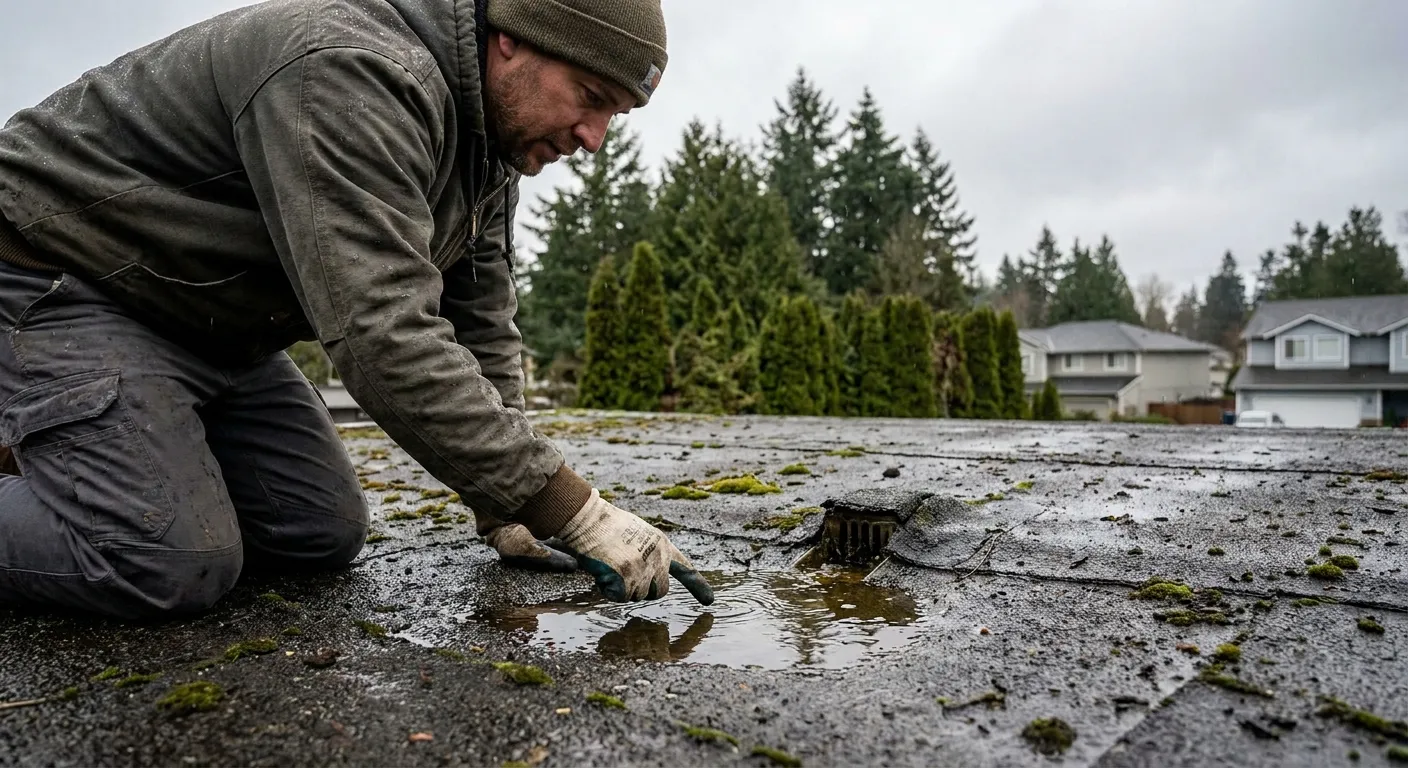
A common misconception is that flat roofs are completely level. In reality, they are designed with a slight slope to guide water toward drains. However, if your flat roofing system does not have adequate drainage systems or suffers from clogs, water pooling can become a significant issue.
Water pooling increases the risk of leaks, weakens the roofing material, and shortens the lifespan of your roof. Preventing these issues requires a combination of proper design, regular maintenance, and debris removal. Investing in frequent roof inspections can catch problems early. For expert help addressing drainage concerns, check out Roof Pros NW’s roof leak repair services in Bellevue.
How Rain and Moss Growth Accelerate Wear
In the Pacific Northwest, where wet seasons dominate much of the year, moss growth can quickly become a problem on flat roofs. The constant moisture creates a breeding ground for moss and algae, which can damage roofing materials and increase the likelihood of leaks.
To combat these issues, homeowners should ensure their flat roofs are equipped with waterproof membranes and schedule routine moss removal. For practical advice, explore seasonal roof maintenance tips for Bellevue homeowners.
Roofing Material Options for Flat Roof Systems
Choosing the right roofing material is critical for the longevity and performance of flat roofs, particularly in areas with heavy rain and fluctuating temperatures. Below are some of the most common materials for residential flat roofs.
Choosing the Right Material for Wet Weather
Some of the most durable flat roof materials include:
- TPO (Thermoplastic Polyolefin): Known for its energy efficiency and resistance to UV light, TPO is a popular choice. Its seamless installation minimizes the risk of leaks.
- EPDM (Ethylene Propylene Diene Monomer): A rubber roofing material that’s especially effective at resisting weather-related wear, making it a top contender for rainy regions.
- Modified Bitumen: This material is great for added durability because of its layered installation, but it may require more maintenance.
Each material offers varying levels of water resistance, cost, and energy efficiency, so it’s important to evaluate your specific needs. To understand how these options fare in wet weather, explore more about roofing materials in Redmond.
How Insulation and Coatings Boost Energy Efficiency
Flat roofs provide an excellent opportunity to improve your home’s energy efficiency. Reflective roof coatings and enhanced insulation layers can help regulate indoor temperatures, reducing the need for excessive heating or air conditioning. These features are particularly beneficial during the Pacific Northwest’s seasonal temperature shifts, helping homeowners lower energy costs while staying comfortable year-round.
Maintenance Requirements of Flat Roofs
Flat roofs require more maintenance than pitched roofs because of their structural design and exposure to the elements.
What Does Routine Flat Roof Maintenance Involve?
Homeowners with flat roofs should plan for regular maintenance, including:
- Clearing debris: Leaves, branches, and dirt can clog drainage systems, leading to water pooling.
- Inspecting membranes and flashing: Look for signs of cracks or separation in the materials to ensure water stays out.
- Removing moss and algae buildup: Especially critical in wet climates, as moss can degrade materials and cause leaks.
- Checking for leaks: Even small leaks can escalate if left unresolved, leading to costly repairs.
Why Frequent Inspections Are a Must in the Rainy Pacific Northwest
In the Pacific Northwest’s damp climate, frequent roof inspections are essential. Heavy rainfall can exacerbate any existing vulnerabilities, making it critical to identify problems before they worsen. A professional inspection provides peace of mind and ensures your roof stays in good condition. To schedule an inspection, contact Roof Pros NW.
Cost Considerations: Upfront Savings vs Long-Term Expenses
Flat roof systems often provide financial benefits upfront but may require increased maintenance costs over time.
Installation Costs Compared to Pitched Roofs
Flat roofs are typically less expensive to install than their pitched counterparts due to their simpler construction. They require fewer materials, and installation is usually quicker.
Long-Term Upkeep and Repair Expenses
Over time, the costs of maintaining and repairing flat roofs can add up. Frequent inspections, drainage system maintenance, and potential water damage repairs can make flat roofs more expensive in the long run compared to pitched roofs. Understanding these long-term expenses is essential to budgeting for your home’s needs. To learn what goes into a flat roof installation, see what to expect during roof installation.
Lifespan and Durability of Flat Roof Systems
With proper care, flat roofs can last 15–30 years, depending on materials and maintenance.
Factors That Impact the Lifespan of Residential Flat Roofs
Key factors that influence a flat roof’s longevity include:
- UV exposure: Prolonged sunlight can degrade certain materials, necessitating reflective coatings.
- Water pooling and drainage efficiency: Poor drainage shortens a roof’s lifespan significantly.
- Moss buildup: As with water pooling, moss growth accelerates wear on materials.
Prolonging Roof Life Through Maintenance and Repairs
Timely repairs and routine maintenance are crucial. Simple actions such as clearing gutters, repairing leaks, and replacing damaged sections go a long way in extending the durability of your flat roof system. For more on how to protect your flat roof effectively, read about the role of gutters.
Is a Flat Roof Home Right for You?
Determining whether a flat roof is right for your home depends on your budget, preferred style, and tolerance for maintenance. Use this checklist to decide:
- Do you value outdoor living spaces like rooftop patios or gardens?
- Are you comfortable with more frequent maintenance and inspections?
- Can your budget cover potential long-term repair expenses?
- Do you live in an area where flat roofs are architecturally fitting?
To find a roofing contractor who can guide you through the decision-making process, learn how to choose the best roofing company in Bellevue.
Schedule Your Professional Roof Leak Inspection Today
A roof leak can escalate quickly, causing water damage and costly repairs if left unattended. Spotting the signs early is crucial, but expert help ensures the issue is resolved thoroughly and efficiently. Roof Pros NW is here to provide a comprehensive roof leak inspection to protect your home and restore peace of mind.
When you schedule with us, you’ll benefit from:
- Prompt and detailed inspections to identify leaks at their source
- A team of trained roofing professionals with extensive experience
- Honest assessments and practical repair solutions tailored to your needs
- Expert advice to prevent future leaks and weatherproof your roof
- Competitive pricing and transparent communication throughout
Leak issues don’t wait—why should you? Protect your home from further damage by letting us address the problem today. Book your appointment now through our convenient online scheduling tool. Let Roof Pros NW take care of your roof so you can focus on what matters.
Conclusion
Flat roof homes offer exciting possibilities for homeowners who value modern aesthetics and creative space utilization. From rooftop patios and gardens to solar panel installations, flat roofs redefine functionality while complementing contemporary architectural styles. They also enhance curb appeal with sleek designs and customizable features, making them an attractive option for those seeking innovative home solutions.
However, flat roofs come with unique challenges, particularly in the Pacific Northwest’s rainy climate. Proper drainage systems, moisture-resistant materials, and routine maintenance are critical to avoiding common issues like water pooling, moss growth, and premature wear. Materials such as TPO, EPDM, and modified bitumen are well-suited for wet weather, while reflective coatings and insulation can further boost energy efficiency. By understanding these factors, homeowners can make informed decisions to protect their flat roof investment.
Routine maintenance is especially important, including clearing debris, inspecting membranes, and addressing small repairs promptly. Frequent roof inspections are a must in wet climates to ensure drainage systems remain effective and minor problems don’t become major repairs. Staying proactive not only extends the lifespan of a flat roof but also reduces long-term costs.
Deciding whether a flat roof is the right choice for your home depends on your priorities, budget, and willingness to commit to regular upkeep. If you appreciate the ability to maximize outdoor spaces and embrace a modern design aesthetic, a flat roof may be a perfect fit. However, working with an experienced contractor is essential to navigating the unique demands of flat roof systems.
For homeowners in the Pacific Northwest, regular inspections are key to maintaining the performance of flat roofs in challenging weather conditions. To start protecting your flat roof, schedule a professional roof inspection with Roof Pros NW. Their expert team will provide clear guidance to help you make the best decisions for your home’s roofing needs.
FAQs
How much does roof repair typically cost?
The cost of roof repair varies and depends on factors like roof size, age, material, slope, and the extent of the damage. For an accurate estimate, contact Roof Pros NW for an inspection.
Will my homeowners insurance cover roof repair or replacement?
Homeowners insurance may cover roof repair or replacement if the damage is due to a covered peril such as a storm. It’s best to check your policy details or consult with your insurance provider. Roof Pros NW can assist with inspections needed for claims.
What should I ask before hiring a roofing contractor?
Ask about the contractor’s licensing, insurance, experience, and past projects. Inquire about warranties and get a detailed estimate. Ensuring clear communication and local knowledge is crucial. Contact Roof Pros NW for professional assistance.
How long does roof repair or a full roof replacement take?
The timeline for roof repair or replacement depends on the size of the roof, the extent of damage, weather conditions, and material availability. Roof Pros NW can provide a timeline assessment during an estimate consultation.
Should I get multiple bids for roofing work, and how do I compare them?
Yes, getting multiple bids helps compare pricing and services. Look for detailed estimates, check reviews, and ensure contractors are licensed and insured. Contact Roof Pros NW for a competitive bid and expert guidance.
