Durable Roofing Materials for Rainy Seasons: A Homeowner’s Guide
Rainy seasons are tough on roofs, especially in wet climates like the Pacific Northwest. Heavy downpours, persistent moisture, and frequent storms can test even the most durable roofing materials. Without the right materials and proper care, roofs are at risk of leaks, moss buildup, and long-term damage that could lead to costly repairs—or worse, premature replacement. So, how do you ensure your roof is up to the challenge?
Choosing the best roofing materials for rainy seasons is one of the smartest decisions homeowners can make to protect their homes. Materials like metal, tile, and architectural shingles are designed to withstand moisture, shed water efficiently, and prevent common issues like water pooling and leaks. But selecting the right material is only part of the equation. Proper roof drainage, regular maintenance, and pre-season inspections are all crucial to keeping your roof in top shape during long, wet seasons.
Understanding how different roofing materials perform in heavy rain can save you from headaches down the road. Is a water-resistant metal roof the best fit for your home? Or do you need the cost-effective durability of architectural shingles? Perhaps you’re leaning toward tile for its longevity and weather resistance. No matter your choice, investing in durable materials and proactive care not only extends your roof’s lifespan but also protects your home’s structure, interior, and overall value.
In this guide, we’ll walk you through the best roofing options for wet weather, including their advantages, maintenance needs, and tips for preparing your roof for rainy seasons. Whether you’re planning a roof replacement or simply trying to maintain your current one, you’ll gain the insights you need to make informed decisions that safeguard your biggest investment—your home.
The Challenges of Roofing in Rainy Climates
How Pacific Northwest Weather Affects Roofs
The Pacific Northwest is known for its relentless rain and long wet seasons, which can create significant challenges for homeowners. Heavy rainfall increases the risk of water intrusion, especially for roofs that are improperly designed or have been neglected. Over time, roofs may develop leaks, sagging areas, or other structural issues due to the constant exposure to moisture.
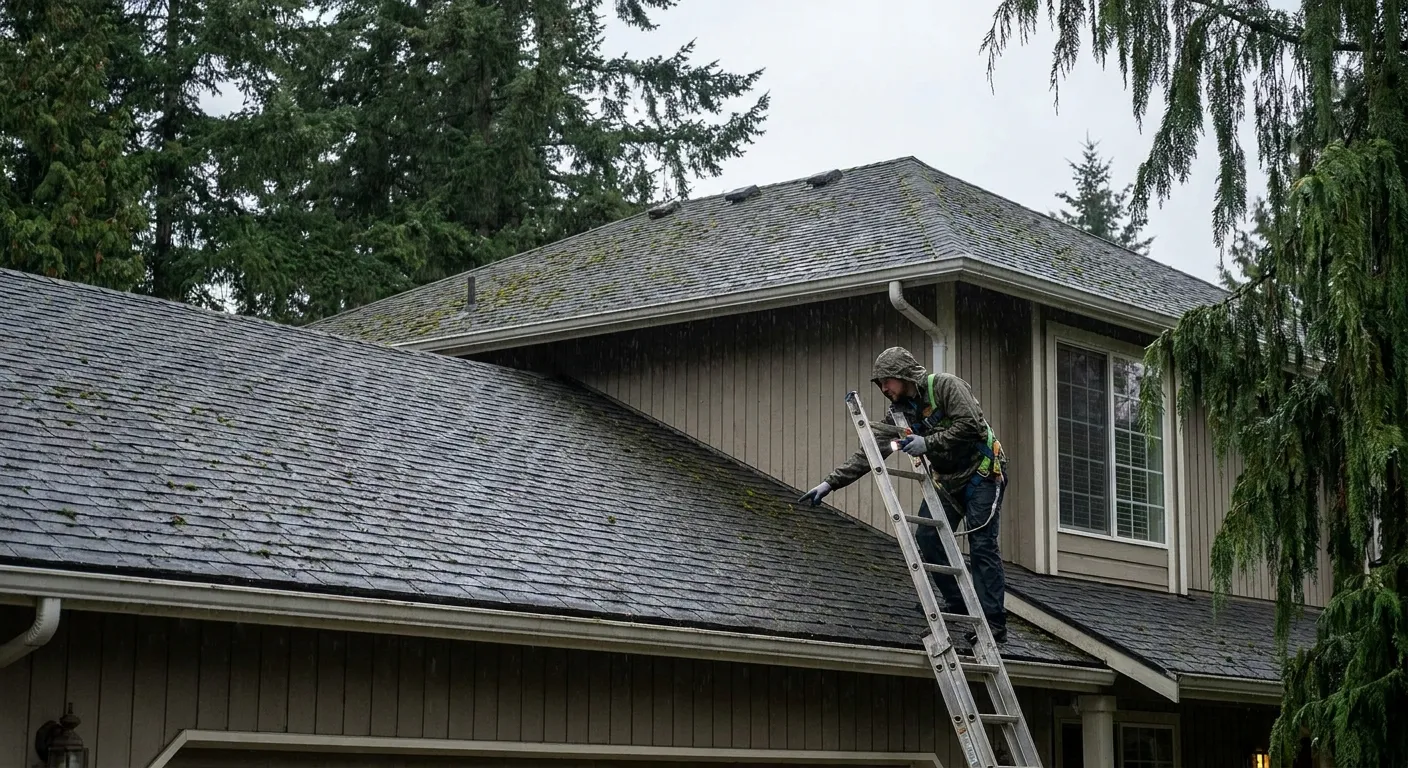
Moss growth is a major concern in this region because of the damp environment. Moss thrives in shaded and wet conditions, and when left unchecked, it can lift roofing materials and allow water to seep beneath them. Additionally, the weight of accumulated water, debris, and moss can put stress on the roof structure, accelerating deterioration.
Strong winds and storms, frequent in the Pacific Northwest, can also loosen shingles, damage flashing, and dislodge debris onto roofs. Without timely maintenance, these factors can contribute to weakened roof performance and increase the likelihood of long-term issues.
Why Moisture is a Roof’s Biggest Enemy
Persistent moisture poses a serious risk to the health of your roof. When water consistently finds its way into roofing materials, it can lead to several costly problems:
- Wood rot: Wooden components such as roof decking and support beams can develop rot, compromising the roof’s structural integrity.
- Mold and mildew growth: Moisture trapped in roofing layers creates the perfect breeding ground for mold, which can affect indoor air quality and lead to health concerns.
- Material degradation: Prolonged dampness weakens the protective layers of your roof, particularly with materials like asphalt shingles, shortening their lifespan.
Investing in water-resistant roofing materials and practicing regular maintenance can protect your home from these issues. To get started, explore these seasonal roof maintenance tips for Bellevue homeowners to stay ahead of rainy season challenges.
Comparing Durable Roofing Materials for Rainy Seasons
Metal Roofs: The Ultimate Water-Resistant Option
Metal roofing is widely regarded as an ideal choice for rainy climates like the Pacific Northwest. Its sleek surface allows rainwater to slide off easily, preventing water pooling. Metal roofs are also highly resistant to moss and algae growth, making them low-maintenance in wet conditions.
Another advantage is their remarkable durability. Metal roofs can withstand heavy rain, wind, and even hail without sustaining significant damage. With proper installation, they can last 50 years or more, reducing the need for frequent replacements or repairs.
Homeowners concerned about noise shouldn’t worry—modern metal roofs are designed with insulating layers that dampen the sound of rainfall. Metal roofing can enhance your home’s long-term protection while requiring minimal upkeep. For more information, discover the advantages of metal roofing for residential homes.
Tile Roofs: Superior Longevity with Proper Maintenance
Tile roofs, made from clay or concrete, are another top-performing option for wet climates. These materials are naturally resistant to moisture, which is critical for preventing water damage during heavy rains. Furthermore, tile roofs are extremely durable, often lasting 50 to 100 years when maintained properly.
That said, certain responsibilities come with owning a tile roof. While the tiles themselves hold up well under rainfall, homeowners should regularly inspect for small cracks that can worsen over time. Moss and algae can also accumulate on tile surfaces, so removing any growth is essential to maintaining their integrity.
By pairing proper care with professional inspections, tile roofs can remain a reliable and visually appealing roofing choice. To learn more about this material, read tile roof pros and cons: A complete guide for homeowners.
Architectural Shingles: Cost-Effective and Reliable
Architectural shingles strike a balance between affordability and performance, making them a popular roofing option. These shingles are designed with multiple layers that provide better water resistance than standard three-tab shingles. They hold up well under heavy rain and can last 20 to 30 years with proper maintenance.
While they are not as long-lasting as metal or tile roofs, architectural shingles are easier to install and repair. They are also versatile, as homeowners can choose from a variety of styles and colors to match their home’s aesthetic.
Comparatively, shingles require a proactive maintenance routine to ensure debris and water do not compromise their lifespan. Learn more about how they stack up by exploring this architectural shingles vs composition shingles comparison.
Essential Maintenance for Rainy Season Roof Protection
Pre-Season Roof Inspections: Spotting Problems Early
Before the rainy season begins, it’s important to inspect your roof for existing or potential issues. A professional roof inspection ensures that weak points, such as loose shingles or deteriorating flashing, can be addressed promptly. Areas to focus on during inspections include:
- Checking for missing or curled shingles.
- Inspecting flashing around chimneys, vents, and roof edges.
- Examining valleys and slopes for water pooling or debris buildup.
For a detailed outline, follow this roof inspection checklist for rainy season to help prepare your roof before heavy rains arrive.
Proper Roof Drainage: The Role of Gutters and Downspouts
Gutters and downspouts play a crucial role in managing roof drainage. When gutters become clogged with debris, water can overflow onto your roof, leading to pooling and possible leaks. Regular cleaning ensures water is directed away from your home’s foundation and roofline.
Homeowners should inspect and clean gutters at least twice a year, especially before and after the rainy season. Look for sagging sections, holes, or blockages that could hinder water flow. Roof Pros NW offers local roofing services in Redmond, WA to assist with any gutter-related concerns.
Moss and Debris Removal: Keeping Roofs Clear and Functional
Keeping your roof free from moss and debris is essential for rainy-season performance. Moss thrives in damp, shady areas and can damage your roof if left untreated. Remove moss using a gentle cleaning solution and a soft-bristled brush, taking care not to damage roof materials.
For safety and efficiency, consider hiring a professional roofing contractor. Additionally, homeowners can find useful tips in these seasonal roof maintenance tips for Bellevue homeowners.
Choosing Maintenance Plans Based on Material Type
Each roofing material has unique maintenance needs. For example:
- Metal roofs: Require minimal maintenance but should be inspected for dents and scratches caused by debris.
- Tile roofs: Need regular inspections for cracks and cleaning to prevent moss buildup.
- Architectural shingles: Routine checks for missing or damaged shingles and ensuring proper drainage are key.
For a detailed comparison of maintenance needs, review metal roof vs shingles: pros, cons, and key differences.
Preventing Roof Leaks During Heavy Rain
Flashing and Vent Repairs: Small Fixes That Make a Big Impact
Flashing and vents are common weak points on roofs, particularly in rainy climates. Flashing around chimneys, skylights, and vents can warp or loosen over time, creating entry points for water. Ensuring these areas are properly sealed and in good condition prevents leaks.
During a roof inspection, look for signs of wear, such as rust or cracks, on flashing. Timely repairs can protect your home from water damage. Explore expert solutions for roof leak repair in Bellevue WA to address flashing concerns.
Steps to Take During a Leak Emergency
If you experience a sudden leak during a storm, take the following steps:
- Place buckets or containers under the leak to catch water.
- Use a tarp or plastic sheeting to cover the damaged area temporarily.
- Contact a roofing professional as soon as possible for emergency repairs.
Taking immediate action can minimize interior damage and prevent issues from worsening.
The Long-Term Value of Investing in Durable Roofing Materials
Balancing Upfront Costs with Long-Term Savings
Although durable roofing materials like metal and tile may have higher upfront costs, they provide long-term savings by reducing repair needs and extending the roof’s lifespan. For instance, you might spend less on maintenance and replacements over a 50-year period with a metal roof compared to standard shingles.
How Material Choices Impact Home Value
Your roof is a key component of your home’s curb appeal and resale value. High-quality roofing materials not only enhance the appearance of your property but also signal to potential buyers that the home has been well-maintained. This is especially attractive in rainy regions where a reliable roof is a top priority for homeowners. Opting for durable materials is an investment in both functionality and property value.
Protect Your Home with a Professional Roof Leak Inspection
If you’ve been reading about roof leaks, you know how crucial it is to address them quickly. Ignoring a leak, even a small one, can lead to bigger problems like water damage, mold, or compromised roofing materials. Why wait until it gets worse? Roof Pros NW offers expert roof leak inspections to pinpoint the problem and recommend the best solution fast.
Here’s why scheduling a roof leak inspection with Roof Pros NW is the smart choice:
- Prevent costly damage by catching leaks early
- Ensure your roof remains structurally sound and safe
- Protect your home from moisture infiltration and mold
- Receive a clear, honest assessment from trusted local experts
- Gain peace of mind knowing your roof is in expert hands
Don’t let a minor issue turn into a major repair. Let our team take a closer look and keep your roof strong no matter the season.
Click here to schedule your roof leak inspection today: Schedule Now
Conclusion
Roofing in the Pacific Northwest comes with unique challenges, but understanding how the region’s rainy climate affects your roof is the first step to protecting your home. Constant moisture, moss growth, and storm damage can all take a toll on roofing materials, leading to leaks, structural issues, and reduced roof lifespan if left unaddressed. However, with the right strategies and materials, you can ensure your home stays safe and dry year-round.
Durable roofing materials like metal, tile, or architectural shingles are designed to weather the Pacific Northwest’s harsh conditions effectively. Metal roofs shed water quickly and resist moss buildup, while tile roofs offer excellent moisture protection with long-term durability. Architectural shingles provide a cost-effective balance of performance and style, making them a reliable option for many homeowners. By choosing the right material for your climate and budget, you can reduce repair costs while enhancing the value and longevity of your roof.
Proactive maintenance is key to keeping rain-related issues at bay. Annual roof inspections, gutter cleaning, and moss removal help prevent small problems from becoming costly repairs. Flashing and vent repairs are particularly important in rainy climates, as these areas are prone to water intrusion if not properly maintained. Regular upkeep tailored to your roof’s material ensures maximum performance throughout the rainy season.
Whether you’re dealing with unresolved roof damage or planning to upgrade your home’s protection, the next step is to consult with a trusted roofing professional. Roof Pros NW offers expert guidance, thorough inspections, and high-quality roofing solutions tailored specifically for the Pacific Northwest. Contact us today to schedule a roof inspection or learn more about our roofing services in the Redmond area.
With the right roofing materials, regular maintenance, and professional support, you can safeguard your home from moisture damage, improve its curb appeal, and enjoy peace of mind during the Pacific Northwest’s wettest months. Don’t wait until the next storm to take action—reach out to Roof Pros NW for trusted, reliable solutions to all your roofing needs.
Choosing the right roofing materials for rainy seasons can help prevent leaks, reduce long-term maintenance costs, and protect your home in wet climates like the Pacific Northwest. These key takeaways highlight what homeowners need to know about durable materials, water resistance, and essential maintenance practices to keep roofs performing well through heavy rains.
- Select water-resistant roofing materials: Materials like metal, tile, and architectural shingles are excellent options for wet climates due to their durability and ability to shed water effectively.
- Prioritize proper roof drainage: Ensure gutters, downspouts, and roof slopes are optimized to direct water away from your home, preventing standing water that can cause leaks and damage.
- Understand maintenance needs by material type: Metal roofs require minimal upkeep, while shingles and tiles may need regular inspections to address moss, cracks, or missing pieces.
- Prevent leaks with pre-season preparation: Schedule a professional inspection before rainy seasons to identify and fix weak spots in flashing, vents, and other vulnerable areas.
- Reduce moss and debris buildup: Regular cleaning of gutters and roof surfaces prevents moisture retention, which can weaken materials and lead to water infiltration.
- Think long-term when choosing materials: Investing in high-quality, durable roofing upfront can lower repair costs, reduce emergency fixes, and extend the roof's lifespan in rainy climates.
- Work with local roofing professionals: Experienced contractors like Roof Pros NW understand Pacific Northwest weather challenges and can recommend the best materials and maintenance plans for your home.
With these insights, you’ll be better prepared to choose roofing materials that can handle the heavy rains and moisture of the Pacific Northwest. The rest of the article will guide you through comparing options, understanding material benefits, and preparing your roof for rainy seasons.
How do I choose a trustworthy roofing contractor?
Select a contractor by checking for proper licensing, insurance coverage, and positive reviews. Look for experience in handling roofs in rainy climates, clear estimates, and detailed warranties. Communication and local knowledge are crucial. Contact Roof Pros NW for trusted guidance.
How much does roof repair typically cost?
Roof repair costs depend on factors such as the size of your roof, the extent of damage, materials needed, labor, and specific repairs. It’s best to contact Roof Pros NW for a detailed inspection and estimate.
How long will my new roof last?
The lifespan of a roof depends on the materials used. Metal roofs can last over 50 years, tile roofs may last 50 to 100 years, while architectural shingles generally last 20 to 30 years. Regular maintenance by Roof Pros NW can help extend your roof’s life.
Does homeowners insurance cover roof leaks or damage?
Homeowners insurance usually covers roof damage caused by uncontrollable events like storms. Damage from neglect or lack of maintenance may not be covered. It’s vital to review your policy and consult with Roof Pros NW for an inspection if you suspect damage.
What should I ask a roofing contractor before hiring them?
Ask about their experience, licensing, insurance, material options, warranties, and how they handle unexpected issues. Inquire about the timeline for the project and request a written estimate. Contact Roof Pros NW to get answers to all your roofing questions.
