Moss on Roof Shingles: Hidden Damage Homeowners Should Know
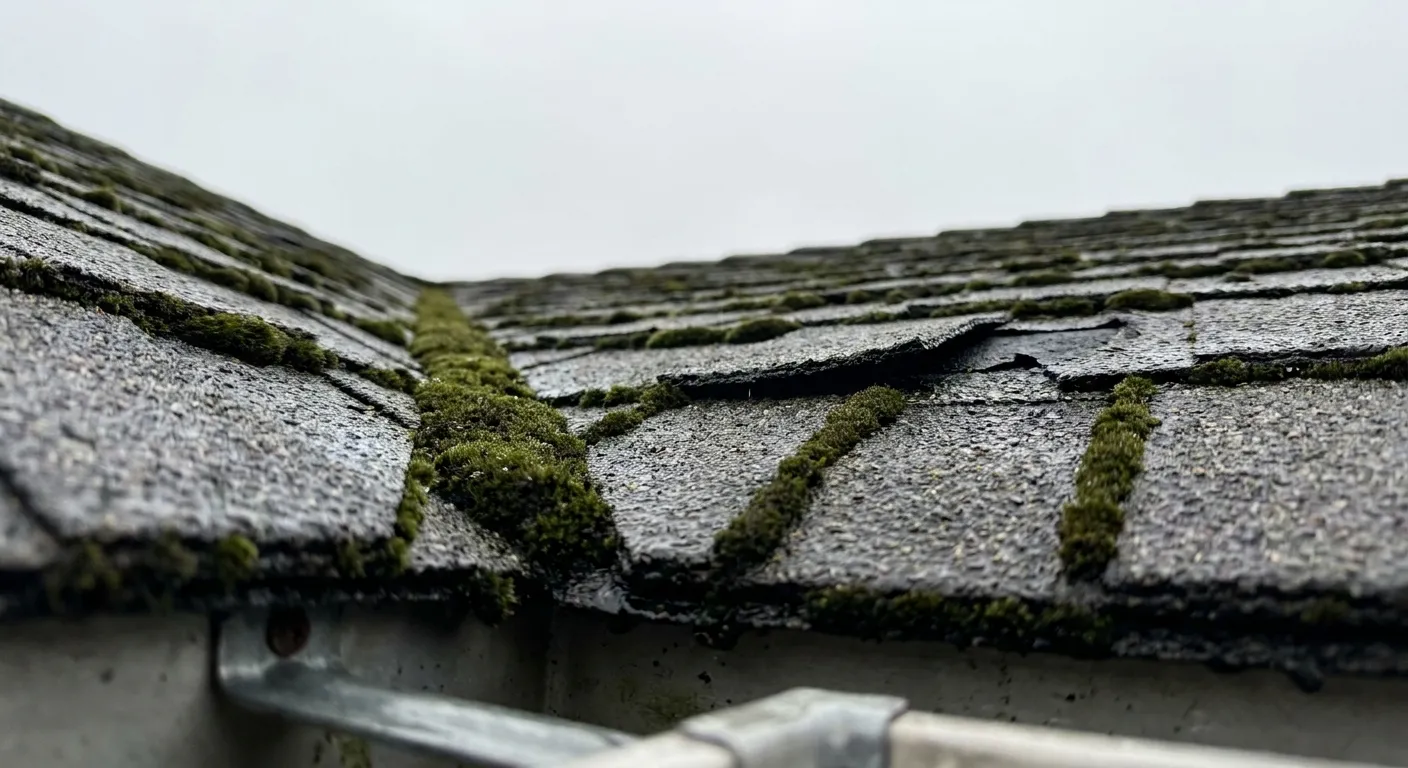
That soft green layer on your roof may be doing more than changing its appearance. Moss on roof shingles can hold moisture against the surface for days or weeks after rain, even when the rest of the roof looks dry. In the Pacific Northwest, where long wet seasons, shade, and overhanging tree branches create ideal growing conditions, moss can spread across shingles and settle into areas that are hard to see from the ground. What looks like a simple cleaning issue may slowly affect the materials that keep water out of your home.
Moss is different from the dark staining caused by algae. Algae can be unattractive, but moss grows thicker and has root-like structures called rhizoids that can work into the protective granules on asphalt shingles. As moss grows, it can trap moisture, speed up granule loss, and cause shingle edges to lift or curl. Those raised edges give wind-driven rain a path beneath the shingles, where it may reach the roof underlayment or roof deck. During colder weather, trapped water can also freeze and expand, adding stress that weakens shingles over time.
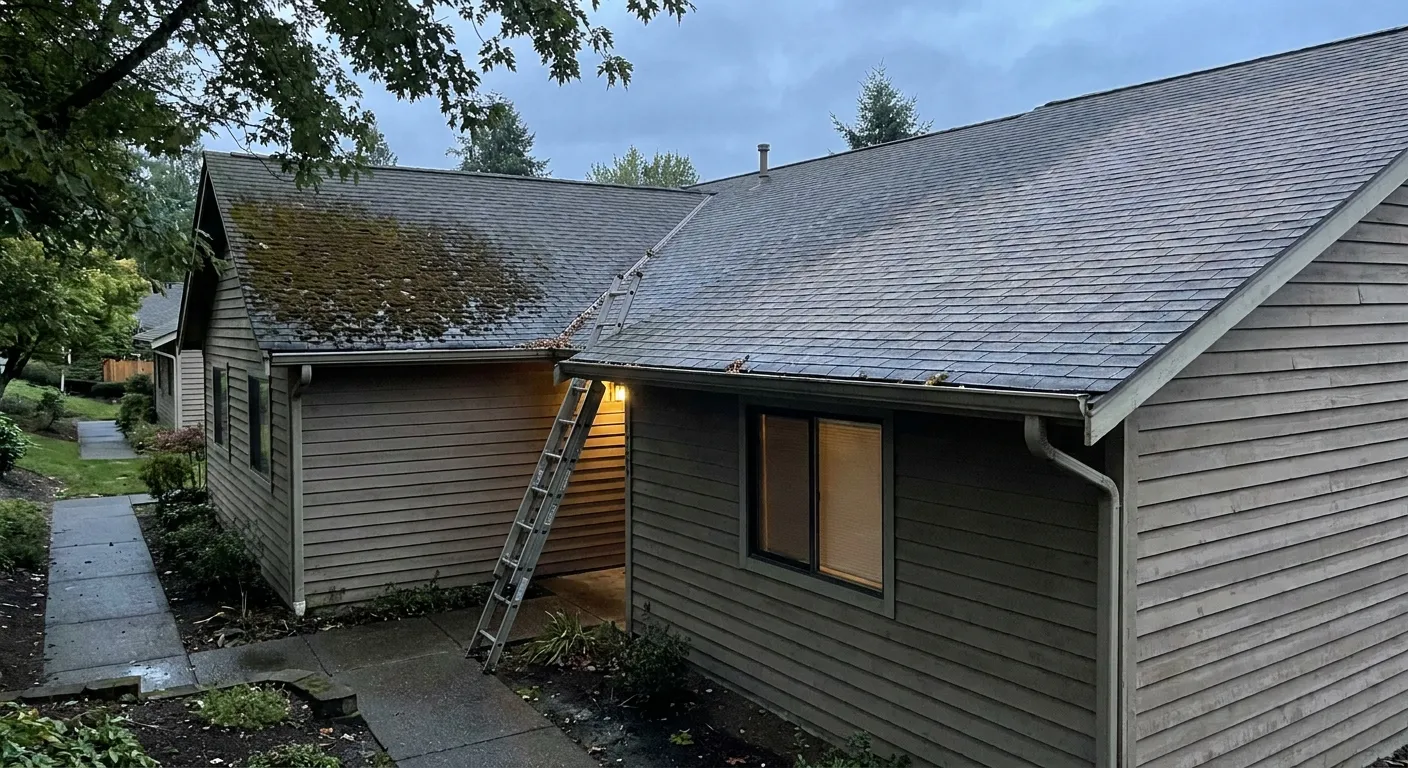
This matters for homeowners, property managers, and property owners because roof moss damage often begins quietly. You may not see a leak inside right away, but you might notice thick green patches, debris collecting in roof valleys, damp areas that stay dark longer than the rest of the roof, or shingles that no longer lie flat. North-facing roof planes are often more vulnerable because they receive less direct sunlight and stay wet longer. A careful ground-level look can help you spot concerns early, but it is important not to walk on the roof or use a pressure washer. High-pressure cleaning can strip away shingle granules and shorten the roof’s service life.
Knowing when to clean, repair, or inspect a moss-covered roof can help prevent small concerns from becoming larger water damage issues. Safe roof moss removal may involve soft washing and steps to limit future growth, such as clearing debris, trimming back branches, and considering zinc strips. However, cleaning alone may not reveal whether moss has already caused shingle lifting, moisture entrapment, or damage beneath the surface.
This article explains how moss affects asphalt shingles, why it grows faster on certain roof areas, and how freeze-thaw cycles can make the problem worse. You will also learn what to check from the ground, why pressure washing is risky, and when a professional roof inspection from Roof Pros NW can help identify hidden damage before repairs become more involved.
Moss on Roof Shingles: Why It Is More Than a Cosmetic Problem
Moss on roof shingles may look like a surface-level problem, especially when it appears as a small green patch near the roof edge. In reality, moss can hide damage that is difficult to see from the ground. It holds water against the roofing material, works into the shingle surface, and can create conditions that lead to leaks and premature wear.
This is especially important in the Pacific Northwest. Long wet seasons, frequent rain, shaded yards, and cool temperatures allow moss to stay damp for long periods. A roof that does not dry fully between storms is more likely to develop moss and related moisture problems.
Moss on a roof is not always a sign that the roof needs replacement. However, it should not be ignored as a cosmetic concern alone. Over time, moss can contribute to granule loss, shingle lifting, weakened adhesive strips, and moisture reaching the layers beneath the shingles. Understanding how moss begins and why it spreads makes it easier to protect the roof before the damage becomes more involved.
How Moss Grows on Asphalt Shingles
Moss is a small, non-flowering plant that grows in damp environments. It does not need deep soil to survive. Instead, it can take hold in roof debris, rough shingle surfaces, and places where moisture stays trapped.
Moss growing on asphalt shingles is most common where leaves, pine needles, and small branches collect. This debris catches water and blocks sunlight, creating a damp layer where moss can grow. Once established, moss spreads across the roof surface and can form a thick mat that stays wet after the rest of the roof has dried.
North-facing roof planes are often the most vulnerable because they get less direct sun. Other common moss-prone areas include:
- Roof valleys where water and debris collect
- Shaded slopes below overhanging tree branches
- Areas behind chimneys, dormers, and vents
- Lower roof edges near clogged gutters
- Roof sections beneath large evergreens
Homeowners sometimes confuse moss with algae. Algae usually appears as dark streaks or stains on shingles. It may affect appearance, but it generally lies flatter on the surface. Moss is thicker, greener, and more likely to hold moisture against the shingles. Because moss has small root-like structures called rhizoids, it can attach more firmly to the shingle surface and cause greater physical wear over time.
This is why moss on roof shingles deserves attention even when it only covers a small area. Small patches often point to shade, trapped moisture, or debris buildup that can allow the problem to spread.
The Hidden Damage Moss Can Cause Beneath the Surface
The most important question is not simply how moss looks, but what does moss on roof shingles do to your roof over time? The answer involves moisture entrapment.
A healthy asphalt shingle roof is designed to shed water quickly. Moss changes that process by acting like a sponge. It absorbs rainwater, morning dew, and runoff, then holds that water against the shingle surface. Rather than drying in the sun and wind, shingles beneath moss may stay wet for days.
This ongoing moisture can speed up roof moss damage in several ways.
First, moss rhizoids can work into the outer surface of asphalt shingles. The protective granules on shingles help block sunlight and shield the asphalt layer from weather exposure. When moss attaches and is later disturbed by wind, rainfall, or improper cleaning, it can contribute to granule loss.
Second, moss can grow under and around shingle edges. As the moss mat thickens, it may push shingles upward or keep them from lying flat. This shingle lifting can weaken the roof’s water-shedding design. Water that should flow over the shingles may instead move beneath an edge or into a joint.
Third, trapped moisture can affect the seal strips that help shingles stay connected. These adhesive strips are especially important during windy weather. If moisture and moss weaken the bond between shingles, the roof may become more vulnerable to wind-driven rain and, in some cases, shingle blow-off.
Once water moves beneath the shingles, it can reach the roof underlayment. Underlayment is the protective layer between the shingles and the wood roof deck. It provides added protection, but it is not meant to handle constant moisture exposure. Persistent wet conditions can eventually lead to roof deck damage, including softened or deteriorated wood.
A roof leak may not appear right away. Water can slowly affect the roof layers long before a ceiling stain becomes visible indoors. That is why even a limited moss patch can be worth checking, especially if it has been present through multiple rainy seasons.
How Freeze-Thaw Cycles Make Moss Damage Worse
Winter conditions can make moss problems more serious. When moss holds water against shingles, that water may freeze during cold weather. Water expands as it freezes, placing pressure on the moss, shingle surface, and shingle edges.
As temperatures rise, the ice melts. Then the process may repeat during the next cold night. These repeated freeze-thaw cycles can gradually loosen shingles and make existing weak areas worse.
How freeze thaw cycles make moss worse on asphalt shingles comes down to repeated movement. Trapped water expands, contracts, and works into small gaps around shingle edges. Over time, this may lead to:
- Lifted or curled shingle corners
- Brittle shingles that crack more easily
- Loosened seal strips between shingle layers
- More granule loss in moss-covered areas
- Gaps where wind-driven rain can enter
Freeze-thaw damage is not always easy to see from the ground. A roof may simply look darker, wetter, or uneven in the areas where moss has grown. Yet those conditions can signal shingles that are no longer drying or sealing as they should.
In the Pacific Northwest, winter weather does not need to be severe every day to affect a roof. Frequent rain followed by overnight freezing temperatures can create repeated stress on damp roofing materials. This makes early inspection and careful maintenance particularly useful.
How to Tell From the Ground If Moss Is Damaging Your Roof
Homeowners should avoid climbing onto a roof to inspect moss. Walking on shingles can be unsafe, especially when the roof is wet or mossy, and it can also damage older roofing materials. A ground-level inspection with binoculars, or a view from an upper window, can provide useful information.
To understand how to tell if moss is damaging your roof from the ground, look for more than green growth. Pay attention to the condition and shape of the shingles around it.
Possible warning signs include:
- Thick moss mats that cover shingle edges or fill roof valleys
- Shingles that appear curled, lifted, cracked, or uneven
- Dark areas that remain damp long after rain has stopped
- Bare-looking patches where shingles may have lost granules
- Moss buildup at the roof edge or near gutters
- Debris collecting beneath tree-covered sections of the roof
Also inspect the area around the home. Granules in gutters or at the base of downspouts can indicate normal aging, but a heavy amount of gritty material may suggest accelerated shingle wear. Check gutters for moss pieces, leaf buildup, and standing water, since clogged gutters can keep the roof edge wet.
Inside the home, safely check the attic and upper ceilings after heavy rain. Look for water stains, damp insulation, musty smells, or signs of moisture around vents, chimney areas, and roof penetrations. Flashing is the metal material that seals roof transitions around chimneys, skylights, and vents. Moss near flashing does not automatically mean there is a leak, but it can hold moisture in an area that needs to shed water properly.
Visible moss is not the only concern. A roof can have early moisture damage beneath the shingles before any interior sign appears. If the roof looks uneven or moss has been present for several seasons, a professional assessment can clarify the roof’s condition.
Why Pressure Washing Is Risky for Asphalt Shingles
It may seem logical to use a pressure washer to remove moss from roof shingles. However, high-pressure cleaning is usually risky for asphalt shingle roofs. The water stream can blast away protective granules, loosen shingles, force water beneath them, and shorten the roof’s usable life.
Pressure washing may make a roof look cleaner quickly, but it can create a new problem by exposing more of the asphalt layer to sun and weather. It can also disturb aged shingles that have become brittle or have already lost adhesion.
Safer roof moss removal often uses low-pressure methods, sometimes called soft washing. Soft washing applies a roof-appropriate cleaning solution at low pressure so moss can be treated without scouring the shingle surface. The right process depends on the roof’s age, material, slope, moss coverage, and existing condition.
Manual scraping can also be harmful if it pulls granules or lifts shingle edges. A professional can determine whether the roof can be cleaned safely, whether moss should be treated in stages, or whether damaged areas need repair first. Learn more about professional roof cleaning in Renton before choosing a cleaning method for an asphalt shingle roof.
Prevention Tips That Help Slow Future Moss Growth
Moss prevention is mostly about helping the roof dry faster and keeping debris from holding water in place. In a damp climate, no prevention method can eliminate all moss risk forever, but steady roof maintenance Pacific Northwest homeowners can manage helps slow future growth.
Start by trimming overhanging tree branches when possible. More sunlight and airflow can help roof surfaces dry after rain. Branch trimming also reduces the amount of leaves, needles, and twigs that land on the roof.
Keep gutters and downspouts clear. When gutters clog, water can back up along the roof edge and create damp conditions that support moss. Clearing loose debris from accessible areas is useful, but do not scrape or sweep aggressively across shingles.
For ongoing prevention, consider these practical steps:
- Remove leaf and needle buildup from valleys and gutters
- Check shaded roof areas after long rainy periods
- Address leaking gutters that spill water onto the roof or siding
- Keep tree limbs from rubbing against roofing materials
- Consider zinc strips where appropriate for the roof design
Zinc strips are installed near the ridge of some roofs. When rainwater flows over the zinc, it can help limit moss and algae growth lower on the roof. They are not a repair for existing roof moss damage, and results depend on roof shape, rainfall patterns, and the amount of shade. A roofing professional can advise whether they make sense for a specific roof.
Seasonal maintenance is especially helpful before and after the wettest part of the year. Use this roofing maintenance for rainy seasons PNW checklist to build regular roof and gutter checks into your property care routine.
When Moss on Roof Shingles Needs a Professional Inspection
Moss does not always mean a roof needs major work. A newer roof with limited surface moss and no signs of shingle wear may only need careful cleaning and prevention steps. However, moss is more than a cleaning issue when there are signs that water has affected the roofing system beneath it.
A professional roof inspection is a good idea when you notice:
- Moss covering large sections of the roof
- Shingle lifting, curling, cracking, or missing granules
- Dark, persistently damp valleys or roof edges
- Ceiling stains, attic moisture, or a musty odor
- Loose flashing around chimneys, vents, or skylights
- Leaks during wind-driven rain
- A roof that is older and has not been inspected recently
A professional can assess the visible roof surface as well as vulnerable details such as flashing, valleys, vents, gutters, and drainage patterns. They can also look for signs of underlayment trouble or roof deck damage that cannot be confirmed from the ground.
For example, cleaning may be enough if shingles remain flat, granules are intact, and the roof is otherwise sound. Repairs may be needed if moss has exposed lifted edges, damaged flashing, or localized water entry. Review the value of Reliable Local Roof Inspections when moss has been present long enough to raise concerns about the roof beneath it.
Urgent attention is wise if a leak is active, shingles are missing after wind, or interior water marks appear. These top signs you need immediate roof repair can help property owners recognize when waiting may allow water damage to spread.
Moss Damage, Roof Lifespan, and Homeowner Decisions
Repeated moisture exposure can shorten roof lifespan by speeding normal shingle aging. Granule loss, weakened seal strips, and water entering beneath shingles can all reduce how well a roof handles rain and wind. Moss does not automatically mean full replacement, but it can make existing age-related wear more important.
When deciding between repair, cleaning, or replacement, consider the roof’s overall condition:
- The roof’s approximate age and maintenance history
- How widespread the moss and shingle wear are
- Whether shingles are still flexible and lying flat
- Whether leaks, soft decking, or damaged flashing are present
- Whether repairs would solve isolated issues or only delay larger problems
For rental homes, managed properties, and investment properties, regular roof checks are particularly important. Tenants may notice a ceiling stain only after moisture has already reached the interior. Property managers can reduce surprises by checking shaded roof planes, gutters, and attic conditions before rainy seasons begin.
Homeowners insurance may cover sudden damage from a covered event, such as certain storm damage, but routine moss growth and deferred maintenance are often treated differently. If you are asking, is moss on my roof covered by homeowners insurance, review your specific policy and document the roof condition with photos and inspection records. An inspection can help separate routine maintenance needs from repair concerns that may need further review.
Final Thoughts: Take Moss on Roof Shingles Seriously Before It Spreads
Moss on roof shingles is not just an appearance issue. It can trap moisture, wear away granules, lift shingle edges, weaken seal strips, and create paths for water to reach the underlayment and roof deck. Pacific Northwest rain, shade, and freeze-thaw cycles can make that process move faster on vulnerable roof areas.
A safe ground-level inspection, clear gutters, trimmed branches, and careful cleaning can help protect the roof. If moss has been growing for a while, shingles look uneven, or there are signs of interior moisture, it is sensible to have the roof evaluated before small issues become more difficult repairs.
To get a clearer view of the roof’s condition, contact Roof Pros NW to schedule your free roof inspection today.
Conclusion
Moss on roof shingles is more than a surface stain. It can trap moisture, loosen shingle edges, wear away granules, and create conditions that lead to leaks over time. In the Pacific Northwest, where roofs face frequent rain, shade, and long wet seasons, moss can spread faster and stay active longer than many homeowners expect. That is why even a small patch deserves attention before it turns into a bigger roofing issue.
The good news is that moss does not always mean you need a full roof replacement. In some cases, a roof only needs safe cleaning, minor repairs, or better maintenance to slow future growth. The key is knowing whether the moss is only on the surface or whether it has started affecting the roof’s structure below. Signs like curled shingles, granule loss, damp valleys, loose flashing, or interior water stains can point to more than a cosmetic problem.
Homeowners should also be careful about how moss is removed. High-pressure washing can do more harm than good on asphalt shingles, especially if the roof is older or already weakened. Safer methods, such as low-pressure treatment and careful maintenance, help protect the roof while addressing the growth. Trimming nearby branches, clearing gutters, and keeping debris out of valleys can also reduce the conditions that let moss return.
If moss has been present for a while, or if you have noticed any signs of moisture inside the home, the best next step is a professional inspection. A trained roofer can check the shingles, flashing, gutters, and roof deck to see whether cleaning, repair, or replacement is the smarter option. For property owners, that kind of inspection can also help prevent avoidable damage and planning surprises later on.
For a clearer look at your roof’s condition, contact Roof Pros NW and schedule your free roof inspection today. If you want to understand whether your roof needs maintenance, cleaning, or repair first, you can also review Reliable Local Roof Inspections and top signs you need immediate roof repair before moss turns into a larger roofing concern.
Moss on roof shingles is more than a cosmetic issue, especially in the Pacific Northwest where damp weather helps it spread and stay wet. These key takeaways explain how moss causes hidden roof damage, what warning signs homeowners can look for, and when it is time to bring in Roof Pros NW for a closer inspection.
- Moss can damage shingles from the inside out: Moss roots, called rhizoids, can work into shingle granules, weaken the surface, and speed up roof wear over time.
- Trapped moisture can lead to bigger roof problems: Moss holds water against the shingle surface, which can cause faster granule loss, soft spots, and damage to the layers below the shingles.
- Freeze-thaw cycles make moss damage worse: In cold weather, trapped moisture expands and contracts under the moss, which can lift shingle edges and weaken the seal that helps keep water out.
- Raised shingles can let water reach the roof deck: As moss lifts edges and curls shingles, it creates openings where wind and rain can get under the roofing system and cause leaks.
- North-facing roof slopes usually grow moss faster: These areas often stay wetter and get less sun, making them more likely to hold moss growth than other parts of the roof.
- Moss is not the same as algae: Algae may stain the roof, but moss is more likely to cause physical damage because it grows thicker and holds more moisture.
- Pressure washing can harm asphalt shingles: High pressure can strip granules and shorten roof life, while soft washing is a safer cleaning method when moss removal is needed.
- Simple ground-level checks can reveal trouble early: Look for thick green patches, lifted shingle edges, heavy debris, or areas that stay damp longer than the rest of the roof.
- Prevention matters as much as cleaning: Trimming back branches, clearing roof debris, and adding zinc strips can help reduce future moss growth on roof shingles.
- A roof inspection can show how serious the damage is: If moss has been growing for a while, Roof Pros NW can check for hidden issues like granule loss, underlayment damage, and early leak signs before repairs get larger.
If you notice moss on your roof, the best next step is to learn how much damage it may have already caused. The rest of this article will show you what moss does to shingles, how to spot warning signs, and when professional roof care may be needed.
Keep Your Roof Ready for Every Season
Regular maintenance helps you catch small roofing concerns before they grow into costly repairs. If your roof has been through heavy rain, wind, falling debris, or changing temperatures, now is a smart time to schedule a professional inspection with Roof Pros NW.
A roof inspection gives you a clear picture of your roof’s condition and helps you plan the right next steps with confidence.
- Identify worn shingles, loose flashing, and weak areas
- Check for early signs of moisture intrusion
- Spot moss, debris, and drainage concerns
- Get clear recommendations based on your roof’s needs
- Plan maintenance or repairs before the next rainy stretch
Taking action early can help protect your home, your budget, and your peace of mind. Schedule your professional roof assessment today with Roof Pros NW.
Does moss on roof shingles cause leaks, or is it mostly a cosmetic issue?
Moss is more than a cosmetic issue. It can hold moisture against shingles, lift edges, and wear away granules, which can lead to leaks over time. In wet climates, moss can also speed up damage around valleys, flashing, and older shingles. If you see thick moss or dark damp areas that stay wet, Roof Pros NW can inspect the roof and help you decide whether cleaning, repair, or both is needed.
How do I know if moss on my roof means I need a roof inspection?
A roof inspection is a smart next step if the moss has been there for a while, keeps coming back in the same spots, or is paired with curled shingles, missing granules, damp valleys, or interior water stains. Even if the roof looks fine from the ground, moss can hide damage underneath. Roof Pros NW can check for surface wear, weak shingles, flashing issues, and signs of hidden moisture damage.
Will a roofing contractor remove moss and inspect for hidden damage at the same visit?
Often, yes. A roofing contractor can usually look at the roof condition while also discussing moss removal, but the exact process depends on the roof’s age, slope, and condition. The goal is to treat the moss without damaging the shingles and to check for problems that may already be under the surface. Roof Pros NW can evaluate the roof and tell you what level of cleaning or repair makes sense.
How much does roof moss removal cost for a typical asphalt shingle roof?
Pricing depends on roof size, pitch, access, moss coverage, roof age, and whether repairs are needed before or after cleaning. It can also change based on whether the roof needs soft washing, debris removal, gutter work, or a deeper inspection for damage. The best way to get an accurate price is to have Roof Pros NW inspect the roof and provide a quote based on its actual condition.
What should I ask a roofing company before hiring them for moss removal?
Ask how they remove moss from asphalt shingles, whether they use low-pressure methods, and if they inspect for shingle lifting, granule loss, underlayment damage, and flashing issues. You should also ask how they protect the roof during cleaning and whether they recommend follow-up maintenance to slow regrowth. Roof Pros NW can explain the process clearly and help you choose the safest option for your roof.
