Pros and Cons of Cedar Shake Roofing: What Homeowners Should Know
Cedar shake roofing has a timeless charm that few other materials can match. Its rustic, natural look instantly elevates a home’s curb appeal, making it a popular choice for those who want their roof to stand out. But does its beauty outweigh its challenges? For homeowners in the Pacific Northwest, where rain and moss thrive, the answer requires careful consideration.
Your roof is your home’s first line of defense against the elements. While cedar shake shingles offer excellent natural insulation and even some environmental benefits, they also require significant upkeep—especially in a wet climate. Moisture can lead to moss growth, rot, and premature deterioration if not addressed regularly. With improper care, this beautiful material may end up costing more in both time and money than you initially expected.
Understanding the pros and cons of cedar shake roofs is crucial for making the right decision for your home. This guide will break down the benefits, like energy efficiency and eco-friendliness, alongside the challenges, such as maintenance requirements and weather-related durability. You’ll also learn why proper maintenance is non-negotiable for cedar roofs in the Pacific Northwest and explore whether alternatives, like composite shakes, could suit your needs better.
By the end of this article, you’ll have the knowledge to determine if cedar shake roofing aligns with your home’s style, your budget, and your willingness to maintain it. Let’s dive into what makes cedar shake roofing a standout option—and the practical considerations that come with it.
The Allure of Cedar Shake Roofing
Cedar shake roofing has been a favorite among homeowners for generations, and it’s easy to see why. These distinctive wood shingles offer a naturally rustic appearance that enhances a home’s curb appeal. Unlike modern synthetic options, cedar shake shingles bring timeless character and an organic, handcrafted look that complements both traditional and contemporary architectural styles. For properties striving to stand out in the neighborhood, a cedar shake roof ensures a unique and beautiful aesthetic.
In addition to its visual appeal, cedar has natural insulating properties. This means it helps regulate indoor temperatures, keeping homes cooler in the summer and warmer in the winter. For families in the Pacific Northwest, where energy costs can spike during seasonal shifts, cedar shake roofs contribute to energy efficiency. While you won’t completely eliminate energy bills, cedar’s insulating capability can help reduce monthly costs over time.
Another notable advantage is its sustainability. Cedar is a renewable resource, and many cedar shake shingles are harvested responsibly to maintain environmental balance. Unlike synthetic materials that can take centuries to decompose, cedar naturally breaks down at the end of its lifecycle, making it an eco-friendly choice. For environmentally conscious homeowners, this roofing material allows you to reduce your carbon footprint while enjoying its charming aesthetic.
Despite its strong appeal, it’s crucial to assess whether cedar fits the climate and maintenance expectations of Pacific Northwest homes. With its moist, moss-prone environment, special considerations are necessary to keep cedar shake roofs in optimal condition. To explore more about cedar shake roofs and other materials, check out Roof Pros NW’s roofing services.
Challenges of Cedar Shake Roofing in the Pacific Northwest
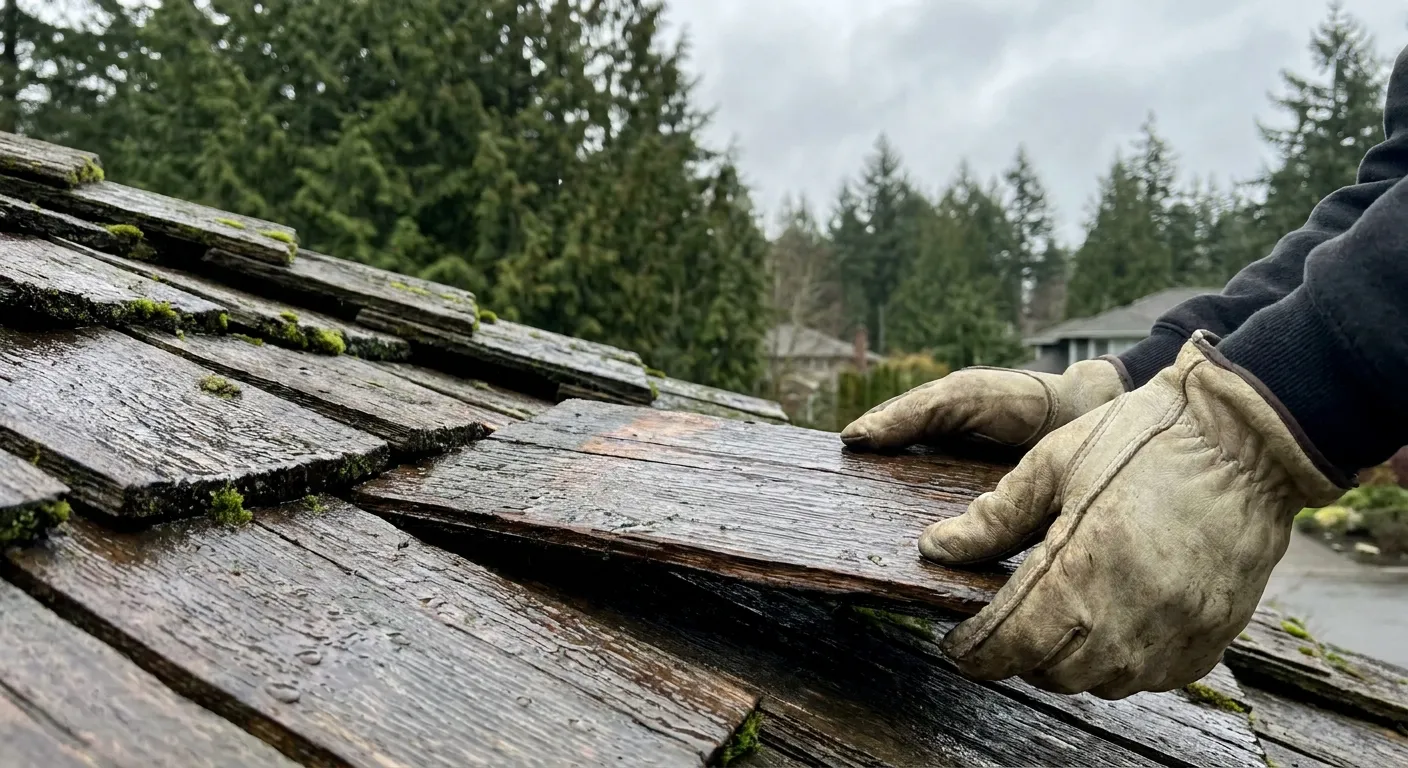
While cedar shake roofing has undeniable charm, its performance in the damp Pacific Northwest climate can be problematic without proper care. The most significant challenge is the region’s frequent rainfall, which creates ideal conditions for moisture infiltration, rot, and moss growth. Moss, in particular, thrives on the rough, porous surface of cedar shakes, and if left untreated, it can retain water and accelerate deterioration.
Constant exposure to moisture can lead to wood rot, which compromises the structural integrity of a cedar shake roof. Over time, saturated wood becomes weak and brittle, increasing the likelihood of costly repairs. Regular inspections and prompt repairs are essential to mitigate these risks. Timely roof repairs are especially critical to address small issues before they escalate.
This region’s unique combination of rain, wind, and occasional storms also increases the need for a consistent maintenance routine. Homeowners must schedule periodic cleanings and moss removal to prevent algae and fungi from taking hold. Failure to do so can shorten the lifespan of a cedar shake roof significantly. For practical advice, consider these seasonal roof maintenance tips for Bellevue homeowners.
Fire resistance is another consideration when choosing cedar shakes. Unlike non-combustible materials such as metal or composite, cedar’s organic nature makes it a fire risk. Manufacturers offer pressure-treated cedar shingles designed to improve fire resistance, but this treatment can increase the overall cost and may require reapplication over time.
Moreover, installing cedar shake roofing requires precision and expertise. Improper installation can lead to gaps, water leaks, or uneven weathering, all of which reduce the roof’s durability. To minimize long-term issues, selecting experienced contractors like those at Roof Pros NW is key.
Cedar shake roofing’s beauty often outweighs the maintenance burden for some homeowners. However, understanding the upkeep involved before committing to this roofing option is essential, particularly in moisture-heavy regions like the Pacific Northwest.
Longevity and Durability of Cedar Shake Roofs
Cedar shake roofs are prized for their longevity when properly maintained. Under ideal conditions, cedar shake shingles can last 20 to 30 years, or even longer. However, the Pacific Northwest’s wet climate often leads to accelerated wear, reducing the effective lifespan of these roofs compared to national averages.
Moisture and moss are significant contributors to premature aging for cedar shake roofs in this region. Even with diligent upkeep, the wet season can cause repeated cycles of expansion and contraction as the wood absorbs and releases moisture. Over time, this weakens the structural fibers of the shingles, potentially causing them to crack, split, or warp.
In addition to natural weathering, debris like leaves and branches can collect on cedar shake roofs after storms. These materials trap moisture, creating a breeding ground for mold and mildew. Periodically cleaning the roof can prevent these issues, but homeowners must balance this with the cost and effort of regular maintenance. For those who encounter frequent storm damage, scheduling professional roof inspections is an excellent option to ensure your cedar shakes remain stable and secure.
When it comes to heavy rainfall and wind, cedar shake roofs perform well if properly installed and maintained. The overlapping design of the shakes creates a natural water barrier, provided the shingles remain intact. However, over time, the gaps between shingles may widen as the wood dries, raising the risk of leaks. Routine sealing and re-treatments can help protect the roof from water penetration, but such maintenance increases the overall cost of ownership.
Ultimately, while cedar shake roofs can withstand many elements, their unique vulnerability to the Pacific Northwest environment means they often require more care to live up to their reputation for durability.
Cost Comparisons: Cedar Shake vs. Alternatives
One of the biggest factors to consider when choosing cedar shake roofing is the cost. Cedar shakes are a premium material, with installation costs significantly higher than those of asphalt shingles. Homeowners can expect to pay more for the craftsmanship required to properly install cedar shakes, as well as for higher-quality materials.
Compared to asphalt shingles, which are among the most affordable roofing options, cedar shake roofs represent a luxury choice. Composite shake roofs, which imitate the appearance of cedar but are made from man-made materials, provide another alternative. While composite shakes may have a higher upfront cost than asphalt but lower than cedar, their reduced maintenance and superior durability can represent better long-term value.
Beyond the initial investment, cedar shake roofing comes with ongoing maintenance expenses. Frequent inspections, cleaning, and moss treatments are necessary to preserve the roof’s integrity, especially in the Pacific Northwest. Repairs due to rot or splitting can also add to the total cost of ownership. To better understand these trade-offs, take a look at our guide on roof shingles.
Cost-conscious homeowners might wonder if cedar shake roofing is worth it in the long run, especially given the added expenses of upkeep. For those seeking a balance between aesthetics and durability, alternatives such as composite shakes may be worth exploring.
Composite Shake Roofing: A Low-Maintenance Alternative
For homeowners who love the look of cedar shake roofing but are concerned about maintenance, composite shake roofing offers a practical solution. Made from modern, weather-resistant materials, composite shakes closely replicate the aesthetic of real cedar while eliminating many of its drawbacks.
One key advantage of composite shakes is their resistance to moisture—arguably cedar’s biggest weakness in the Pacific Northwest. Composite materials do not absorb water, so homeowners don’t need to worry about rot, shrinkage, or expansion caused by damp conditions. Additionally, moss and algae are far less likely to grow on composite roofs, reducing the time and effort spent on cleaning.
Durability is another strong point for composite roofing. These materials are engineered to withstand harsh weather conditions, making them ideal for the region’s storms and heavy rains. Composite roofs come with longer warranties as well, often lasting 40-50 years with minimal maintenance.
While the initial cost of composite shake roofing is higher than asphalt shingles or even some cedar types, the long-term savings in maintenance and repair make them an attractive choice. Learn more about composite roofing and other options by visiting our page on residential roofing in Redmond, WA.
If minimizing labor and increasing roof longevity are priorities, composite shakes could be the perfect fit for your home in the Pacific Northwest.
Cedar Shake Roofing: Is It Worth the Investment?
Choosing cedar shake roofing requires carefully weighing its aesthetic appeal against its practical challenges, particularly in the Pacific Northwest. Its timeless beauty, natural insulation, and eco-friendliness make it an attractive option for homeowners looking to enhance curb appeal. However, frequent upkeep and higher maintenance costs mean it’s not a one-size-fits-all solution.
For those drawn to the unique character of cedar shake roofs but concerned about moisture damage or moss growth, alternative materials like composite shakes can offer a similar appearance with fewer responsibilities. Whether it’s a cedar or composite roof, the decision ultimately comes down to your budget, willingness to maintain the roof, and personal style preferences.
If you’re unsure which option best suits your needs, contact Roof Pros NW to consult with our experienced roofing professionals. They’ll guide you through the decision-making process and provide expert recommendations based on your home and the Pacific Northwest climate.
Schedule Your Roof Repair Estimate Today
Taking care of roof repairs quickly can save you from higher costs and bigger headaches down the road. At Roof Pros NW, we specialize in fast, reliable roof repair services to protect your home. If you’ve noticed damage or suspect your roof may need attention, now is the perfect time to act!
- Detailed inspections to identify every issue, big or small
- Tailored repair solutions based on your roof’s unique needs
- Experienced roofers committed to quality craftsmanship
- Competitive pricing without hidden fees
- Peace of mind knowing your roof is in expert hands
Don’t delay and risk further damage. Let us resolve the problem and restore your roof’s security. Ready to take the next step? Book your free roof repair estimate today and get your roof back in top shape!
Conclusion
Cedar shake roofing provides unmatched natural beauty and timeless character, making it a top choice for homeowners looking to enhance curb appeal. Its eco-friendly properties, natural insulation, and ability to regulate indoor temperatures add functional value as well. However, its performance in the Pacific Northwest’s damp and moss-prone climate requires a commitment to regular maintenance, including frequent cleanings, moss removal, and inspections.
Understanding the challenges of cedar shakes, such as moisture-related wear, shorter lifespans in wet conditions, and higher overall maintenance costs, is critical before choosing this material. For homeowners seeking the cedar aesthetic without the upkeep, composite shake roofing offers a durable, low-maintenance alternative. These modern materials resist moisture, moss, and algae growth while mimicking the rustic charm of cedar, making them a practical and long-lasting option.
Selecting the right roof for your Pacific Northwest home depends on factors like your budget, maintenance expectations, and aesthetic goals. Whether you lean toward the timeless appeal of cedar shake, the practicality of composite shakes, or other roofing materials, consulting a roofing professional is the best way to ensure your choice aligns with your needs.
Roof Pros NW is here to help you make an informed decision. From evaluating the suitability of cedar shake roofing to exploring alternatives like composite shakes, our experts can guide you every step of the way. If you’re ready to take the next step, we recommend scheduling a roof inspection to assess your home and determine the best roofing solution.
Protect your investment and ensure your home has the beauty and durability it deserves. Contact Roof Pros NW today to get started.
Cedar shake roofing is a popular choice for its natural beauty and energy efficiency, but like any roofing material, it comes with both benefits and challenges. Pacific Northwest homeowners should be especially mindful of how the region's wet climate impacts its performance and longevity. The key takeaways below will help you understand whether cedar shake roofing is the right fit for your home.
- Cedar shake roofs offer unmatched natural beauty: Their timeless wood appearance enhances curb appeal and adds a premium, rustic aesthetic to your home.
- Energy efficiency is a significant advantage: Cedar shake roofing provides natural insulation, helping regulate indoor temperatures and potentially reducing energy costs.
- Moisture and moss are major concerns in the Pacific Northwest: Constant rain and shade conditions in the region accelerate cedar deterioration, requiring frequent moss removal and maintenance.
- Regular maintenance is essential but costly: Cedar shake roofs demand frequent cleaning, inspections, and treatments to prevent mold, rot, and algae growth, increasing ongoing costs.
- Longevity depends on proper care: While cedar roofs can last 20-30 years in ideal conditions, the wet climate of the Pacific Northwest can significantly shorten their lifespan without diligent upkeep.
- Fire resistance may require treatment: Untreated cedar shakes are a fire hazard. Many homeowners opt for fire-resistant treatments, but this adds to the initial installation cost.
- Durability is both a pro and a con: Cedar shakes can withstand many weather conditions, but heavy storms or wind may cause shingles to loosen or split over time.
- Composite shake alternatives offer lower maintenance: For homeowners seeking the look of cedar without the upkeep, composite shakes are a low-maintenance and longer-lasting option.
- Environmental sustainability is a key benefit: Cedar is a renewable resource, making it an eco-friendly roofing choice compared to some synthetic materials.
With these takeaways in mind, the rest of this article will break down the pros and cons of cedar shake roofing in more detail, helping you determine if this material aligns with the demands of your Pacific Northwest home and lifestyle.
How much does it cost to replace a cedar shake roof and what factors affect the estimate?
The cost of replacing a cedar shake roof depends on factors like roof size, age, material quality, slope, level of damage, and access difficulty. It’s best to get an estimate from Roof Pros NW, where they can provide a detailed inspection to determine the exact pricing.
Is it worth repairing a handful of cedar shakes or should I replace the entire roof?
If only a few cedar shakes are damaged, repairs may be sufficient. However, if the damage is widespread or the roof is older, replacement might be more cost-effective in the long run. A professional assessment by Roof Pros NW can guide your decision.
What should I ask a roofing contractor before hiring them for cedar shake installation?
Before hiring a contractor, ask about their experience with cedar shake, licensing, insurance, material options, and warranties. Inquire about past projects and check reviews. Roof Pros NW can provide detailed answers and showcase their expertise in cedar shake installation.
How much do roofing companies typically charge to remove moss and treat a cedar shake roof?
Charges for moss removal and treatment depend on factors like roof size, moss extent, slope, and treatment type. Usually, an inspection will provide a more accurate quote. Contact Roof Pros NW for a personalized estimate.
Should I be concerned about fire risk with untreated cedar shakes, and what are fire-resistant options?
Untreated cedar shakes pose a fire risk. Fire-resistant options include treated cedar shingles with retardant coatings. Roof Pros NW can explain these options and help you choose the safest and most effective material for your home.
