Roof Leak Repair Snohomish County: 5 Emergency Steps
A ceiling drip can begin several feet away from the actual roof damage. Water often moves along rafters, roof decking, flashing, or attic framing before it finds a low point and enters the living space. That means the stain over your kitchen, hallway, or bedroom may not be directly below the roof leak at all. When rain is still coming down, the most important goal is not to find the exact hole from outside. It is to protect people, contain the water, and keep a small leak from becoming widespread interior damage.
For Snohomish County property owners, fast action matters during long periods of rain, wind, and steady moisture. Water can soak into insulation, drywall, flooring, and ceiling materials faster than many people expect. If it reaches a light fixture, outlet, or electrical wiring, it can also create a serious safety concern. Move belongings away from the leak, place containers under drips, and use towels to protect floors. If water is near electricity, turn off the power to that area at the breaker and avoid touching wet fixtures or wiring.
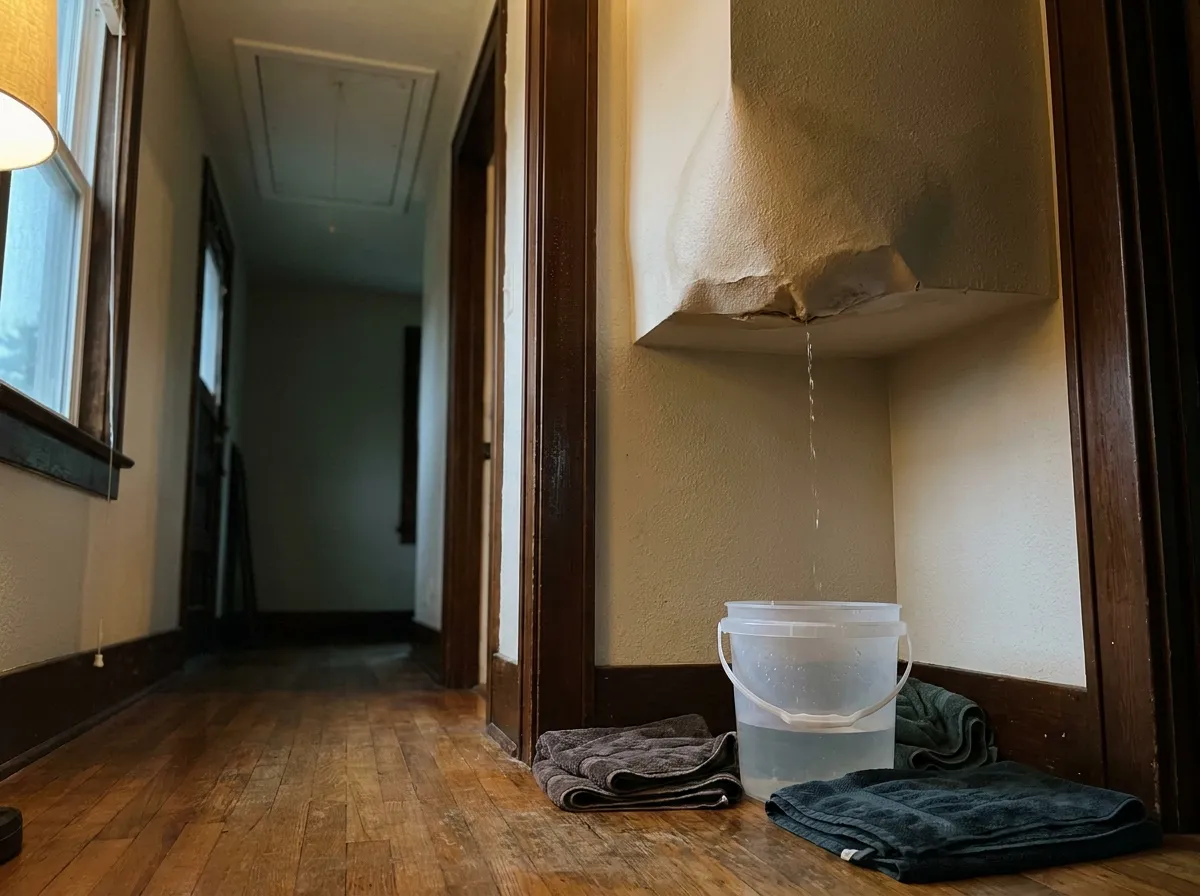
It is also important to resist the urge to climb onto a wet roof during a storm. Slippery shingles, wind, and poor visibility make DIY repairs and temporary tarping risky. A tarp may help in certain situations, but only when conditions are safe and it can be secured without causing further damage. From inside the home, watch for ceiling bulges, damp attic insulation, water trails on framing, and active drips. A swollen ceiling may hold a large amount of water, so it needs careful attention to prevent a sudden collapse and more extensive ceiling water damage.
Professional roof leak repair in Snohomish County can identify the true source of water intrusion and provide the right temporary and permanent solution. Leaks often begin at weak points such as pipe boots, skylights, roof valleys, or chimney flashing. What appears to be a simple shingle problem may involve worn flashing, failed sealant, or hidden moisture beneath the roofing materials. A careful inspection helps prevent repeat leaks and protects the roof system from further wear.
The five emergency steps below explain what to do when a roof is actively leaking, how to reduce water damage from inside, and when to call for help. You will also learn why finding the real leak source matters, what not to do during severe weather, and when to schedule emergency roof help with Roof Pros NW before moisture reaches the home’s structure.
Active Roof Leak in Snohomish County: What to Do First
An active roof leak needs quick, calm action. Your first goals are to protect people, contain the water, and limit damage until a roofer can find and repair the source. A visible ceiling drip can feel like the main problem, but it is often only where water finally found a way out.
Water may enter through a damaged roof detail, then travel along roof decking, rafters, flashing, or attic framing before reaching the ceiling below. That is why roof leak repair Snohomish County homeowners need is not always as simple as repairing the spot above a water stain.
During Pacific Northwest rain, water can continue entering for hours or days. Taking the five steps below can help reduce ceiling water damage and give an emergency roofer a clearer picture of what happened.
Why the drip spot is often not the leak source
A ceiling stain or drip is not always directly below the roof damage. Water follows gravity, but it can also run sideways along a rafter, roof decking seam, nail, pipe, or insulation before dripping into a room.
For example, water entering near a chimney may travel several feet through the attic before it appears near a hallway light fixture. A leak at a roof valley may show up in a bedroom far from the valley itself. This makes roof leak source detection more difficult than simply looking above the wet ceiling.
Why fast action matters during long wet weather
Snohomish County roofs deal with steady rain, wind, moss growth, and long periods of damp weather. Once water gets below shingles or flashing, it can soak insulation, wood framing, drywall, and flooring.
A fast response can help limit water intrusion before it becomes more extensive structural water damage. You do not need to diagnose the entire roof during a storm. Focus on safety and containment first, then arrange professional help.
Step 1: Protect People and Belongings Right Away
Before looking for the source, make the room safer. Keep children, pets, tenants, and visitors away from the leaking area. Property managers should also notify affected occupants and document the conditions as soon as it is safe.
Move furniture, rugs, and valuables out of the way
Move items away from the leak if you can do so without walking through pooled water or touching wet electrical equipment. Start with items that can be damaged quickly, including:
- Electronics, chargers, and power strips
- Paperwork, books, and photographs
- Upholstered furniture and rugs
- Wooden furniture that may absorb water
- Items stored beneath attic access points or ceiling stains
Place plastic sheeting, waterproof bins, or trash bags over large items that cannot be moved. Move rugs away from wet flooring to reduce moisture trapped against wood or carpet padding.
Contain the leak from inside the home
Place a bucket, plastic storage bin, or other stable container under active drips. Put towels around the container to catch splashes and protect flooring, trim, and baseboards. Check the container often, especially during heavy rain.
If water is running down a wall, place towels at the base and move furniture away from the area. Do not assume that a slow drip is minor. Water can be collecting above the ceiling or inside a wall even when the visible flow seems small.
Watch for ceiling swelling or sagging
A bulging ceiling can mean water is trapped behind drywall. The added weight can cause the ceiling material to crack or fall. Keep people out from under a swollen or sagging area.
Do not poke, cut, or drain a bulging ceiling if there is any chance water is near a light fixture, wiring, or electrical box. If the area is clearly away from electricity and you are unsure how to manage trapped water safely, wait for professional guidance. Containing the area and avoiding injury is more important than attempting a rushed repair.
With the room protected, the next step is checking for electrical danger.
Step 2: Check for Electrical Hazards and Shut Off Power if Needed
Water and electricity are a dangerous combination. Treat any leak near lights, ceiling fans, outlets, switches, or visible wiring as a possible electrical hazard.
Water near lights, fixtures, or outlets is a warning sign
Is water dripping from a ceiling light fixture dangerous? It can be. Moisture around a fixture or wiring may create shock, short-circuit, or fire risk. An electrical hazard roof leak should be handled with extra caution.
Do not touch a wet light switch, ceiling fixture, outlet, fan, or exposed wire. Do not stand in water while trying to unplug anything. Keep everyone away from the affected area until power is safely shut off.
Turn off the breaker for the affected area
If you can reach the electrical panel without walking through water, turn off the breaker for the affected room or area. If you are unsure which breaker controls the room, shut off the main power only if doing so can be done safely and you understand your electrical panel.
After power is off:
- Do not turn lights or appliances back on in the wet area.
- Do not remove a wet light fixture or outlet cover.
- Do not touch dangling wires or damaged electrical equipment.
- Keep the room closed off if water is dripping through a fixture.
If you cannot safely access the breaker, leave the area and contact an electrician or emergency services as appropriate for the immediate hazard.
When to call for emergency help right away
Call for urgent roofing help when water is entering near electrical components, a ceiling is sagging, or dripping is increasing during rain. An active leak needs an emergency roof leak response Snohomish County WA property owners can rely on after they have made the space safe.
For a roofing emergency, schedule emergency roof help with Roof Pros NW as soon as the leak is contained. Electrical concerns may also require a qualified electrician before the room is used again.
Step 3: Find the Leak Source From Inside, Not From the Roof
Do not climb onto a wet roof during rain or wind. Wet shingles are slippery, roof edges are dangerous, and poor visibility makes the risk worse. If you can safely access an attic or upper floor from inside, look for the water path there instead.
Trace water stains, trails, and damp areas
Use a flashlight and look for signs of water intrusion around the attic area above the leak. Avoid stepping on drywall between ceiling joists. Walk only on framing or a stable attic walkway.
Look for:
- Dark water trails on rafters or roof decking
- Damp, compressed, or stained insulation
- Wet wood around penetrations and roof joints
- Rusty nail tips or dark stains around fasteners
- Drips forming on the underside of decking
Follow the water trail upward and outward when possible. The highest visible wet point may be closer to the entry point, though water can still travel in unexpected directions.
Common places where leaks start
Many active leaks begin at roof details where materials meet or change direction. Common weak points include pipe boots, skylights, chimneys, valleys, vents, and flashing around roof transitions.
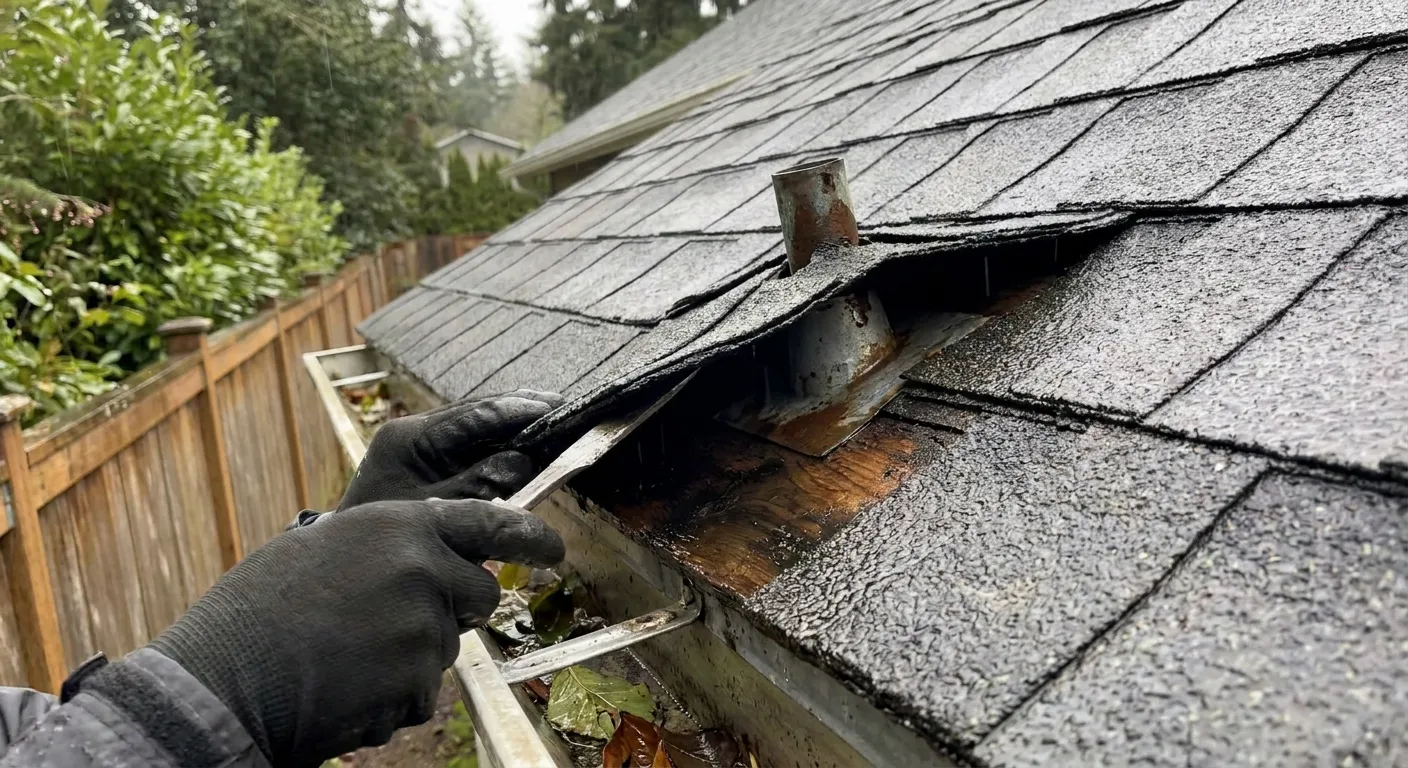
A pipe boot failure can occur when the rubber collar around a plumbing vent cracks or separates. Skylights can leak when surrounding flashing or seals wear out. A chimney counter-flashing leak may let water behind the metal pieces that protect the roof-to-chimney connection.
These areas need careful inspection because the issue may be a small opening, loose flashing, worn sealant, or damaged roofing material nearby.
Why hidden roof damage can be easy to miss
A missing shingle may be obvious, but many leaks come from less visible damage. Small flashing gaps, lifted shingle edges, worn seals, or fastener problems can allow water in only during wind-driven rain.
Moss can also hold moisture against roofing materials, especially during the long wet season. However, moss removal alone does not fix an active leak. A trained inspection is often needed to identify the actual entry point and determine whether flashing repair, shingle repair, or a larger solution is needed.
Step 4: Use Only Safe Temporary Fixes Until Help Arrives
Temporary steps should control water without creating a new safety risk. The goal is not a permanent repair. It is to protect the interior and reduce further damage while you wait for emergency roof repair in Snohomish County.
Temporary protection from inside the home
Continue using buckets, towels, and plastic sheeting to manage the water. Empty containers before they overflow, and replace soaked towels as needed.
If attic insulation is wet, avoid compressing or moving it during the storm unless it is creating an immediate hazard. Wet insulation can spread moisture and may need assessment after the leak is stopped. Keep airflow moving in the room if it is safe to do so, but do not use fans near wet electrical areas.
When a temporary roof tarp may help
A temporary roof tarp may help protect a damaged area after wind has removed shingles or a branch has damaged the roof. However, it should only be installed when conditions are dry enough, the roof can be safely accessed, and the work can be done without climbing on a steep or damaged surface.
Do not attempt to install a tarp during active rain, high wind, lightning, darkness, or icy conditions. A tarp that is poorly secured can tear loose, worsen roof damage, or create a falling hazard.
Why DIY roof repairs during a storm are not recommended
Trying to seal shingles, apply roofing cement, or nail down loose materials during a storm can be dangerous and may not stop water entering from a hidden location. Wet roofing is slippery, and wind can make ladders and materials unstable.
The safer choice is to contain water indoors, stay off the roof, and call a professional. For more warning signs that should not wait, review these top signs you need immediate roof repair.
Step 5: Call an Emergency Roofer Before the Damage Spreads
Once the immediate area is safe and contained, arrange roof leak repair Snohomish County property owners need without waiting for the next round of rain. Continued water entry can affect insulation, drywall, framing, and other areas that are not visible from the room below.
When to call for emergency roof leak repair
Call promptly if you notice active dripping, a growing ceiling stain, wet attic insulation, water near electrical fixtures, or a leak that returns every time it rains. Repeated dripping after storms may also point to a roof detail that has not been fully repaired.
Fast action can help limit structural water damage, especially when the roof is exposed to wind-driven rain. This is particularly important for rental properties, vacant homes, and investment properties where a leak may go unnoticed for longer.
What Roof Pros NW may do during an emergency visit
During an emergency visit, Roof Pros NW may inspect the roof and attic conditions, trace the likely source, and identify the best way to stop active water entry. Depending on conditions, the work may include temporary protection, targeted flashing repair, replacement of damaged materials, or a recommendation for follow-up repairs.
Some leaks can be stabilized quickly but need a permanent repair once weather allows. A clear repair plan should address both the immediate leak and the condition that caused it.
Why fast inspection matters for long-term roof health
Early inspection can reveal whether water has affected a small, isolated area or whether there are signs of broader roof wear. Repeated leaks can indicate aging materials, failing flashing, poor drainage, or multiple weak points.
A quick response does not mean assuming the worst. It means getting accurate information before moisture remains trapped in roof layers, framing, or insulation.
What Causes Roof Leaks Around the Most Common Weak Points
Roof leaks often start where water moves quickly, collects, or meets a roof opening. These details require more precision than open roof fields covered by shingles.
Skylights, pipe boots, and flashing details
Skylight leak repair often begins by checking the flashing system around the skylight, not just the glass or visible seal. Water can enter at a corner, under a flashing piece, or through worn materials around the opening.
Pipe boots are another common concern. The boot seals the gap where a plumbing vent exits the roof. When it cracks, loosens, or deteriorates, rain can enter around the pipe and run into the attic.
Flashing repair may also be needed around walls, vents, dormers, and roof edges. These metal or membrane details guide water away from vulnerable joints.
Valleys, chimneys, and roof transitions
Roof valleys carry water from two roof slopes into one channel. During heavy rain, valleys handle a large volume of runoff, so damaged valley materials can cause fast leaks.
Chimneys need both base flashing and counter-flashing to direct water away from the roof opening. Over time, movement, weather exposure, and deteriorated sealant can create gaps. A leak around a chimney or skylight should be professionally inspected because the visible wet spot may not show the full path of the water.
How to Reduce the Risk of Bigger Damage After the Leak Is Contained
After the immediate emergency is under control, continue watching the affected area. Some moisture damage becomes more visible after the roof stops leaking.
Watch for hidden signs in the attic and ceiling
Over the next day or two, check for new stains, soft drywall, damp insulation, peeling paint, musty odors, or fresh drips. Moisture that stays trapped can damage materials and support mold growth.
Do not cover a stain with paint or patch drywall before the leak source is confirmed and the materials have dried. That can hide signs a roofer needs to see.
Document what happened for the repair visit
Take clear photos or short videos of the active drip, ceiling stain, attic moisture, and any exterior damage visible from the ground. Note when the leak began, whether wind was present, and which rooms were affected.
This documentation can help the roofer understand the conditions that triggered the leak. It is also useful for property managers tracking maintenance or owners preparing insurance information.
When a Roof Leak Points to Bigger Roof Problems
Some roof leaks are isolated and can be repaired with a focused solution. Others are a sign of broader wear, especially on older roofs or roofs with repeated storm exposure.
Signs the roof may need more than one repair
A full evaluation may be appropriate when there are repeated leaks, multiple water stains, widespread shingle wear, cracked pipe boots, failing flashing in several places, or recurring moss and moisture problems.
Roof materials can age unevenly. Repairing one leak may be the right choice, but a roof with several weak areas may need a larger plan to avoid repeated emergency calls.
Why an honest inspection matters
The right recommendation depends on the roof’s age, material condition, drainage, flashing details, and the extent of moisture exposure. An inspection should explain whether a targeted repair is reasonable or whether roof replacement planning should be considered.
For guidance after the immediate leak is addressed, contact Roof Pros NW to discuss the roof’s condition and next steps.
Conclusion: Take the Right Next Step Before the Leak Gets Worse
An active leak is stressful, but the response is straightforward: protect the space, avoid electrical danger, look for evidence from inside, use only safe temporary protection, and call a roofer promptly.
A simple recap of the emergency steps
- Protect the space below the leak.
- Shut off power if water is near electricity.
- Trace the leak from inside, not from a wet roof.
- Use only safe temporary protection.
- Call an emergency roofer before the damage spreads.
Final call to action
Do not wait for the next storm if water is already entering your home or property. Roof Pros NW can help assess the leak, provide temporary protection when appropriate, and recommend repair guidance for the source of the problem. Schedule emergency roof help with Roof Pros NW for prompt roof leak repair in Snohomish County.
Conclusion
An active roof leak calls for quick, careful action. The most important first steps are to protect the people and belongings below the leak, watch for electrical hazards, and contain the water until a professional can inspect the roof. As this article explained, the visible drip spot is often not the true source of the leak. Water can travel along decking, rafters, insulation, or framing before it finally shows up on a ceiling or wall.
That is why it helps to think beyond the stain or drip and look at the full roofing system. In Snohomish County, long wet seasons, wind-driven rain, moss growth, and damp conditions can turn a small roof issue into a bigger one if it is ignored. A cracked pipe boot, loose flashing, a damaged skylight edge, or a worn valley can let in water even when the roof still looks mostly intact from the ground. The sooner those problems are found, the better chance you have of limiting interior damage and avoiding more costly repairs later.
The article also showed that safety should always come first. If water is near a light, outlet, fan, or exposed wire, the leak should be treated as an electrical concern right away. It is also important to stay off a wet roof and avoid storm-time DIY repairs that can put you at risk or make the damage worse. Temporary indoor protection is useful, but it is not a fix. The real solution is finding the source and repairing it the right way.
For homeowners, property managers, and property owners, a fast response can help protect drywall, insulation, framing, and flooring. It can also help you understand whether the leak is a one-time issue or a sign of larger roof wear. If leaks keep returning, or if there are signs of multiple weak points, it may be time to compare repair options and long-term roof planning with a trusted roofer. Regular attention to roof leaks, flashing, drainage, and storm damage is one of the best ways to extend roof life in our rainy climate. For more on keeping a roof ready for wet weather, see these roofing maintenance tips for rainy seasons.
If you are dealing with an active leak now, do not wait for the next storm to make it worse. Schedule emergency roof help with Roof Pros NW or contact Roof Pros NW to get the leak evaluated and take the next step with confidence.
When a roof is actively leaking, the first few minutes matter most. These key takeaways explain the safest emergency steps to protect your home, reduce water damage, and know when it is time to call Roof Pros NW for roof leak repair in Snohomish County.
- Act fast to limit water damage: Move furniture, buckets, and towels into place right away so leaking water does not spread into flooring, drywall, and insulation.
- Shut off power if water is near lights or outlets: If a leak is dripping from a ceiling light, fixture, or nearby electrical area, turn off the circuit breaker for that room and avoid the area until it is safe.
- Contain the leak from inside first: Catch dripping water, poke a small bulge in the ceiling only if needed to release trapped water, and protect the space below before trying anything outside.
- Find the true leak source, not just the drip spot: Water can travel along rafters, flashing, or attic framing before it shows up inside, so the visible stain is often not where the roof leak started.
- Common weak points need close attention: Skylights, pipe boots, chimney flashing, and valley flashing are frequent leak sources and often need a trained roof inspection to confirm the problem.
- Do not climb onto a wet roof during a storm: DIY tarping and roof repairs can be dangerous in rain, wind, or slippery conditions, so temporary fixes should only be done when it is safe.
- Act before insulation and framing soak through: Once water reaches attic insulation, ceiling joists, or other structural parts, the risk of bigger damage rises fast and repairs can become more involved.
- Call an emergency roofer when the leak is active: Roof Pros NW can help with emergency roof leak repair in Snohomish County, temporary protection, and a full inspection to stop the leak and limit further damage.
If your roof is leaking now, these steps can help you stay safe and protect your home while you wait for help. The article below explains exactly what to do next, how to spot the source of the leak, and when to call Roof Pros NW for emergency roof leak repair in Snohomish County.
Take the Next Step With a Professional Roof Inspection
Regular maintenance and early repairs can help your roof handle the wet Pacific Northwest climate with fewer surprises. If you have noticed loose shingles, clogged gutters, moss growth, or signs of moisture indoors, now is a smart time to schedule a professional inspection.
Roof Pros NW can assess your roof’s current condition and help you understand what needs attention now versus later. A clear plan can make it easier to protect your home and budget before the next stretch of heavy rain.
- Identify worn shingles, flashing, and drainage concerns
- Catch small issues before they require larger repairs
- Receive honest recommendations based on your roof’s condition
- Learn whether maintenance, repair, or replacement is the best fit
- Plan ahead with clear next steps and no guesswork
Don’t wait for minor roof concerns to become more disruptive. Schedule your roof inspection with Roof Pros NW today.
How soon should I call a roofer if water is dripping from the ceiling?
Call right away. A ceiling drip can turn into ceiling damage, attic moisture, and structural water damage fast, especially during steady rain. If water is near a light, outlet, or wire, treat it as an electrical hazard and shut off power to that area if you can do so safely. Then place buckets and towels to contain the leak and contact Roof Pros NW for emergency roof leak repair in Snohomish County.
Can a roofer find the source of a leak that is hard to locate?
Yes. A trained roofer can trace the water path from inside the attic or upper floor and look for signs on rafters, decking, insulation, and flashing. The visible drip spot is often not the real leak source. Roof Pros NW can inspect common problem areas like skylights, pipe boots, chimney counter-flashing, and valleys to identify where the water is entering.
What causes roof leaks around pipe boots and flashing?
Pipe boots can crack or pull away from the pipe, which lets water enter around a roof vent. Flashing can fail when sealant wears out, metal shifts, or wind-driven rain gets under weak spots. These issues often start small but can lead to water intrusion inside the home. A full inspection helps confirm whether the fix is a simple repair or something more involved.
How do I know if I need roof repair or roof replacement after a leak?
It depends on the roof age, the amount of damage, and whether the leak is isolated or part of a larger pattern. One leak may only need a targeted repair, but repeated leaks, widespread wear, or multiple weak spots can point to a roof that needs more than one fix. Roof Pros NW can inspect the roof and explain whether repair or replacement is the better long-term choice.
How much does emergency roof leak repair cost in Snohomish County?
Cost depends on the type of leak, roof size, roof age, roofing material, slope, access, the amount of damage, and whether the job needs a temporary fix, flashing repair, or a larger repair plan. If the leak has already caused ceiling or attic damage, that can also affect the scope of work. The best next step is to schedule an inspection with Roof Pros NW so they can assess the damage and provide an estimate based on your roof’s condition.
