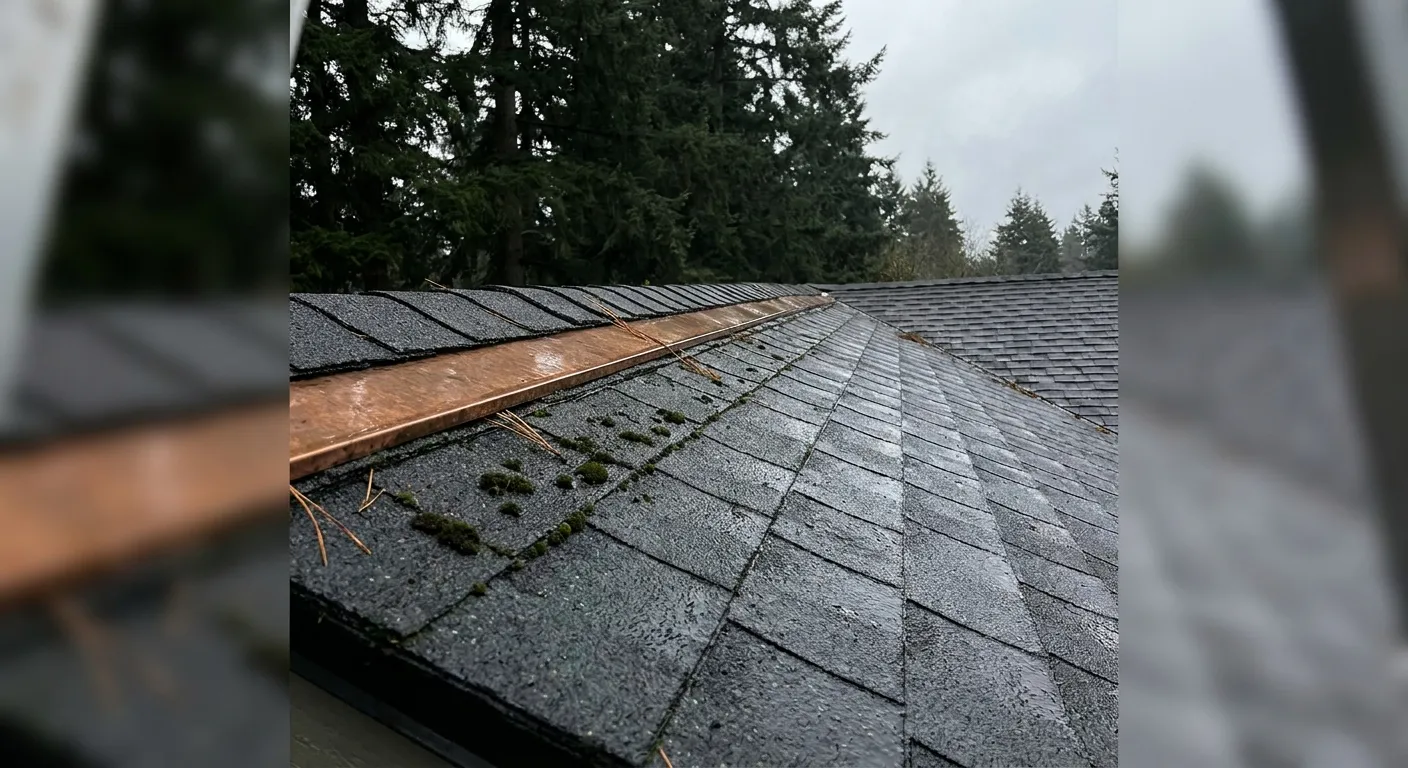
Copper Strips for Roof Moss: Do They Really Work?
A thin strip of copper near the top of a roof may seem like a simple answer to moss, but its results depend on far more than the metal itself. In the Pacific Northwest, frequent rain, long wet seasons, shaded roof areas, and damp debris create ideal conditions for moss and algae to grow. Once moss takes hold, it can trap moisture against shingles, lift roofing materials as it thickens, and make routine maintenance more difficult. That is why preventing moss is not only about keeping a roof looking clean. It is also about protecting the roof’s ability to shed water and last as long as possible.
Copper strips for roof moss work through a straightforward process. When rainwater washes across copper, it carries small amounts of copper ions down the roof surface. These ions can help slow moss and algae growth in the areas the water reaches. However, copper is not a one-time cure for an already moss-covered roof, and it does not protect every part of every roof equally. A strip installed at the ridge may only influence a limited distance downslope, often leaving lower sections, valleys, dormers, and separate roof planes exposed to new growth.
Placement is especially important on larger or steeper roofs. Water must flow over the strip and continue down the roofing surface for copper to have an effect. If the roof has long slopes, complex sections, heavy shade, or blocked drainage, one strip may not provide the coverage a homeowner expects. Thick moss also needs to be addressed carefully before any prevention method can do its job. Removing it incorrectly can damage shingles, while leaving it in place can allow moisture problems to continue beneath the growth.
Cost is another part of the decision. Installing copper ridge strips yourself may appear less expensive at first, but the full cost includes the right materials, safe access to the roof, proper fastening, and enough coverage to make a difference. Homeowners should also compare copper with zinc strips, which work in a similar way but may suit some roofs and budgets better. In many cases, a professional roof cleaning and a plan for ongoing maintenance may be more useful than adding strips alone.
This article explains how copper strips work, how far their protection can reach, and how they compare with zinc options. It also covers installation concerns, expected costs, environmental considerations, and the signs that moss prevention strips are not enough. By understanding the limits as well as the benefits, homeowners and property managers can make a smarter decision about roof moss treatment, drainage, and long-term roof care.
How Copper Strips for Roof Moss Work
Copper strips for roof moss are thin pieces of copper installed near the top of a roof. Their purpose is to slow future moss and algae growth as rainwater moves over the metal and down the roof surface. They can be a helpful part of roof maintenance in Washington, but they are not a one-step cure for every moss problem.
So, do copper strips on a roof really work to prevent moss? They can work well when they are installed in the right location, on a roof with suitable water flow, and before moss becomes heavy. Their limits matter just as much as their benefits. Roof shape, slope length, shade, drainage, and existing moss all affect results.
Why Moss Is a Bigger Problem in the Pacific Northwest
Pacific Northwest moss growth is common because roofs often stay damp for long periods. Frequent rain, overhanging trees, shaded roof sections, wind-driven rain, and wet leaves can all hold moisture against shingles or shakes.
Moss and algae roof growth can interfere with normal water shedding. Thick moss may hold moisture along shingle edges, in valleys, and around flashing. This can add to wear over time, especially when a roof already has drainage or material issues.
Homeowners, property managers, and real estate investors need a plan that combines cleaning, drainage care, inspections, and prevention. Copper strips can support that plan, but they work best when the roof itself is in good condition.
The Basic Idea Behind Copper Strip Moss Prevention
Copper roof strips moss prevention relies on rainwater. As rain moves across the copper, it picks up very small amounts of copper ions. Those ions travel downhill with the water and help discourage moss and algae on the roof surfaces they reach.
This is a prevention method, not a cleaning method. Copper strips do not quickly remove established moss, dark stains, or debris. A roof with thick growth usually needs a proper roof moss treatment or cleaning before strips can help prevent new growth.
What Copper Strips Can and Cannot Do
Copper strips may reduce the chance of moss returning in treated areas. They can be especially useful after cleaning a roof with mild to moderate moss pressure.
However, they cannot fix:
- Thick, established moss
- Clogged gutters or poor drainage
- Loose, cracked, or missing shingles
- Damaged flashing
- Leaks or trapped water
- Heavy shade and debris buildup without ongoing maintenance
The science behind the strips explains why water flow and placement are so important.
The Science Behind Copper Ions and Moss Inhibition
Copper is sometimes described as biocidal metal roofing because its ions can discourage certain biological growth. In simple terms, copper ions moss inhibition means that tiny copper particles in rainwater make it harder for moss and algae to establish on the roof surface.
This effect is gradual. It is not like spraying a cleaning solution that removes visible growth in a short time. Instead, the copper creates a mild protective effect where rainwater carries the ions.
How Rainwater Activates Copper Strips
Rain activates the copper strip each time water flows across it. Small amounts of copper enter the runoff and move downslope. Over repeated wet weather, this can help create less favorable conditions for moss and algae.
The strip must receive rainwater to work. If it is installed where water flow is blocked, or if leaves collect above it, the copper sulfate runoff effect may be limited. The goal is not to send large amounts of metal into the water. It is the steady movement of tiny amounts of copper ions across the roof that supports prevention.
Galvanic Moss Prevention in Simple Terms
Galvanic moss prevention is a simple way to describe how metal ions can discourage organic growth when exposed to water. Copper and zinc both release ions as rainwater runs over them.
For roof moss prevention, the process depends on three things:
- Rain reaching the metal strip
- Water moving evenly over the roof surface
- The treated water reaching the areas where moss is likely to grow
A strip cannot create a complete moss spore barrier across every roof section. It only affects the paths where water carries the ions.
Why Copper Works Better as Prevention Than Cleanup
Copper works best before heavy moss becomes established. Once moss has thickened, it can trap water, debris, and spores beneath its surface. The copper runoff may not reach every part of that growth.
Heavy moss should usually be addressed with safe roof cleaning first. Improper scraping, pressure washing, or aggressive brushing can damage shingles and loosen granules. After the roof is cleaned and evaluated, moss prevention strips for roof surfaces can be added as part of a longer-term plan.
Where Copper Strips Should Be Installed on a Roof
Roof ridge installation is the most common method because water begins near the ridge and flows down toward the eaves. But the top of the roof is not always enough. Roof size and layout determine whether one strip can provide useful coverage.
Why the Ridge Is the Most Common Placement
Copper ridge strips for moss are usually installed just below or along the ridge line. From there, rainwater can move over the copper and travel downslope with normal drainage.
Proper installation should protect the roof surface and avoid unnecessary damage to shingles. The strip also needs to be secure enough to handle rain, wind, and seasonal movement without lifting or trapping debris.
A ridge location makes sense on a simple roof plane with a relatively short slope. On larger roofs, however, the lower sections may receive little or no copper-treated runoff.
How Far Copper Strips Protect a Roof
Copper strip effectiveness is often limited to roughly 10 to 15 feet downslope from the strip. This is one of the most important facts to consider before buying material or scheduling installation.
A single ridge strip may help protect a short roof slope. On steep-pitch, high-ridge, large, or multi-slope roofs common in Washington State, it may not reach the lower roof sections near the eaves.
If moss returns near the eaves, that does not always mean the copper failed. It may mean the strip’s coverage zone was too limited or the placement was incomplete. Staggered strips or multiple strips at different roof sections may be needed for more even protection.
Roof Features That Can Reduce Coverage
Roof water does not always move in straight, even lines. Several features can reduce the reach of copper ions:
- Valleys that direct water away from nearby roof planes
- Dormers that interrupt water flow
- Roof breaks between upper and lower sections
- Steep slopes that move water quickly
- Shaded areas that stay damp longer
- Skylights, chimneys, and vents that split runoff paths
- Debris that blocks water from reaching lower surfaces
For example, a copper strip placed on a main ridge may help one open slope while leaving a shaded dormer roof untreated. This is why coverage should be considered before installation, not after moss returns.
Why Professional Placement Matters
Professional placement considers roof size, pitch, drainage routes, material condition, and moss patterns. A roofer can identify where water actually travels, which may be different from what is visible from the ground.
Poor placement can waste money and create uneven results. Complex roofs often benefit from a professional assessment before any strips are installed, especially when there are valleys, multiple ridges, or signs of moisture problems.
Copper Strips vs Zinc Strips for Roof Moss
When comparing zinc strips vs copper strips for roof moss, both materials work in similar ways. Neither is automatically right for every property. The best choice depends on budget, roof layout, visible moss pressure, and maintenance goals.
How Copper and Zinc Work in Similar Ways
Both copper and zinc release ions as rainwater passes over their surfaces. Those ions can slow moss and algae growth where the water travels.
Like copper, zinc is a prevention tool rather than a replacement for roof cleaning or repair. Both need proper placement, reliable water flow, and ongoing roof maintenance to provide useful results.
Zinc Strips vs Copper Strips for Roof Moss: Key Differences
Copper often costs more than zinc, and its warm metal color may stand out more on some roof types. Zinc is commonly available and may be a more budget-friendly option for certain homes.
In practical terms, compare:
- Cost: Zinc often has a lower material cost, while copper may cost more upfront.
- Appearance: Copper develops a natural patina over time. Zinc tends to have a more muted gray appearance.
- Availability: Both are widely used, though local supply and roofing preferences can vary.
- Performance: Both rely on water flow and coverage. Neither can protect areas runoff does not reach.
- Long-term value: The better value depends on how well the strip fits the roof design and maintenance plan.
Copper often receives more attention as a stronger prevention option, but a higher-priced strip is not helpful if it is installed where it cannot cover the problem areas.
Which Roofs May Benefit Most From Copper
Copper may be a good fit for roofs with steady rainfall, moderate moss pressure, and clear downslope water paths. Smaller roof sections with slopes within the typical coverage range may benefit most.
It can also make sense after a proper cleaning when the property owner wants added prevention in areas that commonly show early moss growth. Still, roof design matters more than the metal alone. A simple, well-drained roof often gets more value from strips than a large, broken-up roof with many shaded sections.
When Zinc May Be the Smarter Choice
Zinc can be a practical choice when cost is a major concern or when several strips are needed across a roof. For homeowners asking, “copper strips vs zinc strips which is better for roof moss in Washington,” the answer often comes down to coverage planning and budget.
A lower upfront price may allow a property owner to install enough strips in the right locations. Compare the entire project, including cleaning, access, labor, and future maintenance, rather than focusing only on material price.
Cost of Copper Roof Strips and Installation
The cost of copper roof strips versus professional moss treatment depends on more than the strip itself. Material is only one part of the project. A reliable estimate should include roof access, slope, layout, existing moss, and the number of strips needed for useful coverage.
What Affects the Cost of Copper Strip Installation
Several factors can raise or lower installation cost:
- Total roof size and slope length
- Roof pitch and safe access needs
- Height of the home or building
- Number of ridges, dormers, and roof sections
- Number of strips needed for coverage
- Existing moss that needs cleaning first
- Shingle, metal, tile, or cedar shake roof material
A short, low-slope roof may need limited material and labor. A steep, multi-level roof with separate shaded sections may need more strips and more careful planning.
DIY Installation vs Professional Installation
DIY installation may seem less expensive, but working at roof level carries safety and repair risks. Homeowners also need to understand how to install copper strips on a roof ridge for moss prevention without damaging shingles, flashing, or ridge components.
Professional installation can be a better value when the roof is steep, high, old, or complex. It helps ensure strips are placed where runoff can be useful and fasteners are installed correctly.
DIY may be more reasonable for an accessible, simple roof when the homeowner is comfortable with safe ladder use and understands the roof material. If there is any doubt about roof condition, an inspection should come first.
Why the Cheapest Option Is Not Always the Best Value
A low-cost strip placed on one ridge may not treat moss near lower eaves, valleys, or dormers. Installing too little material can lead to disappointment even though the copper itself is functioning as expected.
Active moss may also need cleaning before installation. Adding strips over thick growth is unlikely to solve the current problem. A combined approach of cleaning, drainage care, and correctly placed strips often offers better long-term value than choosing the lowest initial price.
Copper Strips Compared With Ongoing Roof Maintenance Costs
Copper strips can fit into a broader maintenance plan, but they do not replace periodic checks and cleaning. Regular care helps prevent debris from blocking runoff and lets property owners spot early moss before it spreads.
For roofs with established moss or widespread staining, Professional roof cleaning in Renton, WA may be a more important first step than installing prevention strips. Cleaning can also reveal whether the roof needs repairs before additional moss control is added.
When Copper Strips Are Not Enough
Copper strips are helpful in the right setting, but they are not a complete solution for roofs with underlying problems. Thick moss, poor drainage, and damaged roofing materials require more than a strip near the ridge.
Signs the Roof Needs More Than a Strip
Consider a fuller roof assessment when you see:
- Thick moss lifting along shingle edges
- Loose, cracked, curled, or missing shingles
- Dark staining that continues to spread
- Moss returning quickly after cleanup
- Wet debris collecting in valleys or behind chimneys
- Water marks in attics or on ceilings
- Persistent dampness near eaves and gutters
These signs do not always mean the roof needs replacement. They do mean the cause of moisture should be identified before relying on prevention strips.
Why Roof Cleaning Often Comes First
A roof with heavy moss usually needs cleaning before copper strips can work as intended. Thick growth blocks water paths and prevents ions from reaching the roof surface underneath.
Improper DIY cleaning can scrape protective shingle granules, loosen shingles, or damage cedar shakes. Safe cleaning methods should match the roof type and condition. Once the roof is clear, strips can help slow future growth in the areas they can reach.
Drainage, Gutters, and Moisture Problems
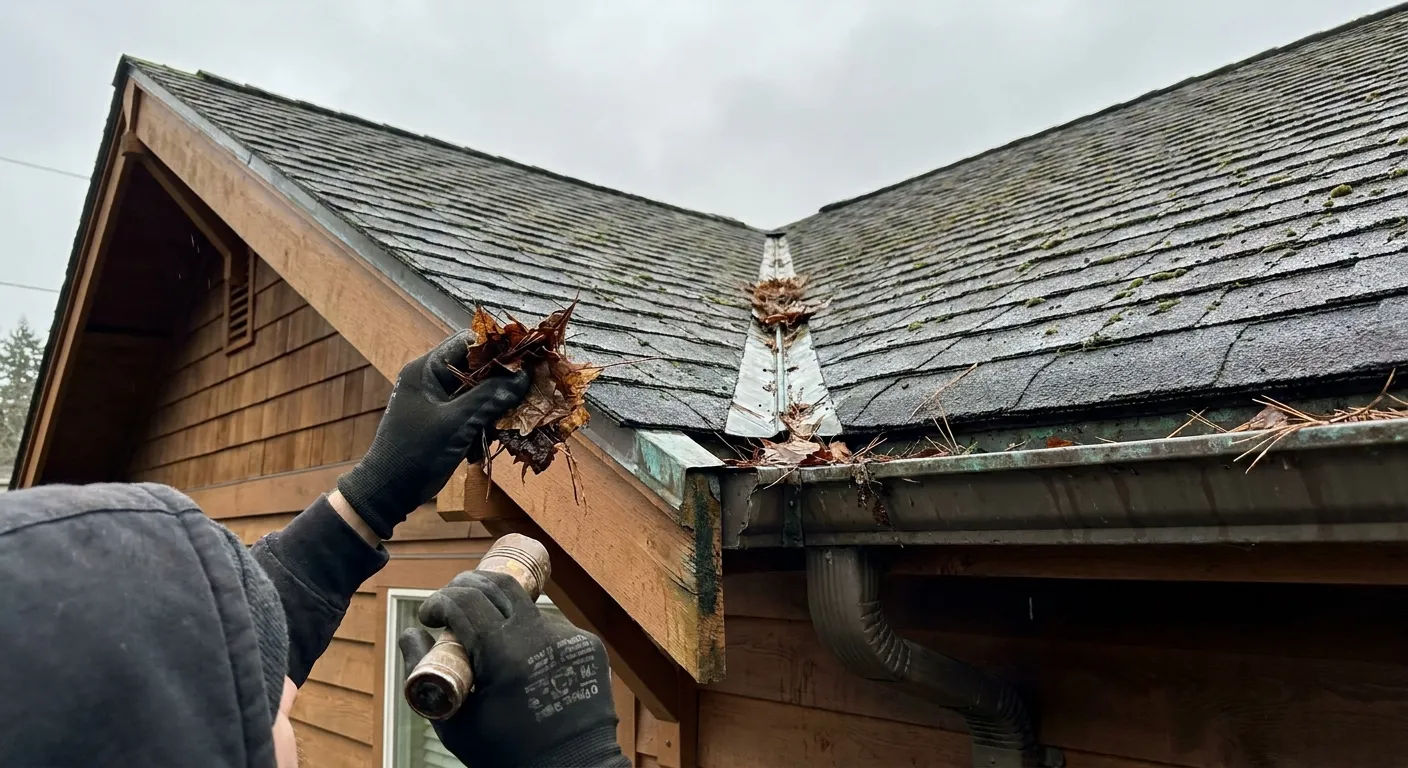
Poor drainage supports moss by keeping roof materials wet longer. Clogged gutters, backed-up downspouts, standing water, and leaf buildup can all add to moisture retention.
The role of gutters in protecting your home is closely connected to moss prevention because gutters help move water away from the roof edge. Property owners should also understand how poor roof drainage shortens lifespan, especially during long rainy periods.
When Roof Repair May Be Needed Instead
Moss can sometimes hide damaged flashing, worn shingles, open seams, or other leak paths. If the roof is already failing, repair should take priority over prevention strips.
Professional roof repair services in Renton, WA can help address material damage and moisture entry points that strips cannot fix. Prevention works best after the roof is able to shed water correctly.
Pacific Northwest Roof Maintenance and Moss Prevention
Washington roofs deal with long wet seasons, tree cover, damp debris, and changing weather. Copper strips can support roof lifespan extension, but consistent maintenance is what keeps small moisture issues from becoming larger ones.
Why Moss Grows So Fast in Wet Climates
Moss needs moisture, shade, and a surface where spores can settle. Roofs beneath trees or on north-facing slopes often stay wet longer, particularly when leaves and needles collect in valleys and gutters.
Wind-driven rain can also push moisture into areas around roof features. Even a roof with copper strips may develop moss in protected sections where treated water does not flow. That makes routine checks important.
Routine Maintenance That Supports Moss Prevention
Simple maintenance can improve the results of copper strips:
- Remove leaves, branches, and needles from roof surfaces
- Keep gutters and downspouts clear
- Watch for moss around valleys, dormers, and eaves
- Check strips for loose edges or debris buildup
- Schedule roof evaluations when stains, moss, or leaks appear
Comprehensive roofing maintenance for rainy seasons and this Roofing maintenance for rainy seasons PNW checklist can help property owners build a practical schedule.
What Property Owners Should Watch After Installation
After installation, watch where moss returns. Growth below the expected coverage area may indicate that the slope is too long for one strip. Moss in valleys or behind dormers may show that water flow is being diverted.
Check that copper strips remain secure and clear of debris. Ongoing care is part of roof lifespan extension. The goal is not to assume the roof is maintenance-free, but to reduce moss pressure while keeping drainage and materials in good condition.
How to Decide If Copper Strips Are Right for Your Roof
Copper strips make the most sense when they are part of a realistic prevention plan. Consider roof age, roof design, existing moss, drainage condition, budget, and the amount of shade around the property.
Questions to Ask Before Buying Copper Strips
- Is the roof only lightly affected by moss?
- Does water flow evenly over the roof surface?
- Is the roof design simple enough for one or more strips to work?
- Has the roof already had a professional cleaning?
Also ask whether the moss is limited to areas within 10 to 15 feet of a possible strip location. If the roof is much larger, multiple strips may be needed.
When Copper Strips Make Sense
Copper strips can be a good option after cleaning when moss pressure is mild to moderate and the roof has clear runoff paths. They are most useful on roof sections where rainwater can carry copper ions evenly downslope.
They can also help property owners who want a lower-maintenance way to slow future moss and algae growth. Correct installation, drainage care, and periodic cleaning remain important.
When to Get a Professional Roof Inspection
A professional inspection can determine whether copper strips are likely to help or whether roof cleaning, gutter service, or repair should happen first. A roofer can evaluate moss patterns, flashing, shingle condition, drainage, and roof layout.
For help reviewing your roof’s condition and moss prevention options, visit the Roof Pros NW homepage or request an assessment through Booking.
Conclusion
Copper strips can be a useful part of roof moss prevention, but they work best when the roof is already in decent shape and water can move across the surface the right way. They are designed to slow future moss and algae growth, not to remove heavy buildup or fix deeper roof problems. That is why roof shape, slope, shade, drainage, and the current condition of the roof all matter so much.
For homeowners and property owners in the Pacific Northwest, this is especially important. Long wet seasons, tree cover, and damp debris create the kind of conditions where moss can return again and again. A strip near the ridge may help, but it will not solve every issue on its own. If moss is thick, gutters are clogged, flashing is damaged, or water is not draining well, those problems need attention first.
The biggest takeaway is that copper strips work best as part of a full maintenance plan. That means cleaning the roof when needed, keeping gutters clear, checking for weak spots, and making sure runoff paths are not blocked. A roof that sheds water properly will always have a better chance of staying cleaner and lasting longer. If drainage is a concern, it can help to review how poor roof drainage shortens lifespan and the role of gutters in protecting your home.
It is also worth remembering that moss can hide larger issues. If growth keeps coming back, or if you notice loose shingles, leaks, or staining, the roof may need repair before any prevention strip will do much good. In those cases, a professional look can help you decide whether roof repair services in Renton, WA are the better next step. If the roof is mostly sound but has active moss buildup, a safe cleaning service like professional roof cleaning in Renton, WA may be the right place to start.
The best decision is the one based on your roof’s actual condition, not just on the material you buy. A simple roof with good drainage may benefit from copper strips. A larger or more complex roof may need multiple strips, better maintenance, or repair work first. Regular inspections can help you catch small issues early, before they turn into bigger moisture problems.
If you want a clearer answer for your roof, Roof Pros NW can help you review the condition of your roof and talk through the best moss prevention options. Start with a professional inspection, then build a plan that fits your roof, your budget, and the weather your home faces year after year.
Copper strips can help slow roof moss growth, but they are not a simple fix for every roof. The most important thing to understand is how they work, where they should be placed, and when a roof needs more than just a strip at the ridge. These key takeaways explain the science, coverage limits, and cost questions homeowners in the Pacific Northwest should know before deciding on copper moss prevention.
- Copper strips work by releasing moss-fighting ions: Rainwater moves over the metal and carries copper ions down the roof, which can help slow moss and algae growth.
- Placement matters more than many homeowners realize: A single strip at the ridge may only protect part of the roof, especially on steep or long roof slopes common in Washington.
- Coverage has a real limit: Copper treatment usually reaches only about 10 to 15 feet downslope, so larger roofs may need multiple staggered strips for better coverage.
- Copper strips are not a cure-all for heavy moss: If moss is already thick or widespread, the roof may need professional cleaning and treatment before any prevention system can help.
- Zinc strips and copper strips both have pros and cons: Copper often gets more attention, but the best choice depends on roof size, slope, budget, and how much moss pressure the home gets.
- Pacific Northwest weather makes moss prevention more important: Long wet seasons, shade, and damp conditions can speed up moss growth and shorten roof life if maintenance is delayed.
- DIY installation may save money, but not always solve the problem: The real cost includes the strips, labor, and making sure they are placed where water can actually carry the protective ions where needed.
- A roof inspection can show whether strips are enough: Roof Pros NW can check for moss, flashing issues, and drainage problems to help decide if copper strips, cleaning, or repair is the better next step.
With these points in mind, the full article will break down how copper strips work, how they compare to zinc, what they cost, and when a professional roofing solution makes more sense for your home.
Keep Your Roof Ready for the Next Rainy Season
Regular maintenance helps you spot small roofing issues before they become larger repairs. If your roof has not been checked recently, now is a smart time to schedule a professional inspection with Roof Pros NW.
A thorough roof inspection can help you make informed decisions about cleaning, repairs, drainage, and long-term upkeep. You will get clear guidance without pressure, so you can plan the right next step for your home.
- Identify worn shingles, flashing, and vulnerable roof areas
- Check for drainage concerns that may affect roof performance
- Catch moss growth and debris buildup early
- Get practical maintenance recommendations for rainy weather
- Understand whether repairs are needed now or can be planned ahead
Give your roof the attention it needs before the next stretch of wet weather arrives. Book your roof inspection with Roof Pros NW today.
Are copper strips for roof moss worth the cost?
Copper strips can be worth it when the roof is in good condition, moss growth is still light, and water can flow evenly down the roof. They help slow future moss growth, but they do not remove heavy moss or fix drainage problems, damaged shingles, or leaks. A roofing company can inspect the roof, check the slope and layout, and tell you whether copper strips will provide enough coverage or whether cleaning or repair should come first. Contact Roof Pros NW for an inspection and a clear estimate based on your roof’s condition.
Which is better for roof moss, copper strips or zinc strips?
Copper and zinc work in similar ways. Rainwater carries metal ions down the roof, and those ions help slow moss and algae growth where the water reaches. Copper often costs more and may provide a stronger prevention option on some roofs, while zinc can be a practical choice for certain budgets and roof layouts. The better choice depends on your roof size, slope, shade, and how much coverage you need. Roof Pros NW can review your roof and help you decide which option fits best.
How far do copper strips protect a roof from moss growth?
Copper strips usually only help the roof areas that rainwater can reach after it passes over the strip. On many roofs, that means the protection is limited to a shorter section downslope, not the entire roof. Long slopes, dormers, valleys, and shaded areas can reduce coverage. If your roof is large or has a complex layout, one strip may not be enough. Roof Pros NW can inspect the roof and show you where copper strips would and would not help.
Do I need roof cleaning before installing moss prevention strips?
If your roof already has thick moss, cleaning should usually come first. Moss prevention strips are made to slow new growth, not remove heavy buildup. Installing strips over active moss will not solve the existing problem, and the moss can keep holding moisture against the shingles. A professional cleaning can clear the roof and make prevention more effective. Contact Roof Pros NW to find out whether cleaning, prevention strips, or both make sense for your roof.
Should I get a professional roof cleaning or a moss prevention treatment?
It depends on the roof’s current condition. If moss is already thick, a professional cleaning is usually the first step. If the roof has already been cleaned and you want to slow new growth, moss prevention treatment can help. Many roofs need both parts of a plan, especially in the Pacific Northwest where damp weather brings moss back quickly. Roof Pros NW can inspect the roof, explain the best next step, and help you choose a plan that fits your home and budget.
