Roof Moss Treatment: A Homeowner’s Guide for the PNW
Moss on a Pacific Northwest roof is more than a green surface problem. It can act like a wet sponge, holding moisture against shingles long after the rain has stopped. On a shaded roof, that added moisture may keep asphalt shingles damp for days, speed up granule loss, and contribute to lifted or curling shingle edges. What starts as a small patch near the ridge or beneath overhanging branches can gradually affect the materials that protect your roof deck, attic, and living space below. Long wet seasons, mild temperatures, and limited sunlight make moss growth especially common throughout the PNW. Moss attaches itself to the roof surface and traps moisture underneath, which can worsen normal shingle wear over time. If water reaches beneath damaged shingles, it may lead to hidden moisture issues, wood rot, and repairs that are far more involved than basic roof cleaning moss. That is why early attention matters for homeowners, property managers, and anyone responsible for protecting a building. A proper roof moss treatment is not simply about making the roof look cleaner from the street. It should address active growth while helping reduce the conditions that allow moss to return. Removing visible moss may improve the appearance of the roof, but surface cleaning alone does not always provide long-term moss and algae control. Treatment choices, timing, roof slope, shingle condition, nearby trees, and drainage all play a role in choosing a safe approach. High-pressure washing, for example, can remove protective granules from asphalt shingles and create more wear than it solves. Softer cleaning methods and roof-safe products are often better suited to moss on asphalt shingles when they are used correctly. It is also important to know the difference between moss and algae. Moss has a thicker, raised texture and holds moisture, while algae often appears as dark streaks. Both can affect a roof’s appearance, but they may not need the same treatment or prevention plan. Signs such as heavy granule buildup in gutters, widespread curling, missing shingles, soft areas, or repeated leaks deserve closer attention. These can suggest that moss growth has moved beyond a maintenance concern and may be hiding deeper damage. In those cases, a professional inspection can help identify issues that are not visible from the ground. This guide explains why moss grows so quickly in the Pacific Northwest, how to approach roof moss removal without damaging shingles, and which prevention steps can slow regrowth. You will also learn when trimming branches, improving sunlight, or adding zinc strips may help, why late summer and early fall are useful treatment times, and when it is wise to schedule a roof inspection before the next long stretch of rain.
Why Roof Moss Is a Bigger Problem Than It Looks
In the Pacific Northwest, roof moss is often treated as a cosmetic problem. While green growth can make a roof look older or unclean, moss can also affect how well the roof sheds water. This matters most on asphalt shingles, which need to dry between rainstorms to protect the roof structure below.
Moss holds water like a sponge. When it grows across shingle surfaces, in valleys, or along roof edges, it can keep those areas damp long after rainfall stops. Over time, this repeated moisture exposure can speed up shingle deterioration and reveal weak points around flashing, vents, and gutters.
Roof moss treatment is therefore more than surface cleaning. A careful approach includes removing or controlling existing growth, improving drying conditions, and checking for damage hidden beneath the moss. This is especially important before the long wet season returns.
How Moss Changes the Way a Roof Dries
Healthy shingles are designed to shed rainwater and dry in moving air and sunlight. Moss interrupts that process by trapping moisture against the shingle surface and around its edges.
Moisture retention under shingles can allow water to work into small gaps, especially where shingles are already curled, cracked, or worn. If water reaches the roof deck, the wood layer beneath the roofing materials, it may contribute to rot over time.
Why PNW Homes See More Moss Growth
Heavy rain, mild temperatures, shade, and tree cover create ideal conditions for moss. North-facing roof slopes and areas below overhanging branches often receive less direct sunlight, so they stay wet longer.
Leaves, needles, and small branches can also collect in valleys and gutters. That debris holds moisture and supports moss and fungal growth on roof surfaces. Regular treatment and maintenance help reduce these conditions before they lead to more serious roofing concerns.
Moss vs. Algae: Knowing What Is on Your Roof
Moss and algae can both appear on Pacific Northwest roofs, but they do not behave the same way. Knowing the difference helps homeowners choose a safer cleaning and treatment plan.
What Moss Looks Like on Asphalt Shingles
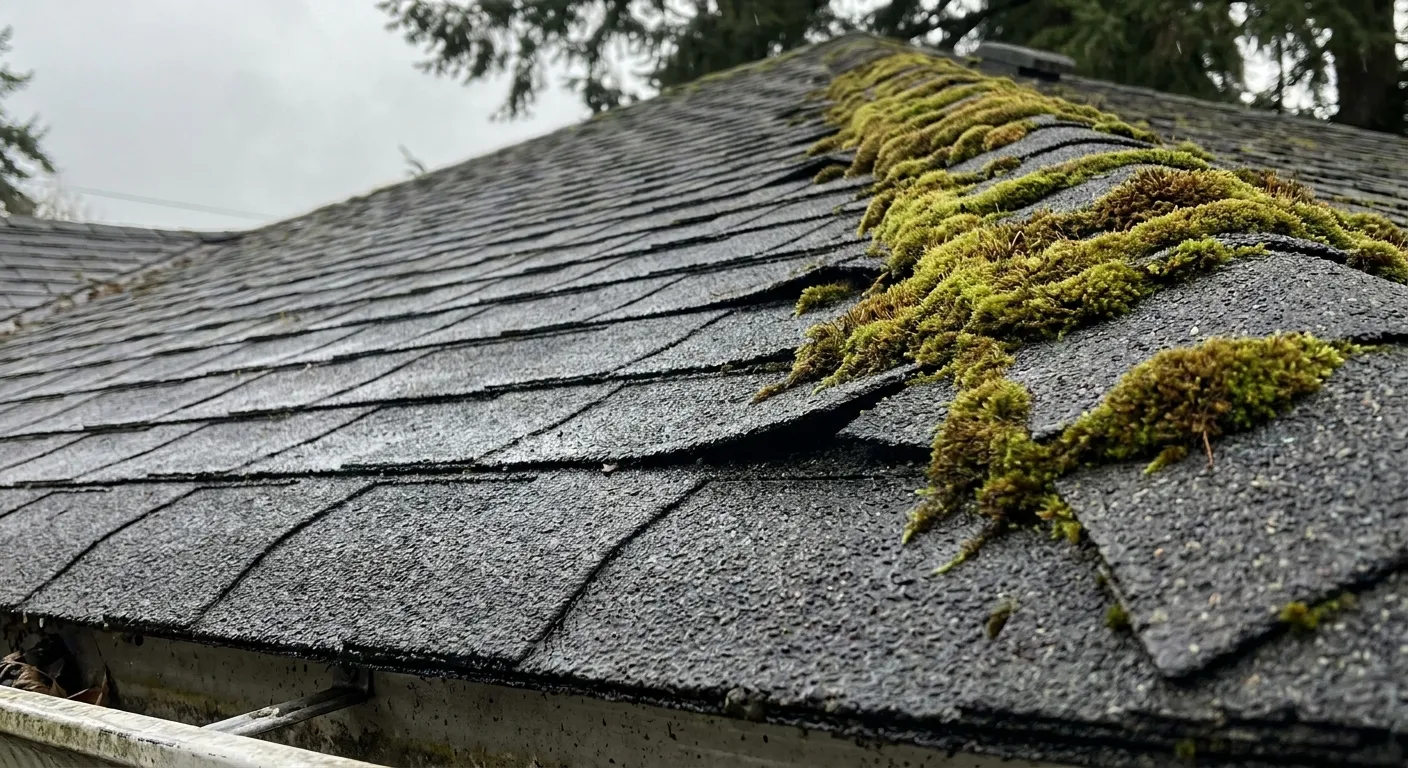
Moss is usually thick, raised, and sponge-like. It may look bright green when wet and duller green or brown when dry. Moss often starts in shaded areas, under branches, near ridges, and along roof valleys.
As it grows, moss can spread into shingle seams and edges. That growth may hold moisture where shingles overlap, making moss on asphalt shingles a concern beyond appearance.
What Roof Algae Usually Looks Like
Roof algae usually appears as dark streaks, stains, or broad discolored patches. It tends to lie flatter against the roof than moss and does not form thick clumps.
Algae can affect curb appeal and may signal damp conditions, but it does not lift shingle edges or hold water in the same way as moss. Moss and algae control may involve similar roof-safe cleaning methods, but heavy moss buildup often needs more careful removal and inspection.
How Moss Damages Asphalt Shingles Over Time
Moss damage often develops slowly. A roof may not leak right away, which can make the problem easy to put off. However, long-term growth can affect the protective surface of shingles and allow water to reach places it should not.
Rhizoids and Moisture Trapped Under the Moss
Moss does not have deep roots like a tree. Instead, it uses tiny attachment structures called rhizoids to grip a surface. Rhizoid penetration describes how these holdfasts settle into rough areas of the shingle surface and around overlaps.
The main concern is not that rhizoids bore deeply through a roof. It is that they anchor moss in place while the growth traps water underneath. During wet weather, that moisture can remain against shingles for days, increasing wear around seams and edges.
Granule Loss and Shingle Wear
Asphalt shingles have a layer of mineral granules on top. These granules help protect the asphalt layer from sunlight, rain, and everyday weathering. Moss can loosen granules as it expands, contracts, and is removed improperly.
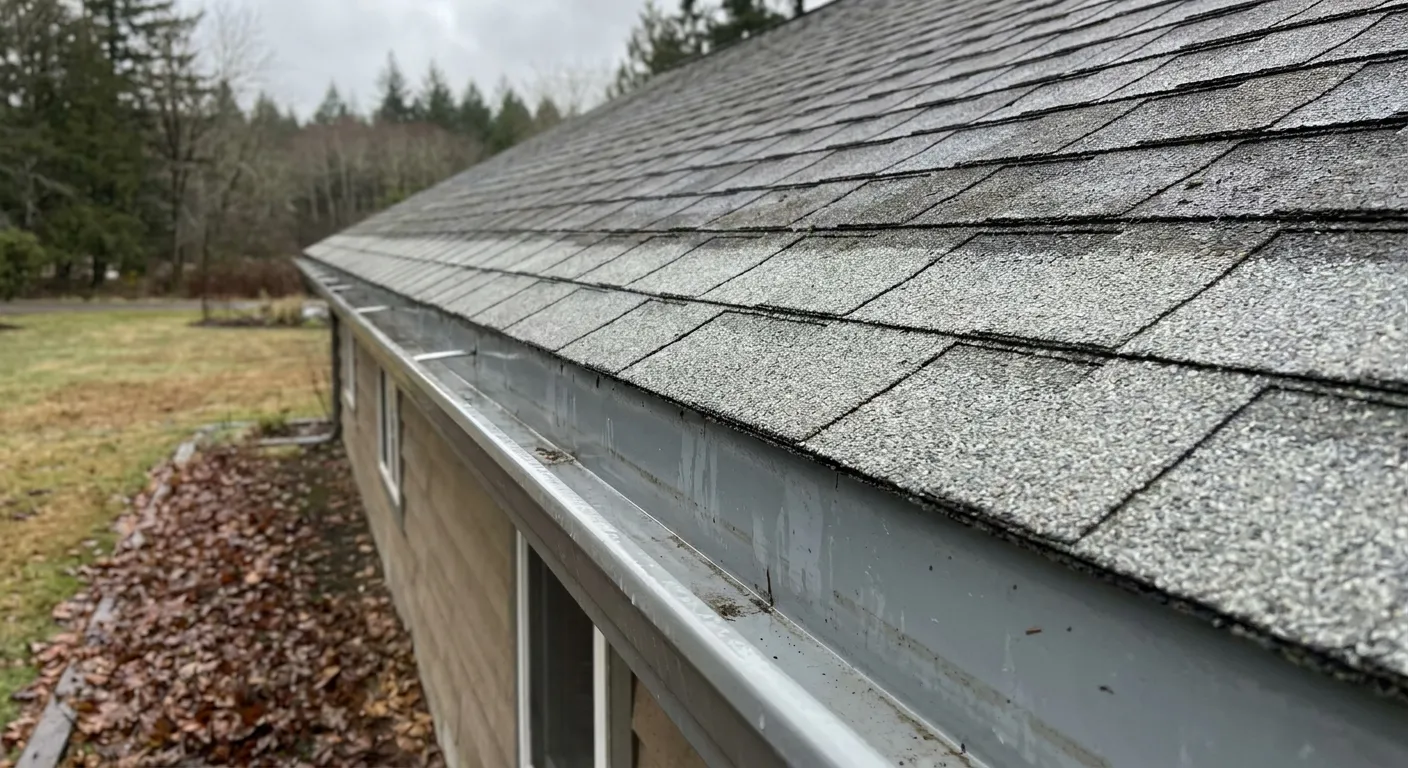
Granule loss may show up as sandy material in gutters or at downspout exits. It can also leave shingles looking smoother, darker, or unevenly worn. Once protective granules are lost, shingles may age faster and become more exposed to rain and sunlight.
Aggressive scraping and high-pressure washing can make this worse. The goal of roof moss removal should be to protect the shingle surface, not simply make the roof look clean quickly.
When Hidden Damage Becomes a Bigger Problem
Water can move beneath damaged or lifted shingles and reach the underlayment or roof deck. A small problem may remain hidden until it causes a ceiling stain, damp attic odor, or soft area in the roof structure.
Roof deck rot can begin in small sections where moisture has been trapped for long periods. Moss is not always the only cause, but it can be an early warning that the roof is not drying as it should. That is why a moss treatment plan should also include a close look at the roof’s condition.
Signs Your Roof May Need Moss Treatment Soon
Regular checks from the ground can help you spot moss before it spreads across large areas. Use binoculars if needed, and avoid walking on a roof unless you have the right experience and safety equipment.
Visible Signs on the Roof Surface
Look for:
- Moss patches near the ridge, beneath trees, or on north-facing slopes
- Thick growth in valleys, near chimneys, or along roof edges
- Curling, lifted, cracked, or missing shingles
- Moss growing between shingle tabs or pushing up their edges
- Debris buildup that keeps sections of the roof damp
Light moss may only need prompt treatment and better roof maintenance. Heavy buildup around worn shingles may mean the roof needs a closer evaluation first.
Signs You May See in Gutters or Around the Home
Gutters can reveal clues about roof wear. Granules, shingle fragments, moss clumps, and debris after wind or rain may indicate that roof surfaces need attention.
Inside the home, watch for damp attic smells, ceiling stains, peeling paint near upper walls, or moisture around skylights. These signs do not always come from moss, but they should not be ignored.
When Moss Damage May Need a Professional Inspection
A professional roof inspection is helpful when moss growth is widespread, shingles feel fragile, or leaks have occurred more than once. An inspection can identify damage that is difficult to see from the ground, including worn flashing, weak shingle edges, and possible moisture issues below the surface.
Roof Moss Removal Methods: What Works and What to Avoid
Safe roof moss removal depends on the roof’s age, slope, condition, and type of growth. The best method removes or controls moss while protecting the shingle granules and avoiding damage to gutters, landscaping, and nearby surfaces.
Soft Washing and Gentle Cleaning Methods
Soft washing uses low-pressure water and roof-safe cleaning solutions rather than forceful spray. It is generally a safer approach for asphalt shingles because it does not rely on pressure to blast moss away.
A careful cleaning process may involve applying an appropriate treatment, allowing it time to work, and gently removing loose debris where needed. Some moss may weather away gradually after treatment rather than disappearing the same day. This can be preferable to harsh scraping that pulls at shingles.
For more guidance on careful roof cleaning, see this resource on professional roof cleaning.
Roof-Safe Moss Treatment Products
Moss treatment for roofs can include zinc sulfate treatment, potassium salts of fatty acids, and certain bleach-based solutions formulated for roofing use. Each product has different application instructions, dwell times, and safety needs.
Zinc sulfate can help control moss, while zinc or copper-based preventive systems may reduce regrowth over time. Potassium salts of fatty acids are used in some roof-safe cleaners to control organic growth. Bleach solutions may be effective when properly diluted and applied, but misuse can harm plants, discolor surfaces, or affect roofing materials.
Always follow the product label and local handling guidance. Protect nearby landscaping, keep runoff in mind, and do not mix cleaning products. If you are unsure which treatment fits your roof, professional help is the safer choice.
Why Pressure Washing Can Do More Harm Than Good
Pressure washing can strip protective granules from asphalt shingles, loosen shingle edges, and force water beneath the roofing system. It may make a roof look cleaner for a short time while creating avoidable wear.
Roof cleaning moss should focus on controlled treatment and gentle removal. High-pressure cleaning is especially risky on older roofs, roofs with existing granule loss, and roofs with brittle shingles.
DIY Roof Moss Removal vs. Professional Help
A homeowner may be able to manage light surface moss on a low, safely accessible roof using a roof-approved treatment. Even then, avoid harsh brushing, pressure washing, and walking on shingles that are wet, steep, or fragile.
Professional roof moss removal is often the better option when:
- Moss is thick, widespread, or growing under shingle edges
- The roof is steep or difficult to access safely
- Shingles are aging, curled, or losing granules
- There are signs of leaks, soft spots, or damaged flashing
- The property has complex valleys, skylights, or multiple roof levels
Professionals can assess whether the roof needs cleaning, treatment, repair, or a combination of services.
What Not to Use on a Roof Without Care
Avoid using wire brushes, metal scraping tools, undiluted chemicals, or cleaners not intended for roofing. Strong products can stain metal components, corrode flashing, harm vegetation, or damage shingles when applied incorrectly.
The safest approach is to use products designed for the roof material and to focus on long-term moss prevention, not just immediate appearance.
The Best Time to Treat Roof Moss in the Pacific Northwest
Late summer through early fall is often a practical time for roof moss treatment in the Pacific Northwest. Drier weather can make the roof easier to inspect and allows cleaning solutions to be applied under more controlled conditions.
Why Late Summer and Early Fall Work Well
Treating moss before fall rains helps prepare the roof for months of moisture, wind, and debris. It also gives homeowners time to correct clogged gutters, overhanging branches, or small repair needs before wet weather makes roof work more difficult.
This is often the best roof moss treatment before fall rains, but timing should depend on the roof’s actual condition. Heavy moss growth or a suspected leak should not wait simply because it is not late summer.
How Weather and Roof Conditions Affect Timing
Shade, roof slope, nearby trees, drainage, and the amount of moss growth all affect treatment timing. A shaded roof below evergreen branches may need attention more often than a sunny roof with clear drainage.
Schedule work for a period without active rain when possible. A roof professional can help determine whether treatment should happen now or after a repair is completed.
How to Prevent Moss from Coming Back
Roof moss prevention works best after existing growth has been treated and the roof has been checked for damage. Preventive steps reduce the damp, shaded conditions that moss needs to thrive.
Trim Branches and Improve Sunlight
Overhanging branches create shade and drop leaves, needles, and twigs on the roof. Trimming them back can improve sunlight and air movement, helping shingles dry faster after rain.
Branch trimming should be done carefully so limbs do not damage the roof or fall onto gutters. It is also helpful to remove roof debris before it breaks down and holds moisture.
Add Zinc Strips or Other Preventive Measures
Zinc strips are installed near the roof ridge. When rainwater flows over them, small amounts of zinc can help limit moss and algae regrowth below. They are not a substitute for cleaning or repair, and performance can vary based on roof design and rainfall patterns.
Preventive measures work best on a clean roof with sound shingles. If moss has already lifted edges or caused major granule loss, inspection and repair should come first.
Keep Gutters and Roof Valleys Clear
Clogged gutters can cause water to back up along roof edges. Debris-filled valleys can slow drainage and create damp pockets where moss thrives.
Seasonal cleaning should include gutters, downspouts, valleys, and areas behind chimneys or around skylights. For a broader maintenance plan, review comprehensive roof maintenance for rainy seasons.
Schedule Regular Roof Maintenance
Moss prevention is part of ongoing roof care, not a one-time project. Check the roof after windy weather, remove debris when safe, and look for fresh moss in shaded locations.
A seasonal schedule can make maintenance easier for homeowners and property managers. This roofing maintenance for rainy seasons PNW checklist and these seasonal roof maintenance tips for Bellevue homeowners can help guide routine checks.
When Moss Damage May Signal a Bigger Roof Problem
Moss often points to moisture and drying problems, but it can also hide existing roof damage. Treating the moss is important, yet the condition beneath it matters just as much.
Warning Signs That Need Fast Attention
Contact a roofing professional promptly if you notice:
- Heavy granule loss in gutters or below downspouts
- Lifted, cracked, or missing shingles
- Soft spots, visible sagging, or uneven roof lines
- Active leaks, ceiling stains, or damp attic insulation
- Moss growth concentrated around flashing, vents, or chimneys
These signs may indicate that water is getting beneath the shingles or that roof components need repair.
How Moss Can Hide Roof Repair Needs
Moss can cover cracks, exposed fasteners, worn shingle tabs, and weak flashing. During an inspection, a roofer may find issues around vents, chimneys, valleys, or pipe boots that were not visible through the growth.
If you are concerned about leaks or worn roofing materials, review the top signs you need immediate roof repair. Property owners in the area can also learn more about roof repair services for homeowners in Kent.
What a Professional Roof Inspection Can Find
A professional inspection helps separate a surface moss issue from a roofing system issue. It is especially useful after heavy moss growth, before the wet season, or when a roof has shown signs of leaking.
What Roof Pros Check During an Inspection
An inspection may assess:
- Shingle condition, cracking, curling, and granule loss
- Moss growth patterns and moisture-prone areas
- Flashing around chimneys, vents, skylights, and walls
- Gutters, valleys, and drainage paths
- Signs of roof deck rot or soft areas
- Ventilation concerns that may contribute to trapped moisture
These details help identify why moss is returning and whether any repairs are needed before treatment.
Why an Inspection Helps You Choose the Right Next Step
Inspection findings can help determine whether the roof needs moss treatment, minor repair, more extensive restoration, or roof replacement planning. It also prevents cleaning from covering up a problem that needs attention first.
For more information, see roofing inspections in Kent for a moisture-heavy climate.
Roof Moss Treatment Tips for Homeowners, Property Managers, and Investors
Different property owners have different maintenance needs, but regular observation and early action are valuable for every roof.
For Homeowners
Watch shaded areas, gutters, valleys, and the lower edges of roof slopes. If you see early moss growth, arrange roof moss treatment before it spreads into shingle seams.
Keep records of cleaning, repairs, and inspections. This can make it easier to spot patterns, such as moss returning in the same area because of shade or drainage.
For Property Managers and Investors
Include moss control in seasonal maintenance plans for each property. Schedule visual checks after long wet periods and before fall, especially for buildings with tree cover or older asphalt shingles.
Early treatment can help reduce the chance that minor moss growth turns into larger repair costs later. For rental properties, routine roof checks also help protect occupants from disruptions caused by preventable leaks.
Final Thoughts: Choosing the Right Next Step for Your Roof
Roof moss is more than a surface concern when it traps moisture, lifts shingle edges, and speeds up granule loss. Proper roof moss treatment combines gentle cleaning, appropriate moss control, prevention steps, and inspection when there are signs of wear.
When to Treat, Prevent, or Call for Help
Light moss on a sound roof may respond well to roof-safe treatment and better debris control. Thick moss, repeated regrowth, shingle damage, leaks, or soft areas deserve a professional evaluation before cleaning begins.
Take the Next Step Before the Wet Season Returns
If you see heavy moss, granules in gutters, lifted shingles, ceiling stains, or signs of water intrusion, schedule a closer look before wet weather returns. You can book a roof inspection or service with Roof Pros NW or visit the Roof Pros NW home page to learn more.
Conclusion
Roof moss may start as a small patch on an asphalt roof, but it can lead to bigger roofing concerns if it keeps moisture trapped on the surface. In the Pacific Northwest, where roofs face long wet seasons, shade, debris, and frequent damp weather, moss can slow drying, loosen granules, and hide early signs of wear. That is why it should be treated as more than a cosmetic issue.
The main takeaway is that moss is a moisture problem as much as a cleaning problem. When it spreads into shingle seams, valleys, and edges, it can hold water against the roof for days at a time. Over time, that can contribute to shingle damage, flashing trouble, gutter buildup, and even hidden deck rot. If the roof is already aging, curled, or losing granules, moss can make those weak spots worse.
A safe roof moss plan starts with knowing what you are dealing with. Moss is thick and sponge-like, while algae usually appears as flat dark streaks. Moss is the bigger concern because it can lift shingles and trap water underneath them. That is why gentle treatment matters. Soft washing, roof-safe cleaners, and careful debris removal are usually much better choices than scraping or pressure washing, which can damage shingles and strip away protective granules.
Prevention matters just as much as removal. Trimming branches, clearing gutters, keeping roof valleys open, and improving sunlight and airflow can all help the roof dry faster after rain. Seasonal maintenance also makes a difference, especially before fall weather arrives. Resources like comprehensive roof maintenance for rainy seasons and the roofing maintenance for rainy seasons PNW checklist can help homeowners stay ahead of moss growth and other wet-weather roof issues.
Just as important, moss can hide roofing problems that need attention. If you notice lifted shingles, heavy granule loss, leaks, soft spots, or stains inside the home, it may be time for a closer look. A professional roof inspection can help you see whether the roof only needs moss treatment or whether repairs are needed first. That kind of evaluation is useful for homeowners, property managers, and investors who want to protect the roof and avoid preventable water damage.
If you are seeing signs of moss buildup, debris in gutters, or roof wear that keeps returning, do not wait for the next round of heavy rain. A timely inspection can help you make a smarter choice about cleaning, maintenance, or repair. For help with your next step, you can book a roof inspection or service with Roof Pros NW and get a clear plan for your roof before the wet season returns.
Roof moss may look like a small cosmetic problem, but in the Pacific Northwest it can lead to much bigger roof issues if it is left alone. These key takeaways explain why moss grows so fast, how it can damage asphalt shingles from the inside out, and when it is time to choose treatment, prevention, or a professional roof inspection.
- Moss is more than a stain: Moss holds moisture against the roof surface, which can speed up shingle wear, granule loss, and hidden damage over time.
- PNW weather makes moss grow fast: Long wet seasons, mild spring weather, and shaded roofs create the damp conditions moss needs to spread on asphalt shingles.
- Hidden damage can start before moss looks severe: Rhizoids can trap moisture under the moss, which may weaken shingles and begin early roof deck rot before you see major lifting or damage.
- Surface cleaning is not the same as long-term treatment: Removing visible moss helps, but a proper moss treatment plan should also slow regrowth and protect the roof over time.
- Pressure washing can do more harm than good: High-pressure cleaning can strip granules and damage asphalt shingles, so softer roof cleaning methods are usually safer.
- Professional treatment can help protect shingles: Roof-safe products like zinc sulfate or other moss treatment options may be used to kill moss without causing extra roof damage when applied correctly.
- Prevention works best after treatment: Trimming back branches, improving sun exposure, and adding zinc strips can help reduce future moss growth on the roof.
- Granule loss and lifted edges are warning signs: If moss has caused shingle edges to curl, or if you notice heavy granule loss, the roof may need a closer inspection for deeper damage.
- Knowing moss from algae matters: Moss and algae are different, and each may need a different cleaning approach to protect the roof and avoid repeat growth.
- A roof inspection can catch what you cannot see: A professional roofer can check for moisture damage, roof deck rot, and other hidden issues before the problem becomes a larger repair.
- Late summer and early fall are smart times for treatment: Treating moss before the wet season can help reduce growth and prepare the roof for heavy rain.
With these points in mind, the rest of this article will walk through the best ways to treat roof moss, how to prevent it from coming back, and when Roof Pros NW can help with a closer look at your roof.
Keep Your Roof Ready for Rainy Weather
Regular maintenance helps you spot small roof issues before they become larger repairs. If you have noticed moss growth, loose shingles, clogged gutters, or signs of moisture indoors, now is a smart time to schedule a professional roof inspection with Roof Pros NW.
A thorough inspection gives you a clear picture of your roof’s condition and helps you plan the right next step for your home.
- Find worn shingles, flashing issues, and weak spots early
- Check for moss, debris, and drainage concerns
- Identify moisture risks around vents, skylights, and valleys
- Get honest guidance on repairs or ongoing maintenance
- Protect your roof’s performance through the wet season
You do not need to wait for a major problem to take action. A timely inspection can help you stay ahead of seasonal wear and make informed choices about your roof.
Schedule your roof inspection with Roof Pros NW today.
Is professional roof moss treatment worth it, or should I just clean the roof myself?
Professional treatment is usually worth it when moss is thick, the roof is steep, or the shingles are aging. DIY cleaning can be risky because scraping or using too much pressure can remove granules and shorten shingle life. A pro can use safer methods, check for damage, and recommend the right prevention steps. If you want a careful assessment, contact Roof Pros NW for an inspection or estimate.
Can moss on asphalt shingles cause leaks or roof deck rot?
Yes. Moss holds moisture against the shingles, which can keep the roof damp long after rain stops. Over time, that extra moisture can lift shingle edges, weaken the roof surface, and let water reach the roof deck. If the damage is advanced, it can lead to leaks or rot. Roof Pros NW can inspect the roof and tell you whether treatment or repair is needed.
How soon should I schedule roof moss treatment before the fall rains?
As soon as you notice moss growth, but late summer and early fall are often the best times to act. Drier weather makes treatment easier and helps prepare the roof before long wet periods return. If moss is spreading fast or you already see shingle wear, do not wait. Contact Roof Pros NW to schedule an inspection and plan the next step.
What are the signs that roof moss has already damaged the shingles or underlayment?
Watch for curling or lifted shingles, granules in gutters, soft spots, missing shingles, repeated leaks, or ceiling stains. Moss can hide wear, so damage is sometimes worse than it looks from the ground. If you see these signs, the roof may need more than cleaning. Roof Pros NW can inspect the roof and help you decide if repair is needed.
Is soft washing safer than pressure washing for moss removal on a roof?
Yes. Soft washing is usually safer for asphalt shingles because it uses low pressure and roof-safe cleaning methods. Pressure washing can strip protective granules, force water under the shingles, and cause more damage. The goal is to remove moss without harming the roof surface. Contact Roof Pros NW if you want a safer moss removal plan for your roof.
