Roof Repair Bellevue: What to Do When Your Roof Leaks
A roof leak can travel several feet before it appears as a ceiling stain or dripping water. By the time you notice it indoors, rain may already be working through shingles, flashing, the roof deck, insulation, and drywall. In Bellevue, where long wet seasons and wind-driven rain put steady pressure on roofing systems, a small opening can become a much larger problem sooner than many property owners expect. The first few steps you take can help protect your home, your belongings, and the areas hidden behind your walls and ceiling.
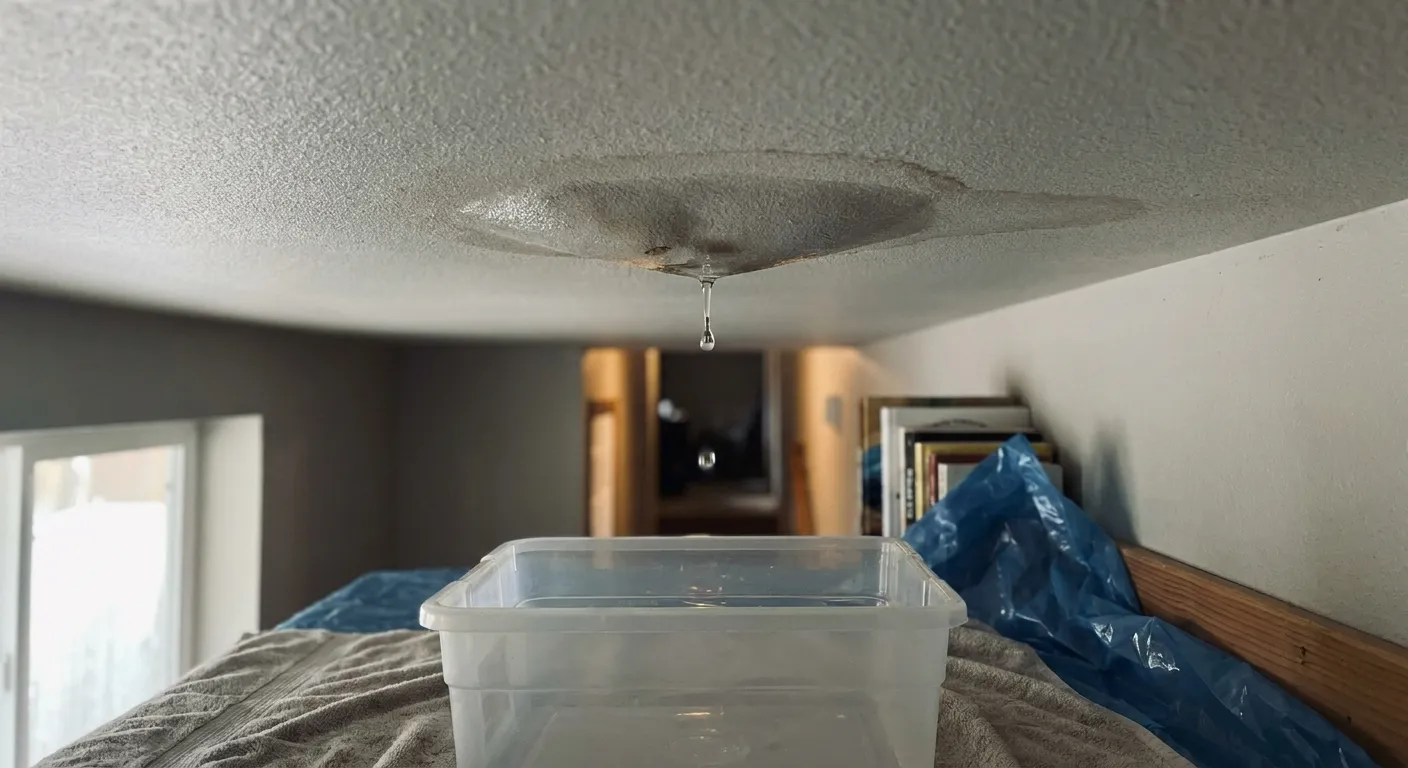
Start by focusing on safety and limiting the water. Move furniture, electronics, and other valuables away from the leak. Use a bucket or other container to catch drips, and avoid climbing onto a wet roof or stepping on a ceiling that may be weakened by moisture. If conditions allow, temporary protection such as emergency tarping can slow water intrusion until a professional can inspect the roof. It is a short-term measure, not a permanent fix, but it can make an important difference during heavy Puget Sound rainfall.
Finding the true source of a leak is not always simple. Water can enter around damaged flashing, lifted or missing shingles, worn seals around vents, or a storm-damaged area of the roof. It may run along framing or roof decking before it reaches the ceiling, which means the visible stain is not always directly below the problem. Strong winds can also create sudden issues by loosening shingle edges or exposing vulnerable areas that were previously protected. A careful inspection is the best way to identify the source and determine how far the moisture has spread.
Prompt roof repair Bellevue homeowners arrange after discovering a leak can help limit damage to drywall, insulation, and wood framing. Left unaddressed, ongoing moisture can contribute to wood rot and mold growth, especially during Bellevue’s damp months. Still, not every leak means the whole roof needs to be replaced. An isolated issue on a roof that is otherwise in good condition may only require flashing repair or shingle replacement. If water has affected a larger area of the roof deck or multiple sections show wear, a more extensive repair or section replacement may be the smarter long-term choice.
This guide explains what to do when a roof begins leaking, how to protect your property while waiting for help, and what signs can point to storm damage or a deeper roofing issue. You will also learn how professionals assess a ceiling leak, when temporary measures are appropriate, and how to weigh a spot repair against a larger solution. For more warning signs that require quick attention, review these signs you need immediate roof repair before water damage has a chance to spread.
What to Do First When Your Roof Leaks in Bellevue
An active roof leak needs prompt attention, especially during Bellevue’s long wet season. Water can move well beyond the ceiling stain you can see. It may travel along the roof deck, framing, insulation, or electrical pathways before it drips into a room.
Start by protecting people and limiting water damage inside the home. If it is safe, place a bucket or other container under the drip and lay towels around it to protect flooring. Move furniture, electronics, rugs, and stored belongings away from the affected area. If water is near light fixtures, outlets, or electrical equipment, avoid touching those items and consider turning off power to that area if you can do so safely.
For homeowners wondering what to do when your roof leaks in Bellevue WA, the first goal is not to find the exact hole from the ground or attempt a risky roof repair. The goal is to contain the water, document what is happening, and arrange professional help.
Why a Small Leak Can Become a Big Problem Fast
A small opening in shingles, flashing, or a roof seal can let in more water than expected during steady rain. Wind-driven rain can push moisture under roofing materials and into the roof deck, which is the wood layer beneath the shingles.
In Bellevue, moisture often does not have much time to dry between storms. Wet insulation can lose its ability to protect the home, drywall can soften or stain, and repeated water intrusion can lead to wood rot or mold growth. The window between a manageable leak repair and a larger repair can be shorter in the Pacific Northwest than in a dry climate.
Safety Comes First Before Any Cleanup
Do not climb onto a wet roof, particularly during rain or wind. Slippery shingles, loose materials, and limited visibility create serious fall risks. Also avoid standing under a bulging or sagging ceiling. Water can collect above drywall and make it unstable.
Keep children, pets, and valuables away from the leak area. If a ceiling appears swollen with trapped water, or water is reaching electrical fixtures, contact a qualified professional promptly. Once the area is safe and the immediate water is contained, you can focus on protecting the rest of the home while help is on the way.
How to Protect Your Home Before Help Arrives
Temporary steps can reduce interior damage, but they do not replace professional roof leak repair. Property managers and homeowners should focus on keeping water controlled, saving documentation, and avoiding unsafe DIY work.
Move Belongings and Contain the Water
Move items away from the leak path, including furniture, electronics, artwork, and boxes stored in attics or upper-floor rooms. Use buckets or deep containers to catch drips. Place towels, old blankets, or plastic sheeting around the container to protect carpet, hardwood, or laminate flooring.
If water is dripping from more than one location, use separate containers rather than trying to direct water across the room. Check buckets often during heavy rain so they do not overflow.
Useful items for temporary interior protection include:
- Buckets, bins, or large pots for dripping water
- Towels and absorbent cloths for floors
- Plastic sheeting to cover furniture or stored belongings
- Fans or dehumidifiers after the leak is stopped and conditions are safe
- A camera or phone for documenting damage
Use Emergency Tarping When Conditions Allow
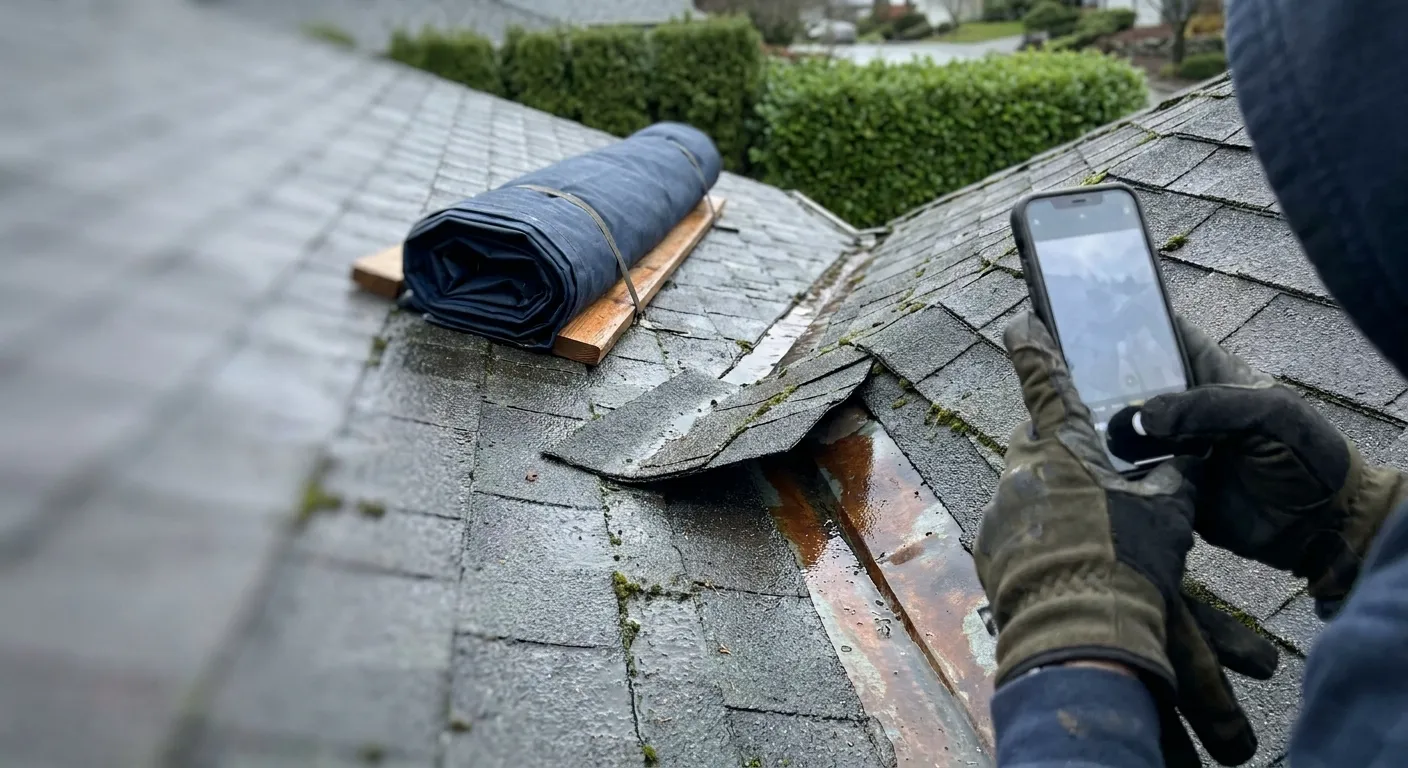
Emergency tarping can slow water intrusion when a roof has missing shingles, exposed decking, or storm damage. A properly secured tarp covers the damaged area and directs water away until a lasting repair can be completed.
However, a tarp is a temporary protective measure, not a repair. Do not attempt to install one during heavy rain, high wind, darkness, or icy conditions. It is safer to have a roofing professional assess whether tarping is needed and install it when roof access is safe. A tarp can help prevent additional water from entering, but it cannot fix damaged flashing, broken shingles, or underlying roof deck damage.
Document the Leak for Repair and Insurance Records
Take clear photos and short videos of the ceiling leak, water stains, wet belongings, and any visible exterior damage from the ground. If you can safely see missing or lifted shingles, photograph them without climbing onto the roof.
Note when the leak started, whether it began after wind or heavy rain, and which rooms are affected. This information helps a roofer narrow down the cause. It can also be useful if you need to ask your insurance provider about possible coverage.
Common Causes of Roof Leaks in Bellevue
A roof leak does not always mean the entire roof has failed. Many leaks begin at a vulnerable connection point or in one area damaged by weather. Understanding common causes helps Bellevue property owners describe the issue clearly when requesting service.
Damaged Flashing Around Chimneys, Vents, and Roof Edges
Flashing is the metal material installed around roof joints, chimneys, skylights, vents, walls, and valleys. Its job is to guide water away from gaps where shingles alone cannot create a watertight seal.
Over time, flashing can loosen, corrode, crack, or pull away from the roof. Sealant around flashing can also fail. A needed flashing repair is a common reason for a localized leak, especially when water appears near a chimney, bathroom vent, or roof-to-wall connection.
Missing, Lifted, or Wind Damaged Shingles Bellevue Homes Often See
Strong winds can lift shingle edges, break tabs, or remove shingles completely. These are common signs of wind damaged shingles Bellevue homeowners may notice after a storm. Even if a shingle remains on the roof, a lifted edge can allow rain to get underneath it.
Missing shingles expose the layers below, while cracked or loose shingles may let water reach the roof deck during the next downpour. Prompt shingle replacement and storm damage repair can prevent a small exposed area from becoming a wider leak.
Failing Seals, Roof Deck Damage, and Other Hidden Problem Areas
Roof penetrations such as pipe boots and vents rely on seals that can wear out over time. A cracked pipe boot, dried sealant, or loose vent collar can allow water into the attic even when surrounding shingles look fine.
Some damage is hidden below the roofing surface. Soft spots, deteriorated decking, and aging underlayment may not be visible from the ground. These issues require a careful inspection rather than guesswork. For more homeowner guidance, review roof leak repair tips for Bellevue homes.
Why Bellevue Weather Makes Roof Problems Show Up Faster
Puget Sound rainfall, long periods of damp weather, and wind-driven storms place steady pressure on roofing materials. Water can enter small gaps that might not cause a noticeable leak during a light rain.
Moss growth can hold moisture against shingles and debris can block valleys or gutters, causing water to back up where it should drain. Bellevue roof damage repair often involves correcting both the visible leak and the conditions that allowed water to collect or travel beneath the roofing system.
How to Find the Source of a Ceiling Leak
The location of a ceiling stain is an important clue, but it is not always the source of the roof leak. Water follows gravity, slopes, framing, wiring, and roof decking before it finally enters a room.
The Leak May Travel Before It Drips Inside
A leak that appears near a bedroom light fixture may begin several feet away near a vent, valley, or lifted shingle. In an attic, water may run along a rafter before soaking insulation and reaching drywall below.
This is why placing a patch directly above a ceiling stain may not solve the problem. A professional inspection looks at the entire area around the interior symptom to trace the water path.
What a Roofer Looks For During an Inspection
A roofer typically checks the shingles, flashing, roof valleys, vents, pipe boots, skylights, roof edges, and seals. They may also assess gutters for clogs or overflow patterns that are pushing water toward the roof edge.
Inside the attic, signs such as wet insulation, darkened wood, moisture on nails, or staining on the roof deck can help locate the entry point. A full inspection provides a clearer plan than repairing only the most obvious exterior spot.
When Interior Signs Point to Deeper Damage
Spreading stains, peeling paint, bubbling drywall, musty odors, and soft or sagging ceilings can indicate ongoing water intrusion. Wet insulation may also signal that water has been entering for more than a single storm.
These signs do not automatically mean the whole roof needs replacement. They do mean the roof deck and affected materials should be checked before repairs are planned.
Roof Repair Bellevue: When a Spot Repair Is Enough
Not every leak requires a major roofing project. Targeted roof leak repair Bellevue homeowners need can be an effective solution when the roof is generally in good condition and the damage is confined to one clear area.
Signs the Damage Is Limited to One Area
A spot repair may be appropriate when the problem involves a small group of missing shingles, one damaged vent boot, a limited flashing failure, or a single cracked seal. The surrounding roofing materials should still be sound, properly attached, and near the same stage of wear.
For example, a roof with one lifted shingle after a windstorm may need localized shingle replacement rather than a section replacement, provided moisture has not spread beneath nearby materials.
What a Spot Repair May Include
A focused repair can include:
- Replacing damaged or missing shingles
- Repairing or replacing loose flashing
- Resealing a vent, pipe boot, or roof penetration
- Replacing damaged underlayment in a limited area
- Repairing small areas of exposed roof decking when necessary
The goal is to restore the roof’s water-shedding layers without replacing materials that are still performing well.
Why Fast Action Helps Keep Repair Costs Down
Quick roof repair Bellevue homeowners arrange after discovering a leak can limit how far moisture spreads. A localized issue is generally easier to address before water reaches insulation, drywall, or more of the roof deck.
Waiting does not always turn a simple repair into a major project, but repeated rain can increase the scope. Prompt inspection helps establish whether the leak is truly isolated or whether hidden moisture needs attention.
When a Larger Repair or Section Replacement Makes More Sense
Sometimes the visible leak is only one part of a larger problem. A section replacement addresses a broader damaged area while preserving parts of the roof that remain in good condition.
Signs the Problem Is More Than a Single Leak
A larger repair may make sense when there are multiple leak points, repeated repairs in the same area, widespread shingle wear, or storm damage across several roof slopes. Curled, brittle, heavily granulated, or repeatedly lifted shingles can indicate that nearby materials may not hold up to another season of heavy rain.
A roof inspection may also find damage around several vents, valleys, or roof edges. In that case, isolated patches may not provide the most reliable long-term solution.
Water Damage That Changes the Repair Plan
Water intrusion can damage more than the outer shingles. Soaked insulation, soft roof decking, rotted wood, and affected framing may need repair before new roofing materials are installed.
When roof deck damage is present, simply covering the surface may trap a problem beneath the roof. The repair plan should address damaged materials, restore a stable base, and rebuild the waterproof layers correctly.
How to Think About Long-Term Value
The right choice depends on roof age, overall condition, damage spread, and the cause of the leak. A low-cost patch can be reasonable for newer roofing with isolated storm damage. A broader repair may be wiser when the materials around the leak are also worn.
A contractor should explain the repair options clearly, including what is being addressed now and what conditions may need monitoring later. For a closer look at repair versus replacement decisions, see roof replacement and repairs in Bellevue.
How Fast Emergency Roof Repair Can Happen in Bellevue
For emergency roof repair Bellevue WA property owners need, response time depends on conditions at the time of the call. There is no responsible way to promise a specific arrival time, particularly during active storms.
What Affects Response Time
Weather, call volume, the severity of the leak, daylight, and safe roof access all affect scheduling. Heavy rain and high winds may make it unsafe for roofers to complete exterior work immediately, even when a leak is urgent.
When calling, describe whether water is actively dripping, whether a ceiling is sagging, and whether shingles or roof materials are visible on the ground. These details help the contractor understand the urgency.
What a Roofer Can Often Do on the First Visit
The first visit may include an exterior and interior assessment, identifying likely leak sources, documenting damage, and determining whether temporary protection such as tarping is appropriate. If conditions and materials allow, some repairs may be completed promptly.
Other situations require a follow-up repair visit, especially if the roof needs time to dry, damaged materials must be ordered, or a wider section requires replacement.
Why Local Service Matters During Heavy Rain
A local roofing team understands how Bellevue rain, wind, moss, and drainage patterns affect area homes. Local experience helps with practical scheduling and with identifying issues common to Pacific Northwest roofs during wet weather.
Repair Costs, Insurance Questions, and What to Expect
Emergency roof repair costs vary because no two leaks have the same cause or scope. A small seal repair is different from repairing damaged decking, replacing a roof section, or setting up emergency tarping.
What Affects the Cost of Roof Leak Repair
The final cost may depend on roof height and access, material type, the number of damaged shingles, flashing condition, labor needs, and whether water has reached insulation or interior finishes. Emergency work and difficult weather conditions can also affect the process.
Read Understanding Roof Repair Costs in Bellevue for a practical overview of common factors.
How Damage Scope Changes the Total
A small flashing fix or isolated shingle replacement generally requires less labor and material than repairs involving wet insulation, rotted decking, or a larger roof section. A thorough inspection helps define the scope before work begins.
Insurance and Documentation Basics
Insurance coverage depends on the policy, the cause of damage, maintenance history, and other policy terms. Storm-related damage may be handled differently than wear from age or lack of maintenance.
Take photos, keep notes, and save repair estimates. Contact your insurer directly if you have coverage questions, and avoid assuming that any repair will be covered before reviewing your policy.
Preventing the Next Leak After Repairs Are Done
After emergency repairs are complete, regular care can help reduce the chance of another surprise leak. Bellevue roofs benefit from seasonal attention because moisture, debris, and moss can build up over long wet months.
Seasonal Maintenance That Helps Bellevue Roofs Last Longer
Clear leaves and branches from roof valleys and gutters so water can drain freely. Watch for loose flashing, damaged seals, and shingles that appear lifted or cracked. Moss should be handled carefully to avoid damaging roofing materials.
Use seasonal roof maintenance tips for Bellevue homeowners to plan routine checks around the wet season.
Watch for Early Warning Signs After a Storm
After heavy rain or wind, look from the ground for shingles in the yard, lifted edges, bent flashing, blocked gutters, and new ceiling stains. Check the attic for damp insulation or a musty smell when it is safe to do so.
Early action is especially helpful after a storm, when a small exterior issue may not yet have caused visible interior damage.
Why Routine Inspections Matter
Routine inspections can identify weak seals, aging flashing, and drainage issues before they become active leaks. This is useful for homeowners, landlords, and property managers who need to protect a building through multiple wet seasons. See common Bellevue roof issues to repair promptly for additional warning signs.
How to Choose the Right Roofing Help for a Leak
A roof emergency can feel rushed, but it is still important to choose a contractor who communicates clearly and assesses the full problem.
What to Look for in a Local Roofer
Look for licensing, relevant local experience, clear written estimates, and a willingness to explain the likely source of the leak. A qualified roofer should distinguish between temporary protection and a lasting repair plan.
Questions to Ask Before Work Starts
Ask practical questions such as:
- What is the likely source of the leak?
- Is the damage limited or does a larger section need attention?
- Is temporary tarping recommended?
- What repairs are needed now, and what should be monitored later?
- What is the expected timeline once weather allows safe work?
For additional guidance, review how to find trusted roof repair contractors in Bellevue.
Why a Local Bellevue Contractor Can Be a Better Fit
A local contractor understands the rain, wind, moss, and moisture concerns that affect Bellevue roofs. Roof Pros NW can help property owners assess active leaks, storm damage, and repair options with a clear plan based on the condition of the roof.
Final Thoughts: Take the Next Step After a Roof Leak
When to Call for Help Right Away
Call for professional help when water is actively entering the home, shingles are missing after a storm, flashing is loose, or interior moisture is spreading. Quick action can help limit damage to drywall, insulation, and roof framing.
Move From Temporary Protection to a Lasting Repair
Buckets, cleanup, and emergency tarping can help protect the home in the short term, but they are not a substitute for finding and repairing the source of water intrusion. Schedule a professional inspection to determine whether you need a spot repair, flashing repair, shingle replacement, or a larger section repair.
To move from temporary protection to a lasting solution, book service with Roof Pros NW.
Conclusion
A roof leak in Bellevue should always be taken seriously, even if the first sign is only a small stain or a few drips. Water can travel far from the entry point before it shows up inside, which means the real problem may be flashing, shingles, seals, gutters, or hidden roof deck damage. In a wet climate like Bellevue, waiting too long can let a small issue spread into insulation, drywall, framing, or other parts of the home.
The first steps are simple but important: protect the area inside, keep people safe, and avoid climbing onto a wet roof. From there, the focus should shift to controlling the water, documenting the damage, and getting a professional to inspect the roof. Temporary steps like buckets, towels, and emergency tarping can help in the short term, but they do not solve the root cause of the leak.
This article also shows why identifying the source matters so much. A leak may come from damaged flashing, lifted shingles, worn seals, or roof wear that is not obvious from the ground. Bellevue’s long wet season, wind, moss, and steady moisture can make these problems worsen faster than many homeowners expect. That is why a full inspection is often the best way to decide whether a spot repair, a larger repair, or a section replacement makes the most sense.
For homeowners, property managers, and property owners, fast action can help reduce damage and make repair decisions clearer. If the leak is active, the ceiling is sagging, or storm damage is visible, it is time to move beyond cleanup and into a real repair plan. Routine care after the repair also matters, since seasonal maintenance and early checks can help catch future problems before they become another leak.
If you want more background before moving forward, these resources may help:
- roof leak repair in Bellevue tips
- Understanding Roof Repair Costs in Bellevue
- Seasonal Roof Maintenance Tips for Bellevue Homeowners
- roof replacement and repairs in Bellevue
When a leak needs attention, the best next step is a professional inspection from Roof Pros NW. A clear look at the roof can help you understand the damage, compare repair options, and move toward a lasting solution with confidence.
If your roof starts leaking in Bellevue, every minute matters. Heavy rain, wind, and steady moisture can turn a small leak into bigger damage fast, so the right first steps can help protect your home, limit repairs, and guide you toward the best fix. These key takeaways cover what to do right away, how leak damage can spread, and when roof repair may no longer be enough.
- Act fast to limit leak damage: A roof leak can move from a simple repair to wood rot, mold growth, and drywall damage much faster in Bellevue’s wet climate.
- Put safety and protection first: Move belongings away from the leak, catch dripping water, and avoid walking on a wet roof or ceiling area unless it is safe.
- Temporary tarping can buy valuable time: Quick emergency tarping or other short-term protection can help slow water intrusion until a roofer arrives.
- Find the source, not just the stain: A ceiling leak often shows up far from the real problem, so flashing, shingles, seals, and roof deck areas all need a careful check.
- Wind and storm damage often start sudden leaks: Missing shingles, lifted edges, and damaged flashing are common reasons Bellevue roofs begin leaking after strong weather.
- Small repairs work best when damage is limited: If the leak is isolated and the surrounding roof is still in good shape, a spot repair may be enough.
- Widespread damage may call for section replacement: If water has already soaked the roof deck, insulation, or framing, a larger repair may be the better long-term choice.
- Local response time matters in the Pacific Northwest: In a high-moisture area like Bellevue, faster emergency roof repair can help reduce the chance of deeper structural and interior damage.
- A licensed local roofer can make the decision easier: A Bellevue roofing contractor can inspect the damage, explain your options, and help you move quickly from emergency protection to a lasting repair.
With these points in mind, the full article will walk you through what to do first, how to judge the damage, and how Roof Pros NW can help with fast, reliable roof repair Bellevue homeowners can count on.
Get a Clear Picture of Your Roof’s Condition
Keeping up with roof care helps you catch small issues before they turn into larger repairs. Whether you have noticed worn shingles, debris buildup, or simply want peace of mind, a professional inspection can help you make informed decisions about your home.
Roof Pros NW offers thorough roof inspections to help Bellevue homeowners understand what their roof needs now and what to plan for later.
- Identify damaged, missing, or aging shingles
- Check for signs of leaks and moisture concerns
- Review flashing, vents, gutters, and drainage areas
- Get clear recommendations without confusing jargon
- Plan repairs or maintenance around your schedule
A timely inspection can help you protect your home and avoid surprises during the next season of rain. Schedule your roof inspection today and get straightforward guidance from a local roofing team that puts your needs first.
Book your roof inspection with Roof Pros NW
What should I do first when my roof starts leaking during heavy rain?
Stay safe first. Move furniture, electronics, and valuables away from the leak, then place a bucket or bin under the drip and use towels to protect the floor. Do not climb onto a wet roof or stand under a sagging ceiling. If water is near lights or outlets, keep clear of the area and call Roof Pros NW for help as soon as possible.
How can I stop a roof leak temporarily before the roofer arrives?
Use short term protection only. Inside, catch the water with buckets, towels, and plastic sheeting. If it is safe and conditions allow, emergency tarping on the roof can slow more water from getting in. A tarp is not a repair, and it should only be installed when the roof is dry enough and safe to access. Roof Pros NW can inspect the damage and recommend the right next step.
How do I know if I need a spot repair or a section replacement?
A spot repair is often enough when the damage is limited to one small area, such as a few missing shingles, a failed pipe boot, or a small flashing issue. A section replacement makes more sense when there is widespread shingle wear, repeated leaks, soft decking, or water damage that has spread beyond one spot. The best way to decide is with a full roof inspection from Roof Pros NW.
How quickly can a roofer respond to an emergency roof leak in Bellevue?
Response time depends on weather, call volume, roof access, and how severe the leak is. During active rain or wind, timing can be slower because safety comes first. A local roofer can often do an early visit to assess the leak, document damage, and set up temporary protection if needed. Contact Roof Pros NW right away so the issue can be evaluated as soon as possible.
How do I choose a trustworthy roofing contractor in Bellevue?
Look for a roofer with local experience, clear communication, proper licensing, and a detailed estimate. Ask how they will find the leak source, whether they recommend tarping, and what repairs are needed now versus later. A trustworthy contractor should explain the problem in plain language and not pressure you into more work than needed. Roof Pros NW can give you a clear inspection and repair plan.
