Roof Moss Removal Seattle WA: How Moss Damages Shingles
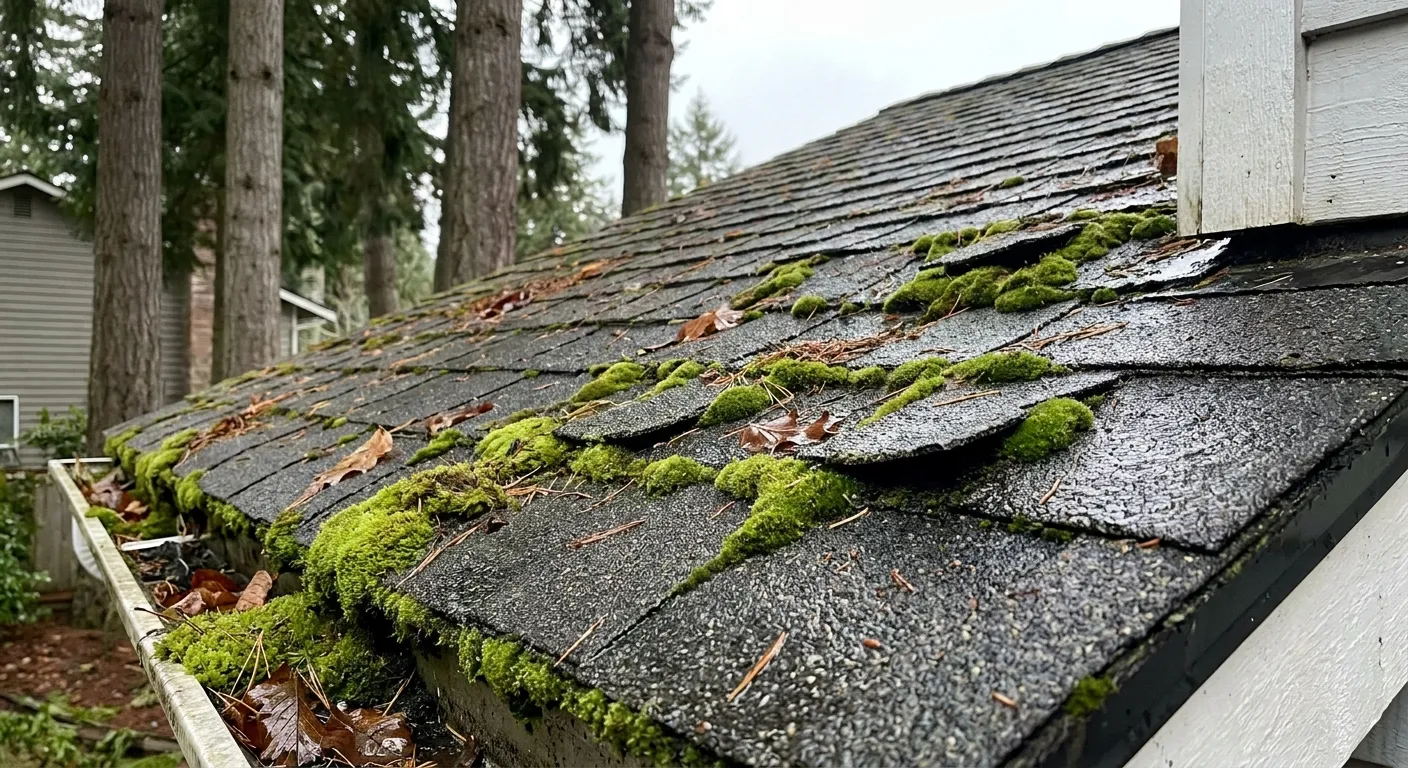
Moss may look like a soft green layer on your roof, but it can cause real damage long before you notice a leak inside your home. In Seattle and throughout the Puget Sound, long wet seasons, cool temperatures, shade, and damp air create ideal conditions for moss to spread across asphalt shingles. What begins as a few small patches can work its way beneath shingle edges, hold water against the roof, and slowly weaken the materials that protect your home. That is why roof moss removal Seattle WA is about more than improving curb appeal. Moss has root-like structures called rhizoids that can grow between shingle tabs and around roof edges. As the moss thickens, it keeps the roof surface damp for longer after rain. That extra moisture can speed up shingle wear, encourage granule loss, and create trouble around flashing, valleys, and gutters. Moss debris can also collect in gutters, slowing drainage and allowing water to back up where it does not belong. These problems are not always visible from the ground, especially on shaded sections of the roof. It can be tempting to solve the problem with a pressure washer, but high-pressure water can do more harm than good. It may strip away the protective granules that help asphalt shingles stand up to weather, force water under the shingles, or loosen parts of the roofing system. A safer approach is soft wash roof cleaning, which uses a low-pressure treatment designed to remove moss without blasting the shingles. After removal, a proper moss prevention plan, including options such as zinc sulfate treatment when appropriate, can help slow regrowth and support long-term roof lifespan protection. Regular care matters because moss does not wait for a convenient time to grow. Homeowners, property managers, and property owners who address it early can make smarter maintenance decisions and reduce the chance of small roof concerns turning into larger repairs. In this guide, you will learn why moss grows so quickly in Seattle, how it damages asphalt shingles, why pressure washing is risky, and how safe treatment and routine roof checks can help protect your roof through the Pacific Northwest’s wet weather.
Why Moss Grows So Fast on Seattle Roofs
Seattle and the Puget Sound region give moss almost everything it needs to grow: cool temperatures, frequent rain, damp air, and long stretches of cloudy weather. Roofs often stay wet long after a storm ends, especially during fall, winter, and spring. That lingering moisture allows moss spores to settle, spread, and develop into thick mats.
For homeowners, roof moss removal Seattle WA is about more than improving curb appeal. Moss can hold moisture against the roofing surface, interfere with drainage, and slowly damage asphalt shingles. The sooner it is addressed, the easier it is to protect the roof from deeper wear.
Seattle Weather and Roof Moss Growth
Moss grows quickly where water does not dry out. In the Pacific Northwest, even light rain, fog, and morning dew can keep a roof damp. North-facing slopes often get little direct sun, while nearby evergreens and deciduous trees can block airflow and drop needles, leaves, and small branches onto the roof.
Common high-growth areas include:
- Roof sections shaded by trees or neighboring buildings
- North-facing slopes with limited sun exposure
- Valleys where water and debris collect
- Areas beneath overhanging branches
- Lower roof edges that stay damp after rain
Why Asphalt Shingles Are Especially Affected
Asphalt shingles are built to shed water, but they are not designed to stay wet under a layer of living moss. Moss can grow between shingle tabs and along their edges, creating places where moisture remains trapped. Over time, this can speed up shingle aging and weaken the surface that protects the roof.
Prompt asphalt shingle moss removal helps prevent moss from becoming a long-term moisture problem. It also gives a roofer a better chance to spot loose shingles, worn flashing, or drainage concerns before they develop into leaks.
Where Moss Usually Starts on a Roof
Moss often begins in places that are hard to see from the ground. A roof may look mostly clean from the driveway while moss is growing in a valley, behind a chimney, along a dormer, or under a tree-covered section.
Debris buildup is often the starting point. Leaves and needles hold moisture on the roof, giving moss a damp surface where it can take hold. Understanding where growth starts makes regular roof checks especially important in Puget Sound homes.
How Moss Damages Asphalt Shingles Over Time
Does moss really damage asphalt shingles, or is it only cosmetic? Light surface growth may not cause immediate problems, but established moss can affect the roof at a structural level. Moss does not have traditional roots. Instead, it uses tiny thread-like structures called rhizoids to anchor itself to the surface.
As moss thickens, those rhizoids can work into small gaps around shingle edges and tabs. The damage often happens slowly and may not be obvious until shingles begin curling, losing granules, or allowing water into vulnerable areas.
Moss Rhizoids and Shingle Separation
Moss rhizoids can grip the rough surface of asphalt shingles and grow into the spaces between tabs. As the moss holds moisture and expands, it may lift or separate shingle edges. This matters because overlapping shingles create a layered barrier against rain and wind.
When moss disrupts that overlap, water has more opportunity to move beneath the shingles. Wind-driven rain is common around Seattle, and lifted tabs may be more vulnerable during storms. A roof can still appear intact from the ground while its water-shedding design is being weakened.
Moisture Trapping and Faster Shingle Wear
Moss acts like a sponge. It absorbs rainwater and keeps the roof surface damp long after surrounding areas have dried. Constant wetness can speed up normal aging in asphalt roofing materials, especially on older roofs or heavily shaded slopes.
This trapped moisture can also contribute to:
- Shingle edges that remain soft or curl over time
- Faster breakdown around nail lines and overlaps
- Greater stress in valleys and low-slope drainage areas
- A wetter environment for algae, lichen, and additional moss growth
Moss removal helps extend roof lifespan when it is part of a larger maintenance plan that also addresses debris, shade, drainage, and shingle condition.
Granule Loss and Roof Surface Damage
The rough mineral granules on asphalt shingles are important. They help protect the asphalt layer from sunlight, weather, and everyday wear. Moss itself can contribute to gradual roof granule loss as it anchors to the shingle surface and holds moisture against it.
Granules may also loosen when moss is scrubbed aggressively or removed with high-pressure water. Once a shingle loses too many granules, its surface becomes more exposed and can age faster. Granule loss is one reason the best way to remove roof moss without damaging shingles is usually a low-pressure method rather than forceful cleaning.
Hidden Damage That Starts Before a Leak
A leak is often a late warning sign. Moss-related damage can begin long before water reaches the interior of a home. A professional roof inspection can look closely at areas that commonly stay hidden from view, including:
- Flashing around chimneys, skylights, and vents
- Roof valleys where water concentrates
- Roof edges and drip lines
- Shingle tabs beneath thick moss patches
- Gutters and downspouts affected by moss debris
Why Moss Can Affect More Than Just Shingles
Moss and roof debris can block drainage paths and keep water near sensitive roof components. Flashing may stay wet longer, gutters can collect moss clumps, and valleys can become slow to drain. During heavy rain, backed-up water places added stress on the roof edge, fascia, and nearby siding.
That is why Puget Sound roof moss removal should include more than simply making shingles look clean. It should support the full roofing system, from the roof surface to the drainage path below.
Why Pressure Washing Is Not Safe for Roof Moss Removal
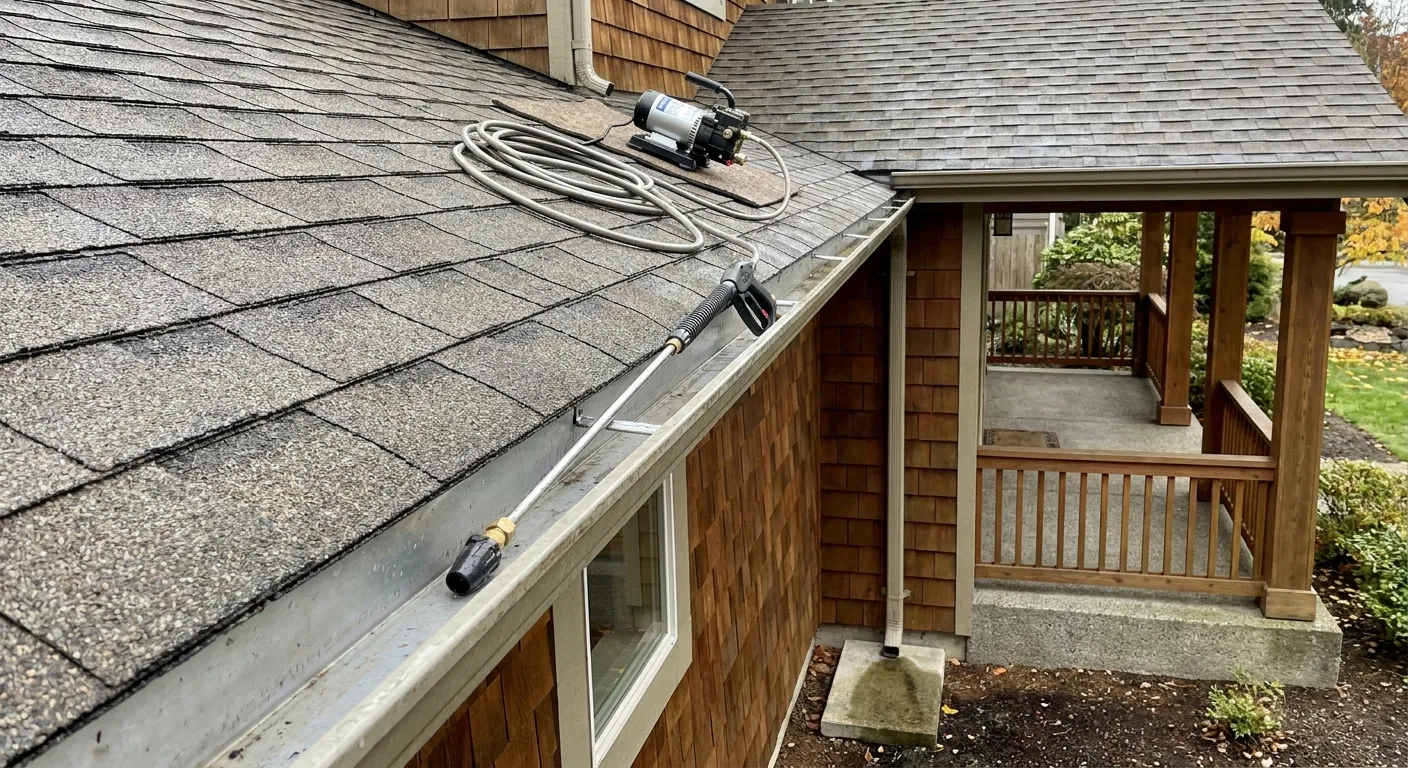
Homeowners often ask, “Is pressure washing safe for roof moss removal in Seattle?” For asphalt shingle roofs, high-pressure washing is generally a risky choice. It may remove visible moss quickly, but it can also remove shingle granules and disturb the layers that keep water out.
A roof is not a driveway or deck. Asphalt shingles have a protective surface that can be damaged by a powerful water stream, especially when the spray is directed upward against the shingle overlap.
How High Pressure Can Damage Shingles
Pressure washing can blast away loose granules, leaving the asphalt beneath more exposed to weather. It can also bend shingle edges or force water under tabs, where moisture is not supposed to go.
Even if the roof looks cleaner right away, the surface may have been weakened. Manufacturers may also limit or exclude coverage for damage caused by improper cleaning methods, so homeowners should review their roof warranty and follow applicable care guidance.
The Risk of Loosening Roof Components
High pressure does not only affect the shingles. It may disturb flashing, loosen sealant around roof penetrations, and push water into vulnerable edges. Older roofs are especially susceptible because shingles may already be brittle, curled, or losing granules.
The cleaning damage can be worse than the moss issue if it creates a path for water intrusion or shortens the useful life of the roof.
Pressure Washing vs. Roof-Friendly Cleaning
Pressure washing relies on force. Soft wash roof cleaning relies on controlled, low-pressure application and an appropriate treatment solution. The goal is to treat moss without stripping the granules that protect asphalt shingles.
A roof-friendly approach takes more patience because dead moss may release gradually with weather. However, protecting the roof surface matters more than getting an instant bare-shingle appearance.
What Is the Safest Way to Remove Moss from Asphalt Shingles?
For many Seattle roofs, the safest approach is a professional soft wash treatment combined with a careful roof inspection. The correct method depends on the roof’s age, pitch, shingle condition, moss severity, and nearby landscaping.
Soft Wash Roof Cleaning Explained
Soft washing uses low water pressure and a cleaning or treatment solution designed for roof surfaces. Instead of blasting moss away, the treatment targets the growth so it can break down over time. Loose moss may be gently removed where appropriate, without harsh scraping or aggressive brushing.
This approach is better suited to asphalt shingles because it respects the shingle surface and overlap. A professional should control the application carefully and use practices that protect surrounding plants, gutters, and drainage areas.
Why Soft Wash Is Better for Asphalt Shingle Moss Removal
Soft wash roof cleaning helps preserve the protective granules that high-pressure water can strip away. It also avoids forcing water beneath shingles. For Seattle roof cleaning, this matters because many roofs are already dealing with long wet seasons and repeated moss exposure.
A careful treatment can address moss while supporting roof lifespan protection. It is not just a cleaning method. It is part of a plan to reduce moisture-related wear before it becomes a larger roofing concern.
Eco-Friendly Moss Treatment and Roof Protection
An eco-friendly moss treatment should be selected and applied with the roof system and surrounding property in mind. “Eco-friendly” does not mean a treatment can be used without care. The right concentration, application method, runoff control, and follow-up matter.
Some treatments work gradually, allowing rain and normal weather to help release dead moss without damaging shingles. A roofer can also determine whether thick moss should be removed in stages to avoid tearing at weakened tabs.
When Professional Roof Moss Removal Makes the Most Sense
Professional roof moss removal is especially helpful when a roof is steep, high, heavily shaded, older, or covered with thick moss. It also makes sense when moss is growing near chimneys, skylights, valleys, or areas where flashing needs close review.
Roof Pros NW can provide roof moss treatment Seattle homeowners can rely on for a roofing-focused assessment, not just surface cleaning. A trained team can identify whether the roof needs treatment, repairs, drainage work, or a more detailed inspection.
What a Safe Moss Removal Visit May Include
A roof-focused moss removal visit may include:
- Inspecting shingles for wear, lifted edges, and granule loss
- Applying a low-pressure soft wash treatment
- Checking valleys, flashing, vents, and roof edges
- Removing or identifying debris that holds moisture
- Reviewing gutters and drainage paths for blockages
- Recommending repairs or a tune-up when needed
This process helps ensure moss removal supports the condition of the roof rather than creating new problems.
Moss Regrowth Prevention After Removal
Moss can return because its main causes, shade, moisture, and debris, are common in the Pacific Northwest. Treatment is useful, but moss regrowth prevention also requires changing the conditions that allow it to thrive.
Why Moss Comes Back So Easily
Spores are carried by wind and can settle on almost any roof. If leaves, needles, and damp debris remain on the shingles, new growth has a place to start. A shaded roof with limited airflow may need more regular attention than a sunny, open roof.
Zinc Sulfate Treatment and Other Prevention Options
A zinc sulfate treatment may help reduce moss regrowth when it is appropriate for the roof and applied correctly. Zinc-based materials can create conditions that are less favorable for moss, but they are not a permanent solution. Homeowners should avoid applying chemicals without understanding safe handling, runoff considerations, and roof compatibility.
Other prevention steps can include trimming branches to improve sunlight and airflow, cleaning debris from valleys, and addressing drainage problems that keep the roof wet.
Roof Maintenance Habits That Help
Regular Pacific Northwest roof maintenance supports longer shingle life. Helpful habits include:
- Clearing leaves and needles from accessible areas
- Keeping gutters and downspouts open
- Trimming branches that overhang the roof
- Watching for dark, damp patches or fresh moss growth
- Scheduling periodic professional roof checks
How Often to Treat Moss in the Pacific Northwest
How often Seattle homeowners should treat a roof for moss depends on shade, tree cover, slope direction, roof age, and moisture exposure. Many properties benefit from routine visual checks, especially after the rainy season and during fall leaf drop. A heavily shaded roof may need more frequent professional attention than an open, sunny one.
The Link Between Moss, Gutters, and Water Damage
Moss does not stay only on the roof. Rain can wash loose moss, granules, needles, and leaves into gutters. Over time, that material can form a blockage that slows water flow.
How Moss Debris Clogs Gutters
When gutters clog, water may overflow near the roof edge or stand in sections of the gutter. During a heavy Seattle rain, that overflow can affect fascia boards, siding, landscaping, and areas near the foundation.
Why Poor Drainage Can Stress the Roof System
Poor drainage keeps roof edges wetter for longer. It can also allow water to back up near shingles and flashing, especially where gutters are already full of debris. While moss may not be the only cause of a drainage issue, it can make an existing problem worse.
Why Gutter Checks Should Be Part of Moss Removal
A quality roof cleaning plan should include a look at gutters, downspouts, valleys, and visible drainage paths. In a region with long wet seasons, clearing the roof without checking where the water goes leaves part of the problem unaddressed.
DIY Moss Removal vs Professional Service
DIY moss removal may seem straightforward, but roofs involve fall hazards and delicate materials. The wrong brush, chemical, or cleaning method can damage shingles and lead to avoidable repair needs.
Common Risks With DIY Moss Removal
Common DIY problems include walking on wet shingles, scraping too hard, using pressure washers, and applying treatments without managing runoff. Moss-covered shingles can be slippery, and older shingles may break or lose granules under foot traffic.
Using an incorrect product can also harm nearby plants or leave residue in gutters. For heavy growth, steep slopes, or uncertain roof condition, professional service is usually the safer choice.
When a Homeowner Might Handle Light Maintenance
Some homeowners can handle light maintenance from the ground or a safely positioned ladder, such as clearing accessible leaves from gutters or trimming back small branches. Avoid walking on the roof whenever possible, particularly when it is wet or mossy.
Why Professional Roof Moss Removal Lowers Risk
A trained roofer can assess moss growth, use roof-safe methods, and inspect for hidden damage during the same visit. This is a practical advantage of professional roof moss removal vs DIY in Seattle WA. Roof Pros NW can help homeowners and property managers address moss while checking shingles, flashing, valleys, and drainage for concerns that may otherwise go unnoticed.
Roof Maintenance Tips for Seattle and Puget Sound Homes
Moss control works best as part of consistent roof care. Rainy months create more opportunities for debris buildup, slow drainage, and moisture-related wear, so small maintenance steps can make a meaningful difference.
Seasonal Roof Care in Wet Weather
After major storms and during fall leaf drop, look for debris in valleys, overflowing gutters, or water that is not draining as expected. A quick ground-level visual check can reveal dark moss patches, hanging branches, or loose material near roof edges.
For a more detailed seasonal plan, review Roofing Maintenance for Rainy Seasons PNW Checklist and Comprehensive Roofing Maintenance for Rainy Seasons.
Simple Steps to Protect Asphalt Shingles
Protecting asphalt shingles does not require harsh cleaning. Focus on reducing the moisture and debris that support moss:
- Keep gutters and downspouts clear
- Remove loose debris from safe, accessible locations
- Trim overhanging limbs to improve airflow
- Check for moss on shaded slopes and valleys
- Schedule inspections when shingles look worn or drainage is poor
More practical care guidance is available in Asphalt Roofing Seattle: Maintenance Tips for Homeowners. Consistent upkeep supports roof lifespan protection and can help homeowners plan repairs before damage spreads.
When to Schedule a Roof Inspection or Tune-Up
A roof inspection or tune-up is useful after moss removal and whenever a roof shows signs of wear. Visible moss, dark moisture patches, loose or curled shingles, clogged gutters, and worn-looking roof surfaces are all reasons to schedule a closer look.
Signs It Is Time for a Roof Check
Consider a professional roof check if you notice:
- Thick or recurring moss growth
- Shingles that are lifting, cracking, or losing granules
- Overflowing gutters or debris-filled valleys
- Stains near ceilings or attic spaces
- Roof edges that look worn or uneven
A roof can have hidden damage even when it appears fine from below, particularly around flashing and valleys.
What a Professional Inspection Can Catch
A roofer can assess shingle wear, flashing condition, drainage concerns, roof edges, and areas affected by moss. That information helps homeowners make practical decisions about treatment, minor repairs, or future replacement planning.
To arrange a tune-up or inspection, book a roofing visit.
Final Thoughts: Protect Your Roof Before Moss Causes Bigger Problems
Moss is common in Seattle, but it should not be ignored as a purely cosmetic issue. Over time, moss rhizoids can lift shingle edges, trapped moisture can speed up wear, and debris can interfere with gutters and drainage. These issues may begin before a leak becomes visible.
Pressure washing can strip granules and push water under shingles, making it a poor choice for most asphalt roofs. Soft wash roof cleaning and carefully applied moss treatment offer a safer path for roof moss removal Seattle WA homeowners can consider.
Regular inspections, debris control, drainage checks, and timely treatment help protect asphalt shingles through the Puget Sound’s long wet seasons. For professional guidance and roofing-focused moss care, visit Roof Pros NW.
Conclusion
Moss growth is a common roofing issue in Seattle and across the Puget Sound region, but it is not something homeowners should brush off as only a cosmetic problem. Cool temperatures, steady moisture, shade, and long wet seasons create ideal conditions for moss to spread on asphalt shingles. Once it takes hold, moss can trap water, lift shingle edges, weaken the roof surface, and contribute to faster wear over time.
The biggest concern is that moss damage often starts quietly. A roof may still look fine from the ground while moss is growing in valleys, along edges, behind chimneys, or under tree cover. As the growth thickens, it can affect shingle overlap, reduce drainage, and make it easier for water to reach vulnerable parts of the roof system. That is why regular checks matter, especially after rainy seasons or heavy leaf drop.
Just as important, not every cleaning method is safe. High-pressure washing can strip granules, disturb shingles, and force water into areas where it does not belong. For asphalt roofs, a soft wash roof cleaning approach is usually the safer option because it treats moss without causing unnecessary damage to the shingles. In many cases, the best results come from pairing moss treatment with a full roof inspection so any hidden wear, loose flashing, or drainage concerns can be found early.
Long-term protection also depends on prevention. Clearing debris, keeping gutters open, trimming branches, and improving airflow can all help reduce the damp conditions moss needs to return. For many Seattle homes, this kind of routine care is part of smart roof maintenance, not just a one-time cleanup. A roof that drains well and dries faster is less likely to develop recurring moss problems.
If your roof already has visible moss, soft spots, clogged gutters, or shingles that look worn, the next step is to have it checked by a roofing professional. A careful inspection can show whether your roof needs treatment, minor repairs, or a longer-term maintenance plan. For homeowners who want help with moss and roof care in the Pacific Northwest, Roof Pros NW can provide guidance and service focused on protecting your roof before small issues turn into bigger ones.
If you are ready to take a closer look at your roof, book a roofing visit and get clear next steps based on your home’s condition.
If you live in Seattle or anywhere in the Puget Sound, roof moss is more than a cosmetic issue. Moss can lift shingles, trap moisture, and wear down the roof surface long before you see a leak. These key takeaways explain how moss causes damage, why pressure washing is risky, and why a safe treatment plan matters for protecting your roof.
- Seattle weather creates the perfect setting for roof moss: Long wet seasons, shade, and damp air help moss grow fast on asphalt shingle roofs across the Puget Sound area.
- Moss can damage shingles from the root up: Moss rhizoids can work between shingle tabs, lift them apart, and hold moisture against the roof surface, which speeds up wear.
- Granule loss weakens asphalt shingles: Pressure washing can strip away the protective granules on shingles, leaving them less able to stand up to rain, sun, and wind.
- Pressure washing is not a safe roof cleaning method: High-pressure water can damage shingles, loosen parts of the roof system, and may create problems that are worse than the moss itself.
- Soft wash treatment is a safer choice: Eco-friendly soft washing removes moss without blasting the shingles, making it a better option for roof moss removal in Seattle WA.
- Moss damage often starts before a leak is visible: A roof can look fine from the ground while moss is already causing hidden damage to shingles, flashing, and roof edges.
- Clogged gutters can make moss problems worse: Moss debris can wash into gutters, block drainage, and raise the risk of water backing up into the roof system.
- Preventive treatment helps slow regrowth: After moss removal, treatments like zinc sulfate can help reduce new growth and support longer roof lifespan.
- Regular roof checks matter in the Pacific Northwest: Homeowners should schedule moss removal and roof inspections on a routine basis to catch damage early and protect their roof investment.
- Professional service lowers the risk of DIY damage: A trained roofer like Roof Pros NW can remove moss safely, check for shingle wear, and recommend the right next step for your roof.
Understanding how moss damages shingles can help you make better choices for roof care in the Seattle area. In the rest of this article, you will learn what causes moss growth, how to remove it safely, and how to protect your roof for the long run.
Keep Your Roof Ready for Rainy Weather
Regular maintenance helps you catch small roof issues before they turn into larger repairs. If you have noticed moss growth, clogged gutters, worn shingles, or water stains, now is a smart time to schedule a professional roof inspection with Roof Pros NW.
A thorough inspection can help you plan maintenance with confidence and keep your home protected through changing weather.
- Identify loose, cracked, or aging shingles
- Check for early signs of leaks and water damage
- Spot moss, debris, and drainage concerns
- Review flashing, vents, and other vulnerable areas
- Get clear recommendations based on your roof’s condition
Roof problems are often easier and less costly to address when they are found early. Take a proactive step for your home and schedule your roof inspection with Roof Pros NW today.
Is pressure washing safe for roof moss removal, or will it damage shingles?
Pressure washing is usually not safe for asphalt shingle roofs. High pressure can strip away protective granules, loosen shingles, and force water under the roof surface. A soft wash roof cleaning is the safer option because it removes moss with low pressure and helps protect the roof from extra damage. If you are unsure about your roof, Roof Pros NW can inspect it and recommend the right approach.
What is the best way to remove moss from an asphalt shingle roof without causing leaks?
The safest method is a professional soft wash treatment designed for asphalt shingles. This approach uses low pressure and a roof safe solution to break down moss without blasting water into the roof system. A trained roofer can also check flashing, valleys, and edges during the visit, which helps reduce the chance of hidden problems. Roof Pros NW can help with roof moss removal and a full roof check.
How much does roof moss removal cost in Seattle, WA?
Pricing depends on roof size, roof pitch, moss buildup, roof age, material type, access, and whether any repairs are needed. The final cost can also change if gutters, flashing, or drainage issues need attention at the same time. The best next step is to schedule an inspection so the roof can be reviewed in person. Roof Pros NW can provide an estimate based on your roof’s condition.
How often should a Seattle homeowner schedule roof moss treatment?
It depends on shade, tree cover, roof slope, and how long the roof stays damp. Homes in Seattle and the Puget Sound often need regular checks because moss can return quickly in cool, wet weather. A roof with heavy shade or nearby trees may need more frequent care than a roof with more sun and airflow. Roof Pros NW can inspect your roof and suggest a maintenance plan that fits your home.
What should I look for when hiring a roofing contractor for moss removal?
Look for a contractor with local roof experience, clear communication, and a cleaning method that protects asphalt shingles. Ask how they remove moss, whether they use soft wash roof cleaning, and if they inspect flashing, gutters, and roof edges during the job. You should also expect a clear estimate and honest recommendations if repairs are needed. Roof Pros NW can help if you want a roof focused team to review your moss problem.
